Facebook vs. Instagram Ads for Aesthetic Clinics
Compare Facebook and Instagram ads for aesthetic clinics—audiences, top formats, pros/cons, and how to combine both to boost leads and bookings.
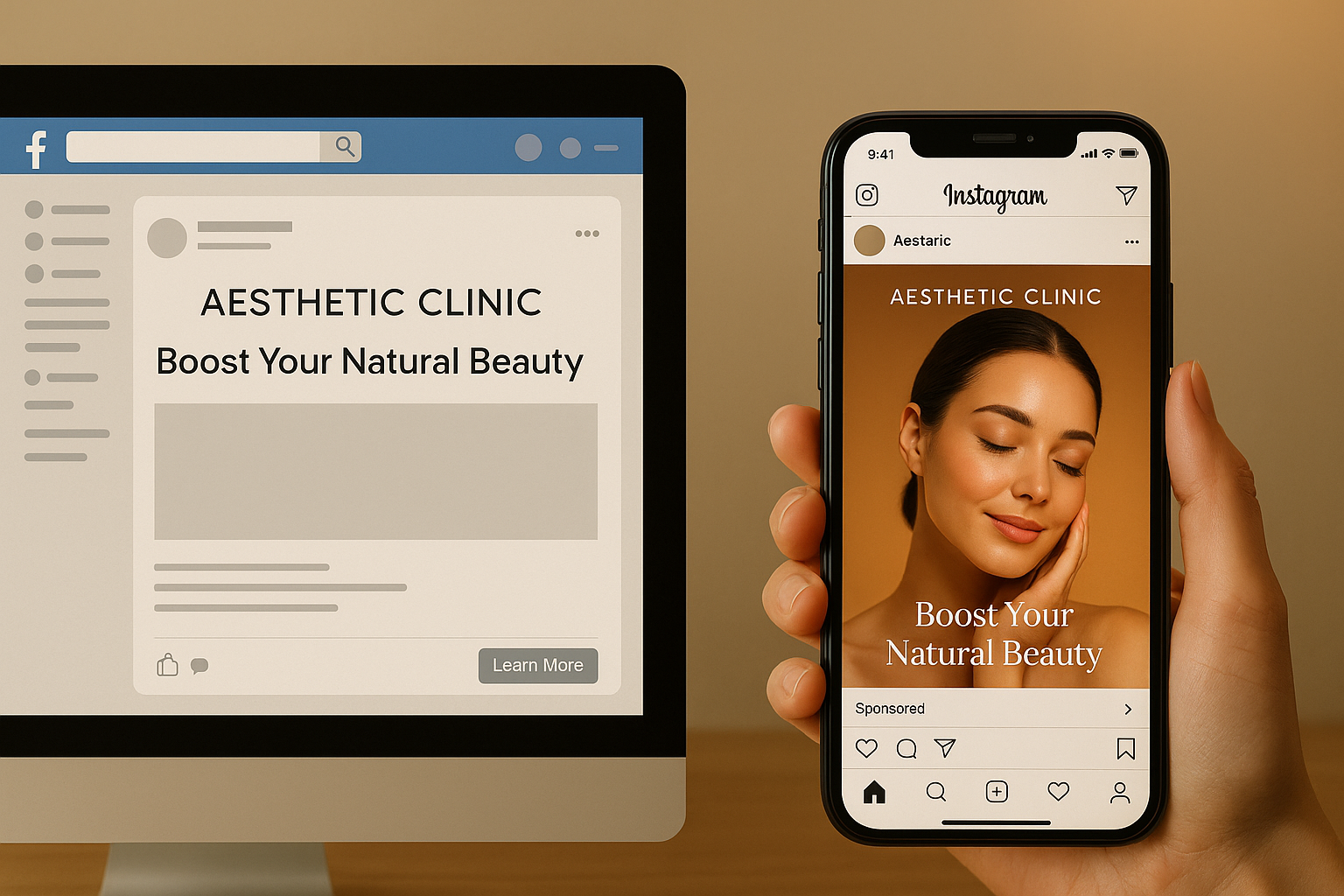

If you're running ads for an aesthetic clinic, the choice between Facebook and Instagram depends on your goals and audience. Here's a quick breakdown:
- Facebook: Better for reaching adults aged 30–65, especially those researching anti-aging treatments. Works well for lead generation and direct bookings with tools like in-app forms and detailed targeting. Ideal for longer, informative content.
- Instagram: Appeals to younger users (18–34) who engage with visually striking content like Reels and Stories. Great for building awareness and showcasing transformations, but less effective for immediate bookings.
Quick Comparison
| Factor | ||
|---|---|---|
| Audience | Ages 30–65, research-focused | Ages 18–34, inspiration-driven |
| Best For | Lead generation, direct bookings | Brand awareness, visual storytelling |
| Top Formats | Carousel ads, lead forms, video ads | Reels, Stories, high-quality images |
| Strengths | Precise targeting, strong retargeting | Engaging visuals, younger audience reach |
| Limitations | Less appeal to younger users, ad fatigue | High competition, shorter attention spans |
To maximize results, many clinics combine both platforms. Use Facebook for conversions and Instagram for engagement. Track metrics like cost per lead and booking rates to adjust your strategy over time.
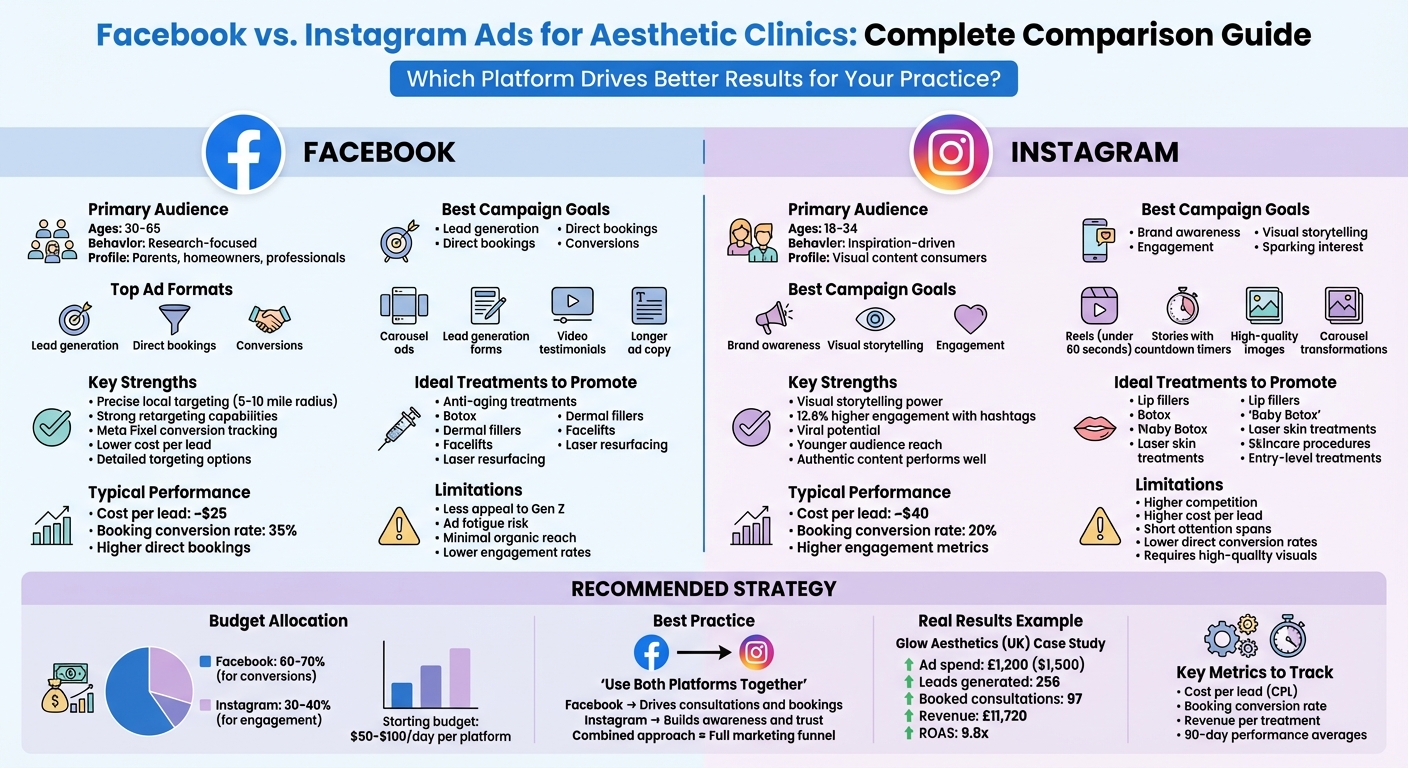
Facebook vs Instagram Ads for Aesthetic Clinics: Complete Comparison Guide
Facebook Ads for Aesthetic Clinics
Facebook's Audience and How Users Behave
In the United States, Facebook's primary audience leans toward adults aged 30 and older, with a particularly strong presence among those 35–64. This demographic often includes parents, homeowners, and professionals - many of whom align with the typical profile of patients seeking anti-aging treatments like Botox, dermal fillers, skin rejuvenation, and body contouring. Aesthetic clinics often focus on patients within a 5–10 mile radius, targeting age groups such as 30–60 for anti-aging procedures and 25–45 for injectables. While campaigns traditionally focus on women, there’s a growing interest from men in these services.
Potential patients rarely book treatments on impulse. Instead, they research extensively, often on their phones, saving offers and comparing providers. This makes it essential for clinics to implement multi-touch retargeting campaigns that educate potential patients. Content addressing common concerns - like pain, recovery time, or expected results - and showcasing real patient testimonials and before-and-after photos can make a significant difference in building trust and converting leads. This patient behavior highlights the need for a strategic approach to Facebook advertising.
Benefits of Facebook Ads
Facebook provides several tools that are particularly useful for aesthetic clinics. The Lead Generation objective, for example, allows clinics to collect contact information directly through in-app forms. This makes it easy to promote consultations or special offers. Conversion campaigns, powered by the Meta Pixel, let clinics track completed bookings and refine their campaigns to lower the cost per consultation over time.
Another advantage is Facebook's allowance for longer ad copy compared to Instagram. This extra space is ideal for explaining complex treatments, addressing common concerns, or linking to detailed resources like blog posts or FAQ pages. This is especially helpful for higher-consideration procedures like facelifts or laser resurfacing. Additionally, Facebook’s precise local targeting ensures clinics can reach nearby potential patients, and lookalike audiences built from patient email lists can efficiently expand reach.
A real-world example comes from Glow Aesthetics in Essex, UK, which spent £1,200 (around $1,500) on Lead Generation ads over 30 days. They directed users to a consultation-focused landing page, followed up via WhatsApp, and used multi-layer retargeting. The results? 256 leads, 97 booked consultations, and £11,720 in revenue - a 9.8x return on ad spend. While this example is from the UK, the same approach works just as well for U.S. clinics, using dollar-based budgets and localized targeting. These tools and tactics make Facebook a powerful platform for aesthetic clinics, even though it comes with its own set of challenges.
Drawbacks of Facebook Ads
Despite its strengths, Facebook advertising has its limitations. The platform is less effective for reaching younger audiences, such as Gen Z and younger millennials, who are more active on Instagram and TikTok. This makes it harder to market entry-level treatments like lip fillers or "baby Botox" to this demographic. Additionally, the competitive nature of Facebook ads can lead to ad fatigue, higher lead costs, and the need for frequent updates to ad creatives.
Organic reach on Facebook is minimal, making paid ads almost a necessity. Even with paid ads, engagement rates often fall short of Instagram’s more visually driven platform. Since many Facebook users are in a browsing mindset rather than actively searching for treatments, converting them into patients typically requires multiple touchpoints, retargeting efforts, and strong follow-up systems.
Moreover, Facebook's strict advertising policies can be a hurdle. Clinics must avoid exaggerated claims, misleading before-and-after imagery, or language that implies users have specific cosmetic "flaws." Any patient photos or testimonials must have proper consent, and ad copy should remain realistic and transparent. While Facebook offers robust targeting options and versatile ad formats, its challenges - like limited appeal among younger users and the constant need for fresh content - balance out its advantages.
Instagram Ads for Aesthetic Clinics
Instagram's Audience and How Users Behave
Instagram attracts a younger crowd, with most users falling between the ages of 18 and 34. This group is deeply engaged with visually driven content, particularly posts about beauty, skincare, and wellness. For aesthetic clinics, this demographic is ideal for promoting treatments such as lip fillers, "baby Botox", laser skin treatments, and other procedures that cater to younger patients interested in enhancing their appearance.
Instagram users tend to scroll quickly, moving through Stories, Reels, and posts at a rapid pace. They're often seeking inspiration rather than in-depth information. For clinics, this means your content needs to grab attention instantly. Unlike Facebook, where users may spend more time researching, Instagram audiences respond to visuals first and details later. This makes visually striking ads essential for success on the platform.
Benefits of Instagram Ads
Instagram's visual nature offers a unique opportunity for aesthetic clinics to shine. Its format is perfect for showcasing results, with before-and-after photos performing particularly well. Reels featuring quick treatment demos or transformation journeys also resonate strongly with users. Stories provide another effective format, allowing clinics to run time-sensitive promotions with features like countdown timers and "DM to book" calls-to-action.
The platform also fosters trust through authentic, engaging content. Video testimonials from real patients, behind-the-scenes glimpses of your clinic, and introductions to your staff help potential clients feel more connected and comfortable. Carousel ads are a great way to highlight step-by-step treatment progressions, while Reels can target specific demographics - like women aged 25–45 interested in skincare - with content that feels organic rather than overly promotional.
Drawbacks of Instagram Ads
Despite its advantages, Instagram's popularity in the beauty and aesthetics niche means intense competition, which can drive up ad costs. To stand out, clinics need top-tier visuals - stock photos or low-quality images simply don’t cut it. Investing in polished, authentic content is non-negotiable.
Another challenge is the platform's fast-paced environment. Users' short attention spans mean your ads must be mobile-friendly, minimalist, and immediately engaging. While Instagram excels at building awareness and sparking interest, turning that interest into bookings often requires robust follow-up strategies. Retargeting campaigns and consistent engagement are key to staying on a potential patient’s radar, especially since many won’t book an appointment after just one exposure to your clinic’s ads.
Reading about the problem? See how Prospyr solves it in one platform.
Book a DemoFacebook vs. Instagram: Direct Comparison
Audience and Campaign Goals Compared
Understanding who uses each platform and their behavior is crucial when tailoring your campaigns. Facebook tends to attract an older demographic, primarily users aged 25–55, who are often in the research phase, looking for detailed information about treatments. On the other hand, Instagram appeals to a younger crowd, typically aged 18–34, who are more likely browsing for inspiration rather than being ready to book an appointment. Instagram users prefer quick, visually appealing content that showcases the possibilities of aesthetic treatments.
Given these differences, campaign goals should align with each platform's strengths. Facebook is ideal for conversion-driven campaigns, such as generating leads or booking appointments. Instagram, meanwhile, shines when it comes to building brand awareness and engaging potential clients. While Facebook is better at driving direct actions, Instagram helps create the initial interest that can later convert into bookings.
Ad Formats and Content Types Compared
The differences in audience behavior extend to ad formats and content strategies. Facebook works well with carousel ads, which can display multiple before-and-after images, video testimonials, or in-platform lead forms. For example, a lead ad with a clear call-to-action like "Book your free Botox consult" can effectively capture qualified leads.
Instagram, however, thrives on visually engaging formats like Reels, Stories, and high-quality images. These short-form, attention-grabbing ads are perfect for showcasing treatment transformations, skincare routines, or behind-the-scenes glimpses of a clinic. Features like countdown timers and direct-message call-to-actions in Stories are particularly effective for time-sensitive promotions. Additionally, Instagram posts that use hashtags tend to see about 12.6% higher engagement, making them a great tool for reaching new audiences.
The content strategy for each platform also varies. Facebook ads can include more detailed text and problem–solution messaging, such as a headline like "Tired of wrinkles? Get fillers in 30 minutes, trusted by 900+ patients", paired with before-and-after images or patient reviews. Instagram, in contrast, focuses on high-quality visuals with minimal text, ensuring the aesthetic appeal takes center stage.
Comparison Table: Facebook vs. Instagram Ads
| Factor | ||
|---|---|---|
| Primary Audience | Ages 25–55, research-focused | Ages 18–34, inspiration-led |
| Campaign Goals | Lead generation, appointment bookings, conversions | Brand awareness, engagement, sparking interest |
| Top Ad Formats | Carousel ads, video testimonials, lead generation ads | Reels, Story ads, high-resolution photos |
| Content Approach | Detailed, text-supported, problem–solution messaging | Visual-first, minimal text, focused on aesthetic appeal |
| Key Strengths | Precise targeting, strong retargeting, measurable ROI | Visual storytelling, viral potential, younger reach |
| Main Limitations | Potential for ad fatigue among older users, less visually focused | Lower direct conversion rates, high competition for attention |
| Typical Performance | Higher conversion rates and direct bookings | Higher engagement and increased brand awareness |
sbb-itb-02f5876
Choosing the Right Platform for Your Clinic
Matching Platform Choice to Your Clinic's Goals
The platform you choose for advertising should align with your clinic's primary goals. If your focus is on gaining new patients and driving direct bookings, Facebook tends to deliver strong results. Its broad audience reach (ages 30–65) and precise targeting capabilities - like narrowing down to women ages 25–45 within a 5–10 mile radius who are interested in anti-aging treatments - make it a great tool for generating consultations. Facebook’s conversion-focused features often result in lower cost-per-lead metrics, making it a favorite for local aesthetic clinics.
For clinics aiming to build brand awareness and tell visual stories, Instagram is the go-to platform. It resonates with a younger audience (ages 18–34) who are drawn to aspirational and visually engaging content. Use features like Reels and Stories to highlight before-and-after transformations, behind-the-scenes peeks, and treatment demonstrations. While Instagram might not always deliver immediate bookings, it’s excellent for creating recognition and sparking interest. If your goal is to develop long-term patient relationships, a combination of both platforms works best: Facebook for sharing educational content, promoting special offers, and fostering community engagement through groups, and Instagram for maintaining visibility with Stories and testimonials.
Many successful aesthetic clinics use both platforms, but they adjust their budget allocation based on performance data. If immediate conversions are your priority, lean more on Facebook. On the other hand, if you’re just starting out and need to build visibility, divide your budget between both platforms, with a heavier emphasis on Instagram for its visual appeal. Once you’ve identified your clinic’s goals, you can fine-tune your budget allocation for the best results.
Budget and Content Creation Considerations
For most clinics, a good starting point is to allocate 60–70% of your budget to Facebook for generating leads and 30–40% to Instagram for engaging younger audiences. A daily budget of $50–$100 per platform over 2–4 weeks can help you track metrics like cost per lead. Facebook typically delivers lower costs for local targeting, while Instagram may show higher engagement but sometimes at a higher cost per lead.
Content should be tailored to fit the strengths of each platform. Facebook works well with text-heavy carousel ads, detailed patient testimonials, and lead forms that make it easy for users to provide their information without leaving the platform. This is especially helpful for clinics with limited design resources. Instagram, on the other hand, thrives on high-quality visuals. Think professional before-and-after photos (with patient consent), short Reels under 60 seconds, and mobile-friendly designs with minimal text. While Instagram content might require more time to produce, authentic patient testimonials and real clinic footage tend to perform better than stock images on both platforms.
For example, a detailed Facebook post explaining the benefits of laser resurfacing can be repurposed into a 15-second Instagram Reel showing the treatment in action, with on-screen text highlighting key benefits. Once your budget and content strategy are in place, the next step is using data to refine your approach.
Using Data to Improve Your Platform Strategy
With your budget and creative assets ready, the key to success lies in leveraging data to fine-tune your strategy. Track metrics like cost per lead (CPL), booking conversion rate (how many leads turn into appointments), and revenue per treatment for each platform. Installing the Meta Pixel on your website allows you to accurately track conversions, and separating your ad sets by placement (e.g., Facebook Feed vs. Instagram Stories) helps you compare performance side by side.
Instead of reacting to week-to-week fluctuations, focus on 90-day averages to make smarter budget decisions. For instance, if Facebook generates leads at $25 each with a 35% booking rate, while Instagram costs $40 per lead with a 20% booking rate, it’s clear where you should allocate more funds. A/B testing different ad formats, targeting options, and creative styles can also reveal what works best. Many clinics find that retargeting website visitors and those who watch at least 50% of a video leads to the highest conversion rates on both platforms.
Tools like Prospyr’s practice analytics can simplify this process. Prospyr tracks where your booked patients come from, their lifetime value, and their appointment attendance rates. Its lead capture tools integrate Facebook and Instagram leads directly into your CRM, enabling automated email and SMS follow-ups within five minutes - a critical step for turning social media leads into actual appointments. By connecting ad performance data with actual revenue through tools like Prospyr, you can make smarter decisions about where to invest your marketing dollars for the best return on investment.
Using Prospyr to Improve Facebook and Instagram Ad Results
Prospyr takes your ad strategy to the next level by ensuring every lead is captured and followed up with precision.
Capturing and Following Up with Leads
The success of an ad doesn’t end with generating leads - it hinges on how quickly and effectively you follow up. Prospyr integrates seamlessly with Meta's lead generation ads, pulling lead data from Facebook Lead Ads and Instagram forms directly into its HIPAA-compliant CRM. This automation ensures no potential patient slips through the cracks.
What makes Prospyr stand out is its ability to send personalized messages, like “Book your free consult now,” within minutes of a form submission. Timing matters - a lot. Industry standards suggest reaching out to new leads within five minutes to achieve the highest booking rates. Dr. Daniel Lee, Founder of New Life Cosmetic Surgery, shared that after switching to Prospyr from a patchwork of disconnected tools, his clinic saw a 50% jump in revenue and a 40% rise in booked appointments. Plus, every interaction feeds into Prospyr’s analytics, giving you a clear picture of how well your follow-ups are performing.
Improving Ad Performance with Analytics
Prospyr doesn’t just track clicks and impressions - it connects your ad spend directly to revenue. Its analytics dashboard goes beyond Meta Ads Manager metrics, helping you see which campaigns lead to booked consultations, completed treatments, and revenue per patient. This level of insight allows you to calculate your ROAS accurately and determine whether Facebook or Instagram is delivering better results for your clinic.
Additionally, Prospyr organizes and tags leads by campaign, treatment type, and platform, making it easier to compare performance and tweak your strategy.
Combining Paid Ads with Organic Content
Prospyr also bridges the gap between your paid ads and organic content, ensuring your brand’s message stays consistent across platforms. With Prospyr, you can schedule and post organic content on Facebook and Instagram, complementing your ads with authentic testimonials, before-and-after photos, and educational posts. This way, when potential patients click through to your profile after seeing an ad, they’ll find a cohesive and trustworthy message that builds credibility and reinforces your campaigns.
Conclusion: Building Your Meta Ad Strategy
When it comes to aesthetic clinics, there’s no one-size-fits-all solution for advertising. The real power lies in combining Facebook and Instagram into a cohesive Meta strategy. Facebook shines when it comes to driving consultations and bookings, especially for patients aged 30 and older, thanks to its detailed targeting, lead forms, and conversion-focused campaigns. On the other hand, Instagram excels at grabbing attention with visual storytelling, showcasing before-and-after transformations, and using Reels to highlight your clinic’s expertise and personality. Together, these platforms create a well-rounded funnel - Instagram draws in potential patients and builds trust, while Facebook turns that interest into actual appointments. Clinics that adopt this dual-platform approach, combined with structured campaigns, timely follow-ups, and retargeting efforts, often see impressive returns on their ad spend.
Success with Meta ads doesn’t stop at launching campaigns - it requires consistent monitoring and fine-tuning. Keep an eye on key metrics like cost per lead, consultation, and revenue. Shift your budget toward campaigns that perform well, and pause those that don’t. Use Meta Pixel to retarget potential patients and refresh your ad creatives every 10–14 days to prevent ad fatigue. Focus on what truly matters: leads and conversions, not just surface-level metrics. This ongoing optimization lays the groundwork for integrating tools like Prospyr into your strategy.
Prospyr takes your Meta campaigns to the next level by streamlining your patient journey. It pulls leads from Facebook and Instagram directly into a HIPAA-compliant CRM, triggers automated email and SMS follow-ups within minutes, and provides analytics to show which campaigns are driving actual revenue. Clinics using Prospyr have reported more booked appointments and increased revenue. When your ads, follow-up processes, and analytics are all working in harmony, you can turn ad spend into consistent, predictable growth.
Start small with a monthly budget of $1,000 to $2,000 across Meta platforms, and scale up as you see a return on investment. Pair your paid campaigns with regular organic content to reinforce your message, and use tools like Prospyr to ensure no lead gets overlooked. A well-executed Meta ad strategy isn’t about choosing between Facebook or Instagram - it’s about leveraging the strengths of both to reach more patients, build trust faster, and keep your schedule filled with qualified consultations.
FAQs
Which platform should my aesthetic clinic focus on for ads: Facebook or Instagram?
If your clinic aims to engage with an older demographic or make use of detailed targeting features, Facebook is an excellent platform to consider. Meanwhile, Instagram works perfectly for sharing eye-catching visuals and connecting with a younger audience that thrives on visually appealing content.
To get the most out of your efforts, try leveraging both platforms together. Their shared ad system makes it easier to fine-tune campaigns, helping you expand your clinic's reach and boost engagement effectively.
What are the best ways to create engaging visual content on Instagram for aesthetic clinics?
To craft engaging visual content on Instagram, start with high-quality images that showcase your treatments and their results. A consistent visual style and branding not only make your profile stand out but also build trust and familiarity with your audience. Mix it up with before-and-after photos, behind-the-scenes glimpses, and patient testimonials to create a genuine connection.
Make the most of Instagram's tools like Stories, Reels, and carousels to keep your content fresh and reach a broader audience. Pair your visuals with compelling captions and clear calls-to-action to spark interaction and boost engagement. Eye-catching content is essential for highlighting your expertise and expanding your aesthetic practice.
What’s the best way to measure the success of my Facebook and Instagram ad campaigns?
To determine how well your Facebook and Instagram ad campaigns are doing, keep an eye on crucial metrics such as click-through rates (CTR), conversion rates, cost per lead (CPL), return on ad spend (ROAS), and overall engagement levels. These numbers provide a clear snapshot of your ad performance and whether you're hitting your goals.
Use tools like Facebook Ads Manager and Instagram Insights to monitor these metrics and gather actionable data. For a deeper analysis, you might want to connect your ad data to a practice management platform like Prospyr. This integration can simplify tasks like analyzing campaign results, managing leads, and staying on top of follow-ups with potential patients.