Top 5 Scheduling Metrics for Med Spas
Five scheduling metrics—utilization, no-shows, rebooking, appointment length, and provider capacity—that med spas must track to cut no-shows, boost revenue, and optimize schedules.
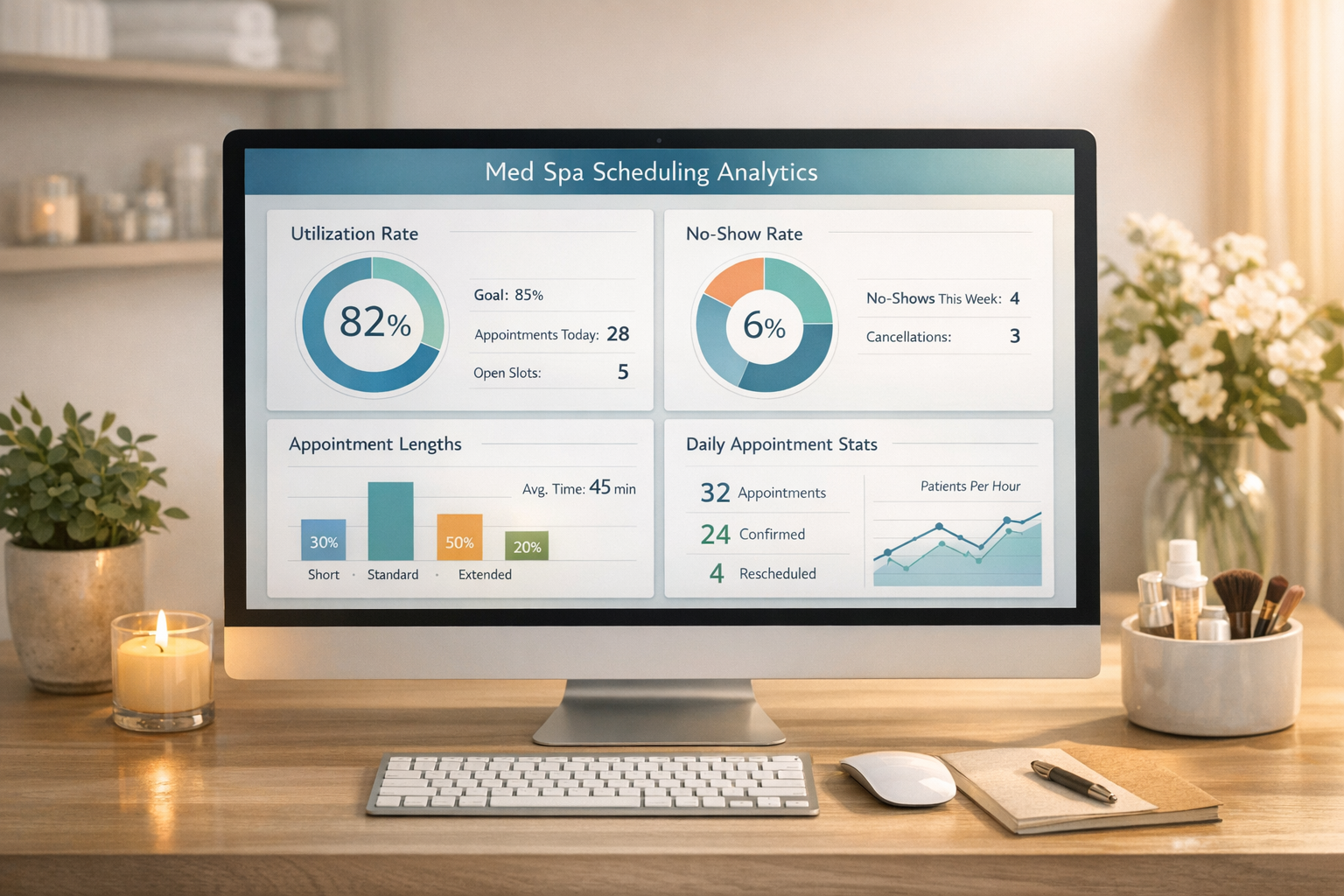

Scheduling metrics are critical for med spas to improve efficiency, maximize revenue, and deliver better patient experiences. Here are the top five metrics you need to track:
- Utilization Rate: Measures how effectively your available hours are booked. Aim for 90-95% to balance productivity and staff well-being.
- No-Show Rate: Tracks missed appointments. Industry standards range from 5-8%, with missed slots costing practices thousands monthly.
- Rebooking Percentage: Reflects how many patients book their next appointment before leaving. A target of 80% ensures steady revenue and patient retention.
- Average Appointment Length: Helps prevent scheduling delays by tracking the actual time treatments take, including buffers for complex procedures.
- Provider Capacity Utilization: Evaluates staff efficiency by comparing treatment hours to available hours, ensuring balanced workloads and identifying growth opportunities.
Using tools like Prospyr, med spas can automate tracking, reduce no-shows, and optimize scheduling for better financial and operational outcomes.
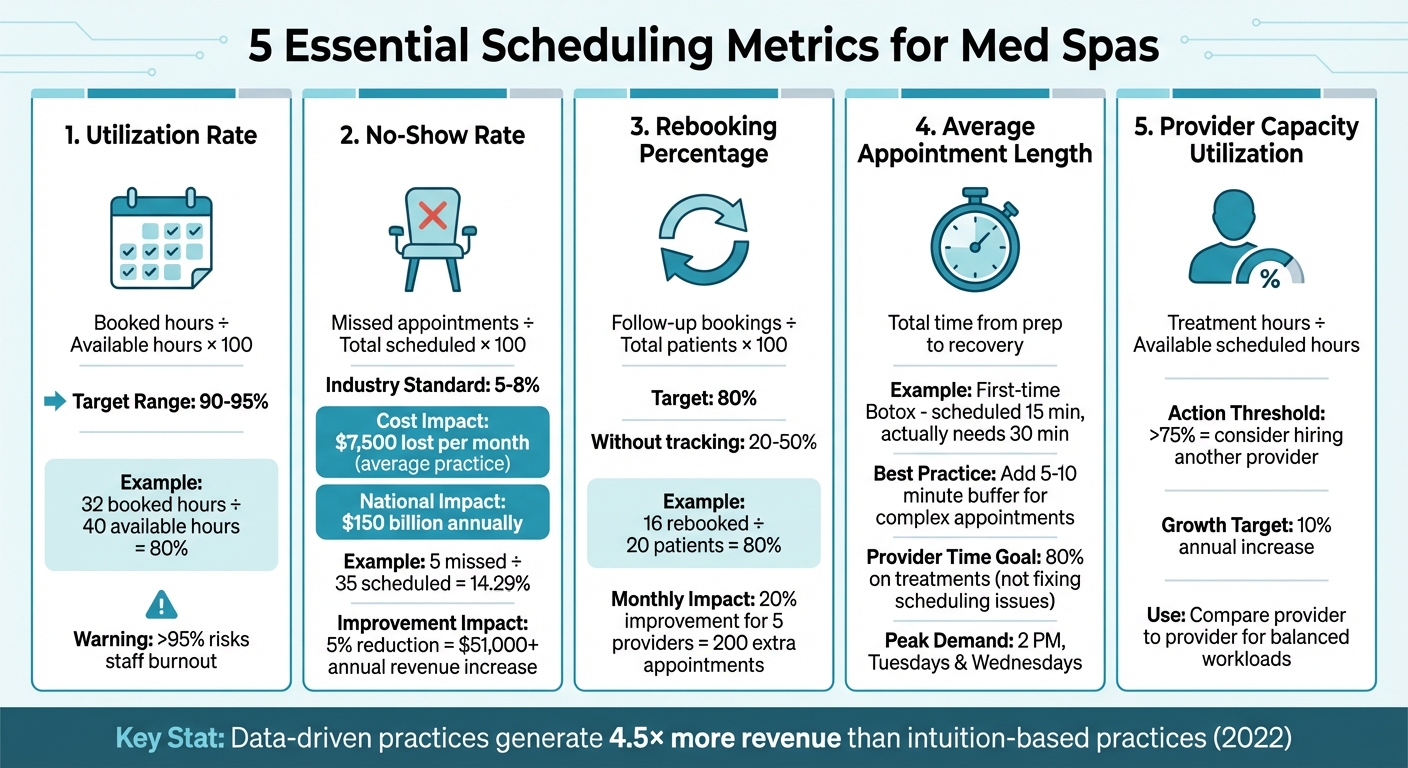
5 Essential Scheduling Metrics for Med Spas with Target Benchmarks
1. Utilization Rate
The utilization rate is a key metric that shows how effectively your schedule is being used to generate revenue while delivering patient care. It’s calculated by dividing the number of booked hours by the total available hours, then multiplying by 100. For instance, if you book 32 out of 40 available hours, your utilization rate is 80%.
A high utilization rate helps you make the most of fixed costs like rent, staff salaries, and equipment. On the flip side, empty appointment slots translate directly into lost revenue.
"Your utilisation rate measures how efficiently your appointment schedule is being used. In practical terms, it's the percentage of available slots that are actually booked." – Niamh Kelleher, Phorest
For most med spas, a healthy utilization rate falls between 90% and 95%. However, exceeding 95% can stretch your team too thin, risking burnout and reducing availability for patients. On the other hand, a lower utilization rate might signal a need to refine your marketing strategy or rethink your med spa service offerings.
To improve your utilization rate, consider using scheduling software to reduce downtime between appointments and pinpoint slower periods. Once you’ve identified these gaps, you can run targeted promotions or offer package deals to fill them. Additionally, tracking no-show rates and addressing patient punctuality can help you fine-tune your schedule even further.
2. No-Show Rate
The no-show rate measures the percentage of patients who miss their appointments without canceling or notifying in advance. To calculate it, divide the number of missed appointments by the total scheduled appointments, then multiply by 100. For instance, if 5 out of 35 appointments are missed, the no-show rate is 14.29%.
This metric is more than just a number - it directly impacts your bottom line. Missed appointments cost healthcare providers an average of $7,500 per month. Across the United States, the financial burden from no-shows adds up to over $150 billion annually. Clearly, this is not just an operational hassle; it’s a significant financial challenge.
"Patient 'no-shows' are one of the most frustrating challenges and a long-standing issue an aesthetic practice faces. It is a drain on both time and efficiency, not to mention its effect on your financial bottom line." – Terri Ross, Practice Management Expert, APX Platform
For context, the industry standard for no-show rates typically ranges between 5% and 8%. However, in some healthcare specialties, the average can climb as high as 18% to 20%. Even a small improvement can make a big difference - cutting your no-show rate by just 5% could increase your annual revenue by over $51,000.
To address this issue, consider these strategies:
- Automated reminders: Send SMS and email reminders 48 hours before and again on the morning of the appointment.
- Deposits for premium slots: Request a $25 to $50 deposit for high-demand times, giving patients a financial incentive to attend.
- Digital waitlists: Use a waitlist system to fill last-minute cancellations quickly, converting potential losses into revenue.
Cut your no-shows in half
The same reminder, deposit, and waitlist-backfill playbook Prospyr practices use — free, no calculator required.
3. Rebooking Percentage
Rebooking percentage tracks how many patients schedule their next appointment before leaving the clinic. To calculate it, divide the number of patients who book a follow-up by the total number of patients seen during a specific period, then multiply by 100. For instance, if 16 out of 20 patients book their next visit before leaving, your rebooking rate is 80%.
This metric plays a crucial role in maintaining both financial stability and a steady schedule. Med spas that focus on rebooking often aim for an 80% rate, while those that don't actively monitor this number usually fall between 20% and 50%. Consider this: increasing a single provider’s rebooking rate from 50% to 70% for 10 weekly patients translates to 40 additional bookings each month. Multiply that across a team of five providers, and a 20% improvement could result in 200 extra appointments monthly.
"The number one key to filling up your schedule is this very simple thing: tracking your rebooking rates and having a rebooking culture in your Med Spa." – Katlin Cauffman, Industry Expert, Diamond Accelerator
Retaining current patients is far more cost-effective than constantly pursuing new ones. High rebooking rates not only stabilize revenue but also allow for more precise financial planning. Plus, they ensure patients stick to consistent treatment plans, leading to better aesthetic outcomes. Successful med spas often see new patients schedule 3 to 4 visits within their first 6 to 12 months.
Even small changes can make a big difference. Sharing rebooking data with your team alone can boost rates by 10% to 20%. Train your front desk staff to use assertive language like, "Based on your treatment plan, let’s schedule your next appointment for 4 to 6 weeks from now", instead of the more passive "Call us when you're ready". For treatments such as anti-wrinkle injections, always schedule a two-week follow-up before the patient leaves. This ensures satisfaction and reduces the likelihood of losing clients. Applying these strategies not only improves your rebooking rate but also sets the stage for more sophisticated scheduling tools and analytics.
4. Average Appointment Length
Average appointment length tracks the total time spent from preparation to recovery during a treatment session . Without monitoring this, your schedule can quickly become chaotic, leaving patients frustrated and staff overwhelmed. Keeping a close eye on this metric helps prevent delays from snowballing throughout the day.
Take this example: a first-time Botox patient might be scheduled for just 15 minutes, but they actually need 30 minutes to include consultation and treatment. If appointments regularly run over their allotted time, it creates a ripple effect, delaying subsequent bookings and potentially lowering the quality of care.
"Always add a buffer of five to ten minutes between complex appointments." – PatientNow Team
By accurately tracking how long treatments take, you can better allocate resources like rooms, equipment, and staff. This ensures providers spend most of their time - ideally about 80% - on treatments rather than scrambling to fix scheduling issues. Since peak demand often occurs around 2 PM and on Tuesdays and Wednesdays, having precise data becomes even more critical during these high-traffic times.
You might also want to create specific categories for each treatment type with pre-determined durations. For instance, grouping all injectable treatments in the morning could cut down on room turnover time and help providers maintain a steady workflow. Regularly analyzing appointment data can highlight which treatments or providers tend to exceed their scheduled time, allowing you to make necessary adjustments. This kind of tracking not only improves scheduling but also enables tools like Prospyr to streamline your operations.
sbb-itb-02f5876
5. Provider Capacity Utilization
Provider capacity utilization is a key metric that evaluates how efficiently your staff is being utilized. It's calculated by dividing the total treatment hours by the total available scheduled hours.
Building on appointment length metrics, this measure gives another angle on scheduling efficiency. It’s particularly useful for making smarter staffing decisions. For example, if a provider consistently operates at over 75% utilization, it might be time to bring in another provider. On the flip side, low utilization could signal the need to tweak marketing efforts or adjust provider schedules.
"With this ratio, you can identify scheduling and staffing opportunities for growth and efficiency. In addition, you can compare provider to provider." – Skytale Group
This metric also allows you to balance workloads more effectively across your team. By spreading appointments evenly, you can avoid overburdening some providers while others remain underutilized. Additionally, comparing providers can highlight top performers or reveal those who might benefit from additional training.
To encourage growth, aim for a 10% annual increase in calendar utilization. Strategies to achieve this include reducing unbookable gaps between appointments, running promotions for under-booked time slots, and training front-desk staff on online scheduling and strategic booking techniques. When managed well, capacity utilization boosts profitability while keeping your team’s workload manageable.
How Prospyr Tracks These Metrics
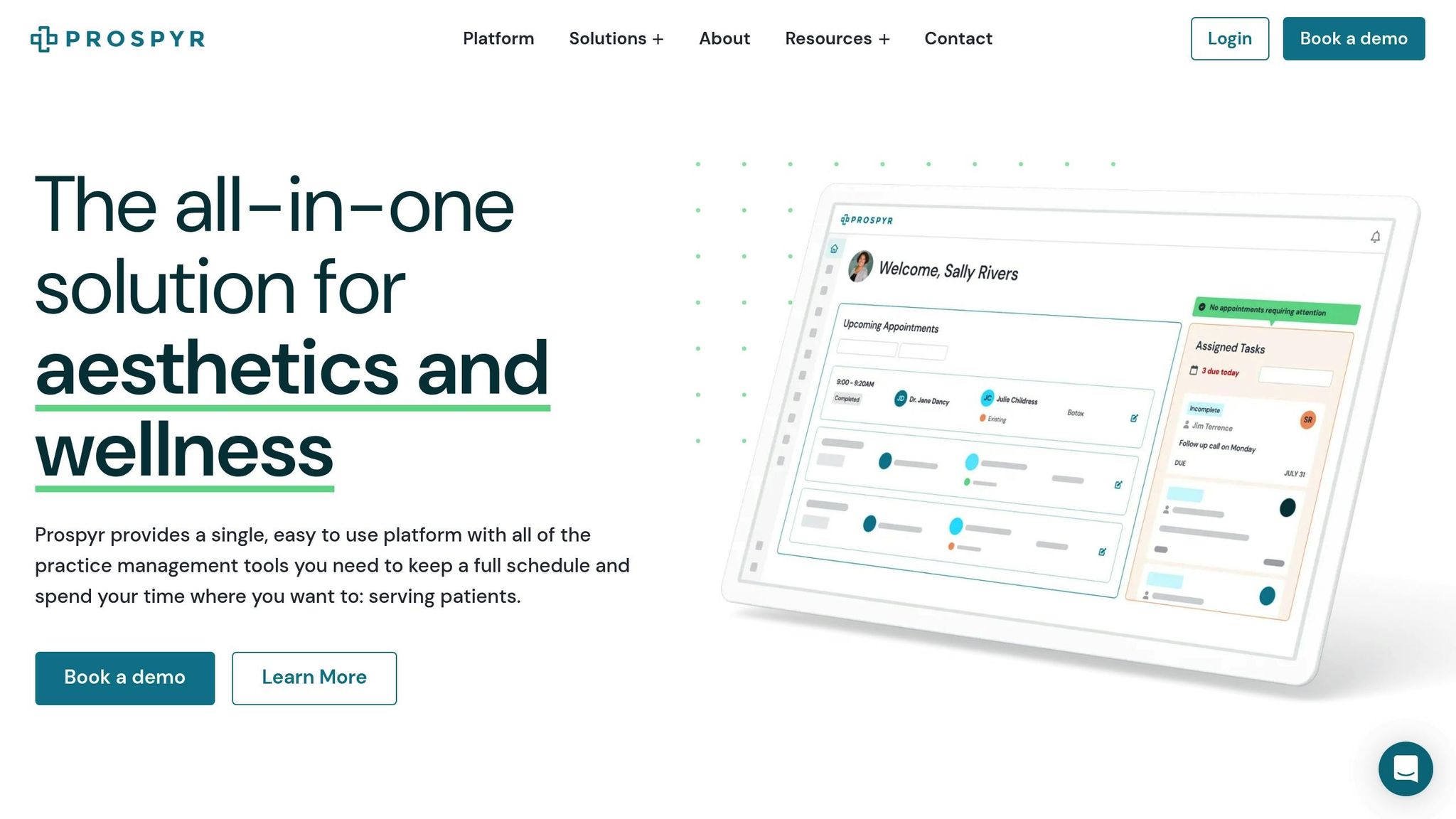
Prospyr's practice analytics takes raw scheduling data and turns it into clear, actionable reports - all without requiring manual input. By integrating with its advanced scheduling and digital intake tools, the platform provides real-time insights into financial and operational performance. Instead of juggling data from multiple systems, med spa owners get a clear view of where bottlenecks happen and which providers are working at full capacity.
The smart scheduling system plays a key role by automatically managing the availability of rooms and medical devices, which directly impacts provider capacity metrics. On top of that, automated reminders and confirmations help reduce no-show rates without adding extra work for front-desk staff. These tools go beyond just tracking metrics - they actively help improve them. And the results speak for themselves.
Take New Life Cosmetic Surgery, for example. In 2025, this practice, led by Dr. Daniel Lee, saw a 40% increase in appointments booked and a 50% revenue boost after switching to Prospyr's integrated platform. Dr. Lee shared:
"We've seen a 50% increase in revenue and a 40% increase in appointments booked since switching away from using several different point solutions to running our practice on Prospyr".
Another standout success story is SOM Aesthetics. Led by CEO Dr. Saami Khalifian, the clinic reached over $100,000 in monthly revenue within just two months of opening in 2025. They even hit their launch sales targets 21 times faster than expected, pulling in $40,000 in revenue within their first two days. Dr. Khalifian explained:
"Prospyr has helped us launch SOM Aesthetics exceptionally fast. Their powerful platform and helpful support have enabled us to exceed our financial targets while delivering an unmatched experience for our patients".
These examples show how Prospyr's integrated tools can make a real difference in achieving operational success.
On top of these success stories, Prospyr’s unified CRM and EMR system ties scheduling data directly to patient care strategies. This means you can track revenue per provider, assess marketing effectiveness, and analyze rebooking trends - all from a single, HIPAA-compliant dashboard. It’s a powerful way to make informed decisions about staffing, promotions, and overall operations.
Conclusion
By keeping track of these five key metrics, you can protect your revenue while enhancing patient care. Prospyr's smart tracking tools provide the foundation for actionable insights, enabling you to make informed decisions. Monitoring utilization rates, no-show percentages, rebooking trends, appointment lengths, and provider capacity creates a clear path for smarter planning. These metrics highlight bottlenecks, reveal which services deliver the most value, and indicate when it’s time to adjust schedules or expand your team.
In 2022, data-driven practices generated 4.5 times more revenue than those relying solely on intuition. Without clear metrics, scheduling errors and no-shows can eat away at profitability.
Prospyr simplifies the process by combining scheduling, analytics, and patient management into one HIPAA-compliant platform. With real-time insights, automated reminders to reduce no-shows, smart scheduling to prevent resource conflicts, and integrated analytics, Prospyr helps align your operations with your financial goals. This streamlined approach not only improves efficiency but also supports steady growth for your practice.
Prospyr turns raw data into measurable progress. Dr. Ahmed El Houssieny of Bank MediSpa shared:
"I aim for 10%, 20%, 30% growth. Access to clear data shows me exactly how I'm doing".
With the right tools, ambitious growth targets become achievable milestones.
When your scheduling metrics are clear and actionable, your team can focus on what truly matters - delivering exceptional patient care while building a more profitable and efficient practice.
FAQs
What are the best ways for med spas to reduce no-show appointments?
Med spas can tackle the issue of no-shows by focusing on clear communication, offering incentives, and utilizing automated reminders. A great starting point is to establish a firm cancellation policy that clearly explains any fees for missed appointments. Make sure to communicate this policy during the booking process and in confirmation messages. Adding a deposit or prepayment requirement (like $25–$50) when scheduling can also help by creating a sense of responsibility for the appointment.
Automated SMS and email reminders sent 48 and 24 hours before an appointment are excellent tools to prevent forgetfulness. Additionally, implementing a waitlist system allows you to fill last-minute cancellations efficiently. Sharing helpful pre-visit details - such as preparation instructions or parking information - can also improve the experience and encourage attendance. To reward reliability, consider offering loyalty incentives for patients who consistently show up for their appointments.
Platforms like Prospyr streamline these efforts by providing tools for automated reminders, customizable no-show policies, deposit handling, and real-time waitlist management. With these features, med spas can cut no-show rates by up to 85% and recover thousands of dollars in revenue each month.
What are the best ways to boost rebooking rates at a med spa?
Boosting rebooking rates takes more than luck - it requires treating it as a priority and weaving it into every patient interaction. When med spas focus on tracking and improving rebooking, they often enjoy busier schedules and less dependence on costly efforts to attract new patients.
Here are some strategies that work:
- Ask patients to book their next visit before they leave: The checkout process is the perfect opportunity. Patients are already thinking about their care, making it easier to lock in their next appointment.
- Use automated reminders: Sending SMS or email reminders with direct scheduling links keeps your services fresh in patients' minds and makes booking hassle-free.
- Provide incentives for early rebooking: Perks like loyalty points, discounts, or exclusive offers can motivate patients to secure their next visit sooner.
Prospyr’s all-in-one platform makes rebooking easier than ever. With tools like real-time tracking, automated reminders, and AI-driven booking assistants that suggest follow-up dates, med spas can streamline operations, boost patient satisfaction, and stay HIPAA-compliant - all in one place.
Why is it important for med spas to track the average length of appointments?
Keeping tabs on the average length of appointments allows med spas to organize their schedules more efficiently. When staff know how long specific services usually take, they can plan time slots more precisely, cutting down on delays and keeping the day running smoothly.
This approach doesn’t just streamline operations - it also makes a big difference for clients. Starting and ending appointments on time creates a seamless, professional experience, leaving patients with a positive impression of their visit.