Ultimate Guide to Patient Retention for Aesthetic Clinics
Strategies to boost patient loyalty in aesthetic clinics: personalization, automated follow-ups, loyalty programs, CRM, and retention metrics.

Keeping patients loyal costs far less than attracting new leads - $35–$85 compared to $247–$1,435. Beyond cost savings, loyal patients are more likely to commit to long-term treatment plans, refer others, and provide steady revenue even during slower seasons. Clinics with retention rates over 70% thrive by focusing on personalized care, consistent communication, and creating positive experiences.
Key Takeaways:
- Personalization: Use CRM tools to track preferences, tailor treatment plans, and engage patients meaningfully.
- Follow-Ups: Automated reminders and post-treatment check-ins boost rebooking rates to 70–80%.
- Memorable Experiences: Small touches like heated blankets or handwritten notes enhance patient satisfaction.
- Loyalty Programs: Reward consistent visits with perks like discounts, exclusive events, or memberships.
- Technology: Platforms like Prospyr streamline retention efforts with automated communication and data insights.
Investing in retention builds trust and turns patients into advocates, helping clinics grow profitably while reducing marketing costs. Read on for actionable strategies to strengthen patient loyalty.
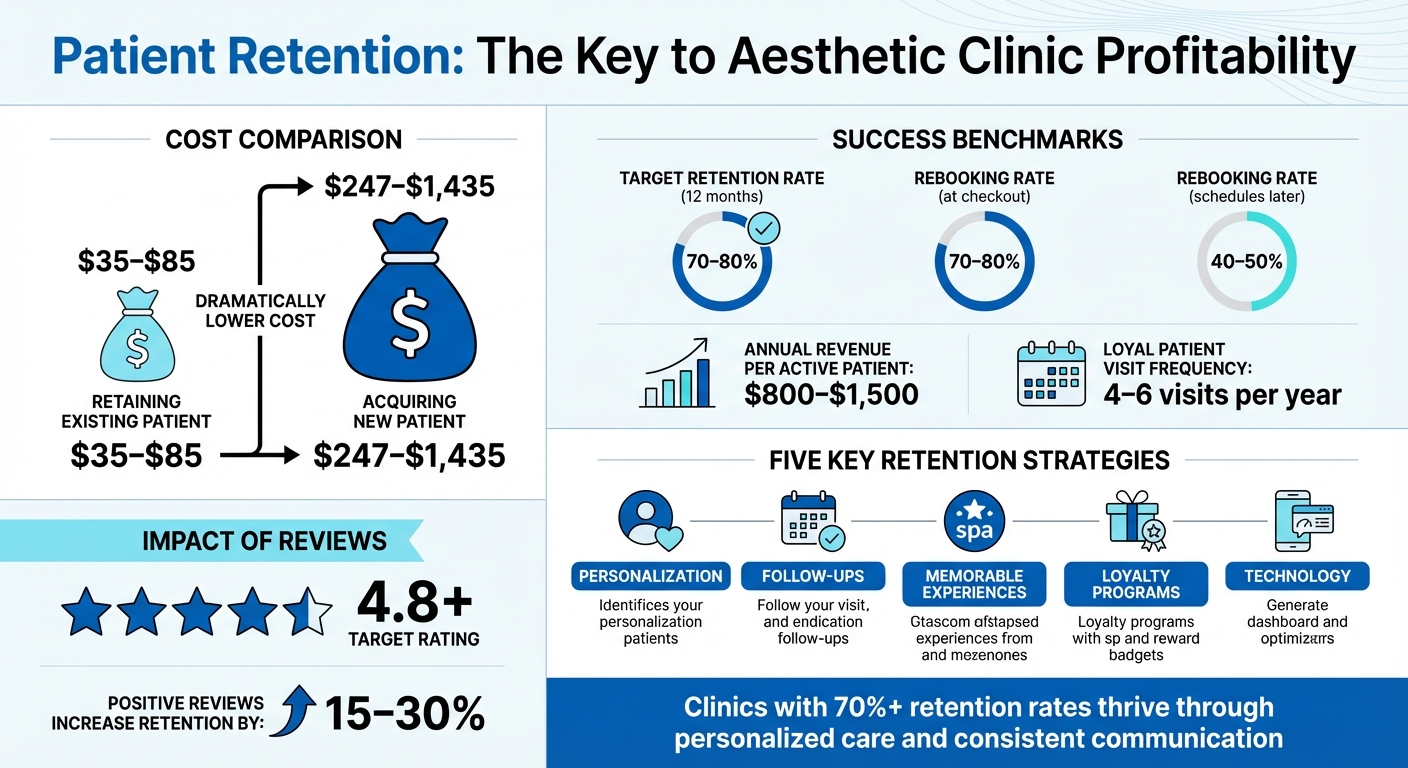
Patient Retention vs Acquisition Costs and Key Performance Metrics for Aesthetic Clinics
Strategies to Improve Patient Retention
Turning a single appointment into a long-term relationship requires more than just good service. Clinics that excel in patient retention focus on personalization, consistent communication, and creating memorable experiences. These elements build trust and loyalty, transforming one-time visitors into lifelong advocates.
Personalized Patient Engagement
Personalization goes beyond remembering a patient’s name. It’s about knowing the little details - like their favorite drink, preferred staff member, past treatment outcomes, or even personal milestones. Clinics that use CRM systems to track this information create a sense of continuity and recognition that patients genuinely appreciate.
Dynamic treatment plans are another key aspect. Instead of offering isolated services, successful clinics adopt a "360-degree approach", tailoring treatment plans to evolve with the patient’s lifestyle, past results, and long-term aesthetic goals. This collaborative model strengthens the bond between patient and provider.
Some clinics are even leveraging social media to personalize engagement. For example, Vitahl Medical Aesthetics identified "local influencers", such as a well-known "mom-celeb", who shared their treatment experiences online in exchange for office credit. This strategy drove authentic referrals and built trust through relatable content. Another Chicago clinic saw impressive results by gifting customized VIP cards (worth $30–$50) to existing patients, who then shared them with friends. In just three months, this effort generated over $30,000 in revenue.
"Underpromising and overdelivering make for ecstatic clients who will rave about your clinic and services to others, and will be fiercely loyal to your brand." - Stacy Caprio, Med Spa Marketing Expert, Accelerated Growth Marketing
By focusing on these personalized touches, clinics set the stage for strong, lasting patient loyalty.
Communication and Follow-Ups
Staying connected with patients between visits is a simple but powerful way to keep your clinic top-of-mind. Automated reminders - sent one week, 48 hours, and 24 hours before appointments - help reduce no-shows and prevent scheduling confusion. For treatments like Botox, sending maintenance reminders every 12–16 weeks ensures patients stay on track.
Post-treatment follow-ups are equally important. A quick text or call within 24–48 hours after a procedure to check on recovery and offer aftercare advice shows patients you genuinely care about their well-being. This kind of outreach builds trust and strengthens the relationship.
The numbers back this up: clinics that rebook patients at checkout see rebooking rates of 70–80%, compared to just 40–50% when patients are left to schedule appointments on their own later. Encouraging patients to book their next visit before leaving the clinic is a simple yet effective way to boost retention.
"Communication is the most significant factor in strong cosmetic care provider relationships with patients and clients." - Natalie Burg, Digital Writer, CareCredit
Clear, consistent communication keeps patients engaged and ensures they feel valued.
Creating Better Patient Experiences
Sometimes, the smallest gestures make the biggest impact. Offering heated blankets, aromatherapy, snacks, or handwritten notes can elevate the overall experience without adding significant costs. These thoughtful touches show patients that you care about their comfort, not just the procedure.
Equally important is the quality of your staff. Hiring team members who genuinely enjoy building relationships ensures every interaction feels warm and consistent. Kimberly Rath, Co-founder and Chairman of Talent Plus, emphasizes this point:
"When you select individuals who are hardwired to care about your customers, you get amazing results. The outcome? Referrals. People who are raving fans will convey that to others."
Even the waiting room can be a tool for engagement. Instead of outdated magazines, some clinics now offer tablets loaded with educational content and before-and-after galleries. This keeps patients interested and may even spark curiosity about additional treatments. Transparency is another key factor - clearly listing pricing, insurance details, and financing options (like CareCredit) on your website helps build trust before patients even step through the door.
Clinics that combine realistic expectations with exceptional results create patients who are not only satisfied but excited to share their experience with others. This leads to enthusiastic word-of-mouth referrals.
sbb-itb-02f5876
Reading about the problem? See how Prospyr solves it in one platform.
Book a DemoUsing Technology to Improve Retention
Modern technology is reshaping how businesses turn one-time visits into loyal, long-term relationships. Practice management platforms take over repetitive tasks, allowing teams to focus on what matters most - providing outstanding care. By tracking patient preferences, automating follow-ups, and offering actionable insights, these systems naturally enhance retention while creating a seamless experience. It's all about merging personalized care with efficient operations.
CRM and EMR Systems
Integrated CRM (Customer Relationship Management) and EMR (Electronic Medical Record) systems are at the heart of personalized patient care. These platforms store a wealth of information, from treatment histories to product preferences and past concerns. According to a 2024 study, leveraging this evolving data fosters stronger, long-lasting relationships between patients and providers.
Take Prospyr (https://prospyrmed.com), for example. This platform combines HIPAA-compliant CRM and EMR systems with AI-driven tools like automated note-taking, digital intake forms, and scheduling. Such features allow teams to instantly access patient data, making it easier to recommend tailored products or design multi-phase treatment plans - like a facial rejuvenation protocol - without overwhelming staff.
Automated Communication and Marketing
Staying connected between appointments is essential, but sending reminders and follow-ups manually isn't practical. Automated email and SMS campaigns solve this by handling tasks like rebooking reminders, appointment confirmations, post-treatment check-ins, and personalized offers. For example, a quick follow-up text after a treatment reassures patients and builds trust - a key ingredient for strong relationships.
Prospyr takes this further by automating seasonal promotions and win-back messages for inactive clients. With tools like AI-powered conversation agents and SMS communication, the platform ensures timely, relevant nudges that drive bookings without adding extra work for your team. For ongoing treatments like a "90-Day Skin Renewal Journey", automated progress updates after every 2–3 sessions keep patients engaged and reduce decision fatigue, improving completion rates. These consistent touchpoints help reinforce the personalized care experience.
Analytics and Data-Driven Decisions
Data analytics go beyond communication, offering insights that help refine strategies and improve outcomes. It's simple - if you don't measure it, you can't improve it. Analytics can reveal trends like seasonal drop-offs, underperforming segments, or treatments with the highest lifetime value. Clinics aiming for optimal benchmarks should target retention rates of 70–80% within 12 months and an annual average revenue of $800–$1,500 per active patient.
Prospyr's analytics dashboard tracks key metrics in real time, including retention rates, package completion rates, average revenue per patient, and reactivation rates for dormant clients. For example, if data shows higher drop-offs in single-session bookings compared to series packages, you can pivot to promoting outcome-focused packages. Features like visual progress tracking with before-and-after photos also help patients see their results, encouraging them to complete their treatment plans.
Building Loyalty Programs
After enhancing retention with technology-driven insights, clinics can take things further by introducing well-thought-out loyalty programs. These programs turn occasional visitors into loyal, long-term patients by rewarding consistent engagement and fostering a sense of connection. For instance, patients can earn points for treatments that translate into discounts, or achieve tiered statuses - like silver, gold, or platinum - that unlock perks such as priority booking or early access to new services. When patients feel valued, they’re more likely to return.
The secret lies in offering rewards that truly resonate with your patients. Generic discounts might dilute the perceived value of your services, so consider offering perks like exclusive workshops, members-only events, or priority scheduling. Make sure to promote the program across all touchpoints - waiting room signage, consultation discussions, checkout conversations, and digital campaigns - to encourage sign-ups and keep it top of mind. This strategy naturally complements the personalized engagement and tech-driven approaches discussed earlier.
Memberships and Subscriptions
Membership programs provide consistent revenue while building stronger patient relationships. Instead of one-off appointments, subscriptions bundle services - such as monthly facials at discounted rates or an "Age-Reversal Series" that combines injectables and skin-tightening treatments - offered on a prepaid or monthly payment basis.
These models are effective because they focus on long-term results instead of single visits. For example, a "90-Day Skin Renewal Journey" package might combine peels, microneedling, and therapy sessions, offering a clear treatment plan with progress checkpoints. This structured approach often leads to higher completion rates compared to standalone treatments. Tools like Prospyr's membership management software (https://prospyrmed.com) simplify the process by automating renewals, managing schedules, and tracking patient progress. Their integration with CRM/EMR systems ensures HIPAA-compliant reminders and personalized communication, all while reducing administrative workload.
Referral and Reward Programs
Referral programs turn your happy patients into brand ambassadors by rewarding them for bringing in new clients. Incentives like discounts on future treatments, free add-ons, or priority booking can encourage patients to spread the word. This taps into word-of-mouth marketing, one of the most trusted ways to attract new patients.
You can take it up a notch with tiered reward programs that assign status levels based on spending. As patients progress from silver to gold to platinum, they unlock bigger perks - such as larger discounts, exclusive promotions, or early access to cutting-edge treatments. Use data to track referral conversions and package completion rates to fine-tune your program. If certain tiers drive more engagement, adjust the structure to maximize participation. The goal is to create a system where patients feel motivated to stay engaged and climb the loyalty ladder.
Measuring and Improving Patient Retention
After setting up loyalty programs and engagement strategies, the next step is to evaluate their effectiveness. Without tracking, it’s impossible to know which tactics are keeping patients coming back - or pushing them away. Focus on metrics that shed light on long-term patient behavior, rather than just tallying up appointments.
Tracking Retention Metrics
Start by calculating your repeat visit rate - the percentage of patients who return for additional visits. This is determined by dividing repeat patients by total patients and multiplying by 100. A well-performing clinic typically retains 70–80% of its patients each year. Another important metric is appointment frequency, which measures how often patients visit annually. Loyal patients usually schedule 4–6 visits per year.
Next, dive into lifetime patient value (LTV). To find this, multiply the average revenue per visit by the average number of visits per year, then multiply that by the average patient lifespan (usually 3–5 years for aesthetic practices). For example, if a patient spends $500 per visit, comes in 4 times a year, and stays with the clinic for 4 years, their LTV is $8,000. Well-managed clinics report annual revenue of $1,000–$1,900 per active patient, while high-retention practices often achieve LTVs exceeding $10,000 by leveraging CRM tools to engage their most valuable patients.
Tools like Prospyr (https://prospyrmed.com) simplify tracking by offering integrated dashboards. These platforms provide actionable insights, helping you fine-tune communication and personalize care to build stronger patient relationships.
Gathering Patient Feedback
Metrics tell you what’s happening, but patient feedback uncovers the why. To capture this, send post-treatment surveys within 24–48 hours via SMS or email. Keep the surveys short - about five questions - and tailor them to the treatment. For instance, ask about satisfaction and side effects for injectable treatments or progress after a series of facials. This approach often achieves response rates around 80%, offering valuable insights to enhance care.
Don’t stop at surveys. Conversations during checkout or follow-ups can also reveal areas for improvement. For example, if multiple patients mention long wait times or unclear aftercare instructions, you’ll know where to focus your efforts. Clear and effective communication plays a key role in fostering strong patient-provider relationships.
Review and Reputation Management
Positive reviews don’t just build trust - they can increase retention by 15–30% by serving as social proof. Use tools like Prospyr’s review management system to automate requests for reviews after treatments. Aim to respond to all feedback within 24 hours. Address negative comments publicly but professionally, and reinforce positive experiences to show you value patient opinions.
Clinics with ratings of 4.8 stars or higher tend to retain more patients, as these scores signal consistent, high-quality care. Sentiment analysis can help identify patterns in reviews. For instance, if many patients praise a specific provider or raise concerns about a particular service, you can adjust accordingly. Showcasing testimonials on your website and social media not only strengthens trust but also creates a cycle where satisfied patients attract new ones, boosting loyalty over time.
Conclusion
Patient retention goes beyond simply keeping your appointment book full - it's the backbone of sustainable growth for aesthetic clinics. Kamila Jurdziak, Sales Team Leader at InDesk, explains it well:
"Patient retention in your aesthetic business and success are pretty tangled up one to another. It's very difficult, almost impossible, to run a successful, top-notch clinic with just a group of new patients coming in".
The financial side makes this even clearer: acquiring a new patient can cost anywhere from $247 to $1,435, while retaining an existing patient costs just $35 to $85. That’s a huge difference.
The strategies outlined here - personalized engagement, timely follow-ups, loyalty programs, and data-driven decision-making - are all about creating meaningful, lasting relationships with your patients. By focusing on the entire patient journey, from their first interaction with your clinic to their post-treatment care, you’re building trust. And trust leads to more than just repeat visits - it turns patients into loyal advocates who refer others, helping you cut acquisition costs even further.
Leveraging technology can make these strategies even more effective. Tools like Prospyr (https://prospyrmed.com) simplify retention efforts by combining CRM/EMR integration, automated communication, review management, and practice analytics into one HIPAA-compliant platform. This means less time juggling systems and more time delivering personalized care. With automation, you can send follow-ups, track retention metrics in real-time, and tailor your approach to each patient - all at scale.
Start small. Try one or two tactics, like automated post-visit messages or a loyalty program, and measure the impact. Over the next three to six months, keep an eye on metrics like repeat visit rates and lifetime patient value. Even small improvements in retention can have a big impact on your clinic’s profitability. Focus on steady progress, and you’ll create a practice where patients feel appreciated, understood, and excited to return. Regularly reviewing your retention data will help you fine-tune your approach and ensure long-term growth.
FAQs
What retention rate should my clinic aim for?
Aesthetic clinics should aim for a client retention rate between 60% and 70% to stay profitable and encourage growth. The best-performing clinics often exceed this, achieving retention rates of 70% or more, which plays a major role in ensuring sustained success over time.
Which follow-ups increase rebooking the most?
Follow-ups that encourage rebooking work best when they are consistent, use multiple channels, and feel personalized. Reaching out 4-5 times through a mix of text, email, phone calls, or even mail can greatly improve reactivation rates.
Crafting messages that align with a patient’s preferences and treatment history makes a big difference. Tools like Prospyr can help by automating reminders and customizing communication. This ensures every follow-up counts, building loyalty and motivating patients to schedule their next appointment.
What retention metrics should I track monthly?
Keeping an eye on specific metrics each month is essential for understanding and improving patient retention. Here are the key ones to focus on:
- Customer Retention Rate (CRR): Aim for a target range of 60–70%.
- Repeat Visit Rate (RVR): For top-performing clinics, this should be 70% or higher.
- Client Satisfaction Score (CSS): This measures how happy your patients are overall.
- Treatment Satisfaction Rate: Tracks how satisfied patients are with the care they receive.
- Missed Appointment Rate: Keep this under 10% to maintain efficiency.
- Membership Retention Rate: If your clinic offers memberships, monitor how many clients stick around.
By regularly tracking these numbers, you can identify areas to improve patient experiences, build loyalty, and ultimately increase revenue.
Related articles
Article
The Importance of Follow-Up: Techniques for Reaching Out to Inactive Patients
By Prospyr Team
Article
Membership Management FAQs for Aesthetic Clinics
By Prospyr Team
Article
How Client Retention Impacts Revenue in Aesthetic Clinics
By Prospyr Team
Article
5 Follow-Up Templates for Aesthetic Clinics
By Prospyr Team