Best Practices for Supplier Risk Management
Practical guidance for aesthetics clinics to vet suppliers, enforce contracts, monitor performance, diversify vendors, and plan contingencies.


Managing supplier risks is essential for aesthetics and wellness clinics to maintain patient care, regulatory compliance, and profitability. Here's what you need to know:
- Common Risks: Late shipments, poor storage conditions, and expired inventory can disrupt operations and harm your reputation.
- Key Practices: Vet suppliers thoroughly, maintain up-to-date records, and implement strong contracts with clear expectations.
- Continuous Monitoring: Track supplier performance with metrics like delivery rates and quality standards.
- Diversify Suppliers: Avoid over-reliance on a single vendor by building a network of reliable alternatives.
- Use Technology: Platforms like Prospyr streamline inventory tracking, compliance, and supplier communication.
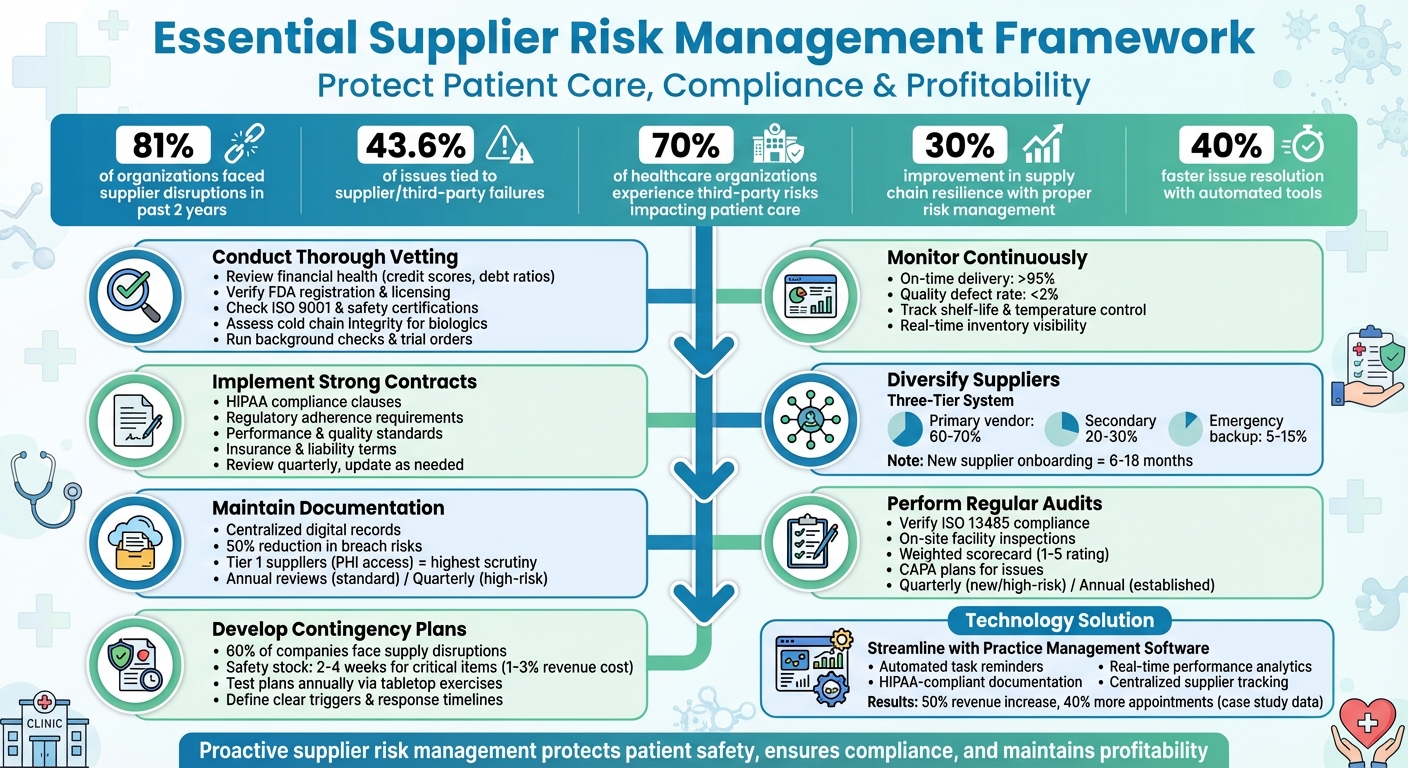
Essential Supplier Risk Management Framework for Aesthetics Clinics
Conduct Thorough Supplier Vetting and Due Diligence
Before entering into a partnership with any supplier, it’s crucial to know exactly who you’re dealing with. This isn’t about being overly cautious - it’s about safeguarding your clinic from disruptions that could jeopardize patient care or regulatory compliance. In fact, over 81% of organizations have faced supplier disruptions in the past two years, with nearly 43.6% of these issues directly tied to supplier or third-party failures. For aesthetics clinics managing prescription-only medicines and medical devices, the risks are even greater.
Supplier vetting isn’t a one-and-done process - it’s an ongoing effort. As Aaron Li, a sourcing quality expert, explains:
A robust assessment requires defining clear risk criteria and continuously evaluating supplier risk to protect your organization's stability and brand integrity.
The idea is to catch potential problems - like financial instability, compliance lapses, or operational shortcomings - before they spiral into bigger challenges. Here’s a step-by-step guide to ensure thorough supplier evaluation.
Establish Supplier Evaluation Criteria
Start by identifying what’s most important for your clinic’s operations. Financial health should be at the top of the list. Use third-party reports, such as those from Dun & Bradstreet, to review credit scores, payment histories, and debt-to-equity ratios. Pay close attention to red flags like an interest coverage ratio below 1.5 or a current ratio under 1.0, as these suggest the supplier may struggle to meet its obligations. For high-value agreements, request audited financial statements under a non-disclosure agreement (NDA).
Compliance with regulations is another non-negotiable factor. Verify that suppliers of prescription medicines are registered as licensed wholesalers with the FDA. For medical devices, check for appropriate safety certifications. When dealing with biologics like botulinum toxin, confirm that the supplier maintains cold chain integrity by using temperature-controlled storage and providing data logger reports. Additionally, suppliers of prescription products should have a licensed pharmacist overseeing operations.
Operational performance is just as important. Assess the supplier’s production capacity, on-time delivery history, and adherence to quality standards like ISO 9001 and FDA regulations. If the supplier handles sensitive patient data or integrates with your systems, review their cybersecurity measures, including incident response plans and compliance with standards such as SOC 2. Ethical sourcing and environmental practices are also worth considering, as a supplier’s reputation can directly impact your clinic’s image.
Perform Background Checks on Suppliers
Once you’ve set your evaluation criteria, dive deeper into the supplier’s history to confirm they meet your standards. Request key documents such as certificates of conformity, batch testing records, and proof of authenticity from the original manufacturer. Check industry-specific organizations like BABTAC or BCAM, and browse reviews on platforms like Trustpilot or Google Reviews to identify any concerns about product authenticity or shipping reliability.
Be cautious of suppliers who lack proper documentation, use inconsistent packaging, or offer prices that seem too good to be true - these are often warning signs of counterfeit or expired products. As noted by MWS Staff Writer at MedWholesaleSupplies:
Supplier vetting is your first risk-reduction step. In botox wholesale purchasing, the goal is not just 'lowest hassle.' The goal is a supplier that can support your audit trail.
Consider placing small trial orders to test the supplier’s packaging, delivery speed, and product quality before committing to larger orders. quarantine new shipments using inventory management tools until you’ve verified lot numbers and storage conditions. Use a risk scoring matrix to weigh different criteria - such as giving more importance to FDA compliance over minor delivery delays - so you can objectively evaluate each vendor. Finally, make supplier re-assessments a regular practice, whether annually or in response to significant events like mergers or regional instability, to ensure your supplier list stays reliable and current.
sbb-itb-02f5876
Implement Strong Contract Management Practices
Strong contract management is the backbone of a well-run clinic. Even with thorough supplier vetting, the most common problems often arise from smaller operational issues - like delayed shipments, incomplete paperwork, or inconsistent procedures. As Peyman Khosravani aptly states:
"Aesthetic practices don't protect margin by working harder. They protect it by reducing preventable chaos." – Peyman Khosravani
The key is to establish clear expectations, ensuring both your clinic and suppliers stay aligned and accountable. Defining roles and responsibilities upfront prevents unnecessary confusion and operational hiccups. Plus, it keeps your practice prepared for audits, eliminating the last-minute scramble when regulators show up. This approach works hand-in-hand with supplier vetting to create a more robust risk management framework.
Key Contract Clauses for Risk Reduction
To minimize risks, certain clauses are essential in your contracts:
- Data Privacy and HIPAA Compliance: For suppliers handling patient information, include clauses that mandate compliance with HIPAA and any relevant state privacy laws. If you use EMR systems or patient management software, including integrated eRX solutions, ensure contracts specify cybersecurity measures, including breach notification protocols aligned with the Healthcare Cybersecurity Act.
- Regulatory and Licensing Adherence: Contracts should require suppliers to follow state-specific licensing rules, especially for medical spas. For example, medical waste disposal vendors must comply with proper disposal standards to avoid legal and environmental headaches. Staffing contracts should also include provisions for documenting employee safety training to meet compliance needs.
- Performance and Quality Standards: Define expectations for product handling, storage, delivery timelines, and batch tracking. Include penalty clauses for non-compliance, such as late deliveries or defective products, and implement a "quarantine" policy for supplies that don’t meet your standards.
- Insurance and Liability: Tailor insurance and liability requirements to fit your clinic’s needs. For example, contracts with marketing or photography vendors should include clauses about the legal use of patient before-and-after photos to protect privacy and meet compliance standards.
Review and Update Contracts Regularly
Drafting strong contracts is just the beginning - regular reviews are critical to keeping them relevant. Conduct quarterly vendor reviews to evaluate KPIs and compliance, addressing any issues before they escalate.
Use contract renewal periods as opportunities to renegotiate terms, update performance metrics, or reassess the supplier relationship altogether. Implement tracking tools and alerts to avoid contracts lapsing or auto-renewing under conditions that no longer serve your clinic’s interests.
Event-driven updates are equally important. For instance, if new billing codes for aesthetic practices are introduced in 2025, contracts with billing and coding vendors should be reviewed and updated. Similarly, changes in state licensing requirements should trigger revisions to ensure continued compliance.
Finally, store all contracts in a centralized, searchable repository. This ensures that your team can easily access the most current terms and obligations. Paul Bagley, Director of Commercial Contracting at Acosta, emphasizes the importance of this:
"When you save a contract to a drive, it's still essentially lost. The only person who knows it's there is the one who put it there." – Paul Bagley
Centralized storage not only improves accessibility but also eliminates the risk of critical contracts being overlooked or forgotten.
Monitor Supply Chain Continuously for Disruptions
Even the best contracts won’t protect your clinic from supply chain hiccups without consistent, real-time monitoring. Delays in delivery, quality problems, or compliance issues can lead to canceled appointments, damage to your reputation, and lost revenue. Keeping a close eye on your supply chain complements the vetting process and contract strategies you’ve already put in place. Clinics that catch potential issues early - like delayed filler shipments - can act quickly, avoiding the chaos that comes with scrambling for a solution.
Set Up Key Performance Indicators (KPIs)
To ensure smooth operations, establish clear KPIs. Aim for on-time delivery rates above 95% and keep quality defect rates below 2%. Track metrics like order accuracy and response times. For aesthetics clinics, focus on specialized KPIs, such as shelf-life compliance, temperature control for neurotoxins, and packaging integrity. Assign priority levels based on the importance of the item - like injectables and sterilization equipment - and set firm thresholds. For example, flag issues like expiring certifications or signs of financial trouble in suppliers.
Use Technology for Supply Chain Visibility
Manually tracking supply chains is time-consuming and prone to errors. Automated systems can solve this by collecting data, generating risk scores, and sending alerts when something needs attention. A centralized platform replaces scattered spreadsheets and emails, ensuring every detail is accounted for.
Tools like Prospyr simplify supplier communication and documentation tracking. Their inventory management features provide real-time updates on stock levels, automatically syncing with invoices as products are sold. This not only prevents unexpected shortages but also helps identify usage trends for smarter ordering. Plus, it keeps audit-ready records to meet regulatory requirements - all without adding extra administrative work. By integrating technology into your supply chain process, you can minimize risks and keep your clinic running smoothly.
Reading about the problem? See how Prospyr solves it in one platform.
Book a DemoDiversify Suppliers to Reduce Dependency Risks
Strengthening supplier relationships is important, but relying too heavily on a single supplier can be risky. If just one supplier accounts for more than 50% of a critical input, issues like delays, financial struggles, or shipping problems could disrupt clinic operations. Diversifying suppliers helps reduce this dependency and provides a backup plan. Plus, it gives you more leverage during negotiations since suppliers know they’re competing for your business.
"A diversified supplier base is a procurement team's most powerful weapon and the tool that is most frequently undervalued and underinvested in." - Precoro
Having multiple suppliers also drives performance improvements. For example, during the Red Sea shipping disruptions in late 2023, clinics with diversified suppliers adapted more quickly, while others faced delays and shortages. These disruptions even contributed to a 0.7 percentage point increase in global core goods inflation in early 2024. This highlights the financial risks of supply chain instability and the importance of a well-thought-out diversification strategy.
Create a Supplier Diversification Plan
Start by reviewing your current suppliers and pinpointing potential risks. Pay special attention to essential items like neurotoxins, fillers, and specialized medical devices. For these high-priority products, consider a three-tier system: allocate 60–70% of your supply to a primary vendor, 20–30% to a secondary one, and 5–15% to an emergency backup.
Keep in mind that onboarding a new supplier for critical components can take anywhere from 6 to 18 months. Use formal processes like Requests for Information (RFI) and Requests for Quotation (RFQ) to evaluate potential vendors. Look for key factors like financial stability, production capacity, and certifications such as FDA or ISO standards. It’s also smart to choose suppliers from different regions to avoid over-reliance on areas prone to natural disasters or political instability. Once your supplier network is in place, keep communication open and active to ensure they’re ready to step in during disruptions.
Balance Supplier Relationships
Diversification doesn’t mean cutting ties with your main supplier - it’s about creating a network of reliable options. By allocating 10–20% of your volume to secondary suppliers, you keep those relationships strong and ensure they’re prepared to scale up when needed.
Stay alert for red flags like extended lead times, sudden price hikes, or missed audits. If these issues arise, gradually shift some volume to your backup suppliers instead of making abrupt changes. Regularly review your supplier portfolio - ideally once a year - to ensure it aligns with current market conditions and performance levels. Often, just the possibility of redistributing orders can encourage better pricing and cooperation from all your suppliers.
Maintain Complete Documentation and Compliance Tracking
Accurate record-keeping is your best defense when it comes to regulatory audits and compliance reviews. For aesthetics and wellness clinics, this means keeping detailed records of supplier contracts, certifications, performance metrics, audit results, and compliance documentation - especially supply chain records. According to industry reports, centralized documentation improves visibility and can reduce breach risks by 50%. On the flip side, poor record-keeping has been linked to 60% of supply chain issues in healthcare.
A smart move is to create a centralized system that organizes suppliers based on their level of criticality. For example, suppliers with access to protected health information (PHI) should be classified as Tier 1 and require the most rigorous documentation. Lower-risk vendors, however, can be tracked with less intensity. This system ensures that all key areas are covered, including financial stability, regulatory compliance, delivery reliability, business continuity plans, cybersecurity measures, and performance scorecards.
Building on earlier strategies around continuous monitoring, automating evidence collection can significantly reduce manual errors and streamline record-keeping. Tools like digital questionnaires with automated reminders for certification renewals or alerts for expiring documents (such as ISO certifications or state-specific licenses) can help you avoid compliance gaps.
Regular reviews of documentation are equally important. For standard suppliers, an annual review might suffice, but for high-risk vendors - especially those dealing with critical products or PHI - quarterly audits are recommended. These reviews ensure that records are complete, up-to-date, and accurate. They also help maintain an audit trail of supplier interactions, including any performance issues, corrective actions, or remediation steps. This approach ties seamlessly into broader risk management strategies by ensuring every supplier relationship is well-documented and traceable.
Finally, establish clear retention protocols that meet regulatory requirements. This includes maintaining organized records such as patient consent forms (for before-and-after photos), HIPAA compliance checklists, medical waste disposal logs, and employee safety training documentation. Having these records readily accessible not only simplifies audits but also reinforces your clinic’s commitment to staying compliant.
Perform Regular Supplier Audits and Performance Reviews
Supplier audits are a key way to ensure trust and verify that suppliers meet the standards you’ve agreed upon. For aesthetics and wellness clinics, this means confirming suppliers comply with industry regulations like ISO 13485 for medical devices, maintain proper quality management systems, and follow safety protocols that safeguard your patients and practice.
Start by preparing for the audit. This includes reviewing the supplier’s financial health, past performance, and setting clear evaluation criteria. On-site visits are essential to evaluate operations, equipment maintenance, and cleanliness - especially for suppliers handling medical-grade products or injectables. During these visits, speaking with management and staff helps confirm whether they follow documented SOPs and have adequate training in place.
"Supplier audits... provide you with a view into how the processes of the supplier work." - Kristina Zvonar Brkic, Consultant and Auditor
After conducting the audit, compile a detailed report that categorizes any issues by severity. Require the supplier to submit a Corrective and Preventive Action (CAPA) plan and schedule follow-up audits to ensure improvements are implemented. For newer or higher-risk suppliers, consider auditing them quarterly. Established suppliers with a reliable track record can be reviewed annually.
In addition to audits, performance reviews are essential. Use tools like a weighted scorecard (assigning ratings from 1 to 5 across key criteria) to track metrics such as on-time delivery, defect rates, and responsiveness. Sharing these results with suppliers promotes collaboration and transparency. Industry data shows that 72% of businesses faced at least one major supply chain disruption in 2025, often due to underperforming or overly relied-upon suppliers. Regular quarterly business reviews allow you to catch any dips in quality or delivery performance early, preventing minor issues from escalating into major problems. Together, these practices strengthen your overall supplier risk management strategy.
Develop Contingency Planning and Risk Response Strategies
Even with the best preparation, disruptions happen. In fact, a 2021 survey revealed that 60% of companies encountered supply chain disruptions. For aesthetics and wellness clinics, these interruptions can lead to canceled appointments, unhappy patients, and financial losses. That's why having a solid contingency plan is crucial - it ensures your clinic can keep running smoothly when the unexpected strikes. This type of planning builds on your existing monitoring efforts, equipping you to handle surprises effectively.
Create a Supplier Risk Response Framework
A supplier risk response framework is a structured approach to pinpoint, evaluate, and address potential issues before they escalate into crises. Start by identifying risks unique to your clinic. For example, think about supplier insolvency, quality concerns with injectables, or delays in receiving medical-grade equipment. Use due diligence reports and past performance data to uncover these vulnerabilities early on.
After identifying risks, assess both their likelihood and potential impact. A risk matrix can help you prioritize where to focus your resources. For instance, a supplier providing Botox or dermal fillers would be considered high-risk because any disruption would directly impact your core services. When scoring risks, give extra weight to factors like quality, safety, and data privacy - especially for medical suppliers and software vendors managing patient information.
Once risks are ranked, develop strategies to mitigate them. This could include keeping a list of backup suppliers for high-demand items, maintaining inventory buffers for essential products, or securing alternative sources for medical devices. For aesthetics clinics, holding an additional 2–4 weeks of safety stock for critical items like injectables and specialized skincare can help prevent service interruptions. And the cost? Typically just 1–3% of your revenue.
"Effective supplier risk management involves more than identifying potential risks; it requires proactive assessment, ongoing monitoring, and comprehensive contingency planning." - akirolabs
Keep a risk register to document each risk, assign responsibility, track mitigation efforts, and schedule reviews. Store all supplier contracts, audit reports, and risk questionnaires in a centralized digital platform. This way, your team can quickly access essential information when disruptions occur.
Test and Update Contingency Plans Regularly
Drafting a contingency plan is only the beginning. Without testing, it’s just a theory. Test your plans at least once a year using tabletop exercises - these are 2–4 hour sessions where your team walks through a disruption scenario step by step. These simulations can reveal gaps, such as outdated contact lists, unrealistic timelines, or unclear communication protocols. Testing ensures your plan is practical and ready to use.
"A plan that has never been tested is a theory, not a plan." - ECOSIRE Research and Development Team
How often you update your plans should depend on the risk level of your suppliers. For high-risk or critical suppliers - like those providing medical injectables - review plans quarterly or semi-annually. Medium-risk suppliers should be reassessed annually, while low-risk ones can be reviewed every two years. Additionally, update plans immediately if there are major changes, such as a supplier being acquired, relocating, facing financial trouble, or if new regulations impact your industry.
Include clear triggers in your plans so your team knows exactly when to act. For example, triggers could include a supplier filing for bankruptcy, failing to deliver a confirmed order, or a natural disaster disrupting production. Outline specific actions to take within the first 24 hours, days 2–7, and weeks 2–4. Also, define recovery criteria so you’ll know when the situation is fully resolved. This level of detail turns a theoretical plan into a practical tool your team can rely on during a crisis.
Use Practice Management Software for Risk Oversight
Managing supply chain risks manually can be a daunting task for busy aesthetics and wellness clinics. Even with thorough supplier evaluations and audits, human error is a constant risk. This is where a structured technology platform steps in, offering complete visibility into potential supply chain issues. Such tools help pinpoint critical suppliers and prioritize risks based on their potential impact on daily operations.
Prospyr streamlines this process with its task management system, which organizes daily responsibilities like supplier audits, performance reviews, and compliance checks. Automated reminders ensure that periodic evaluations - whether for high-risk or lower-risk suppliers - are never missed. This shift from a reactive to a proactive approach integrates smoothly into broader risk management practices, reducing the chances of critical oversights.
The platform also extends its capabilities to performance analytics, providing real-time insights that help clinics make smarter supplier decisions. These analytics deliver immediate visibility into financials, operational metrics, and inventory trends, making it easier to track costs and highlight top-performing suppliers. Additionally, Prospyr's HIPAA-compliant documentation management system centralizes supplier contracts, background checks, and audit records, ensuring everything is securely stored and easily accessible for regulatory audits.
Take, for example, New Life Cosmetic Surgery, led by Dr. Daniel Lee. By transitioning from multiple software solutions to Prospyr's all-in-one platform, the clinic experienced a 50% boost in revenue and a 40% increase in appointments booked.
SOM Aesthetics, founded by Dr. Saami Khalifian, also benefited from Prospyr’s integrated tools. The practice generated $40,000 in revenue within just two days of launching and surpassed $100,000 in monthly revenue in under two months.
We've seen a 50% increase in revenue and a 40% increase in appointments since switching to Prospyr.
- Dr. Daniel Lee, Founder, New Life Cosmetic Surgery
Conclusion
Managing supplier risk is about much more than just avoiding supply chain hiccups. It's about protecting your clinic’s reputation, ensuring patient safety, and maintaining steady revenue. By using a structured approach - like thorough vetting, strong contract management, regular monitoring, diversification, detailed documentation, audits, and contingency planning - you can build a supply chain that keeps patient care running smoothly.
Did you know that nearly 70% of healthcare organizations experience third-party risks that directly impact patient care? This highlights why supplier risk management is so critical for aesthetics clinics. Shortages of essential products can bring operations to a standstill. On the flip side, clinics that focus on supplier risk management have reported up to a 30% improvement in their supply chain's resilience. That’s a clear win for both the clinic and its patients.
Technology can make all the difference here. Manually tracking suppliers, contracts, and compliance is not only time-consuming but also prone to errors. Clinics using automated risk management tools resolve issues 40% faster. That means better patient care and fewer operational headaches - something every busy practice can appreciate when juggling multiple vendors, strict regulations, and high patient expectations.
Platforms like Prospyr are designed to tackle these challenges head-on. From inventory tracking and supplier documentation to compliance monitoring and performance analytics, Prospyr centralizes it all. Its task management feature automates reminders for audits and reviews, while HIPAA-compliant documentation ensures contracts and certifications are always inspection-ready. Plus, real-time analytics help pinpoint top-performing suppliers and flag potential issues before they disrupt patient care.
FAQs
How do I tell if a supplier is too risky?
Keeping your clinic running smoothly means relying on dependable suppliers. But how do you identify those that might pose a risk? Look out for red flags such as:
- Weak cybersecurity measures that could expose your clinic to data breaches.
- Financial instability, which might lead to sudden service interruptions.
- Regulatory noncompliance, putting your clinic at legal or reputational risk.
- Inconsistent documentation that raises questions about transparency and reliability.
- Delayed shipments that disrupt your operations and patient care.
- Unclear storage conditions, especially for sensitive or regulated materials.
- Frequent stock shortages that could leave you scrambling for alternatives.
These issues can snowball into major disruptions, harm your reputation, or even compromise patient safety. To stay ahead, it’s crucial to regularly assess and monitor your suppliers, ensuring they consistently meet your clinic's standards for compliance, safety, and reliability.
What should I include in a supplier contract to protect my clinic?
To safeguard your clinic, it's essential to include key clauses in your agreements. Focus on compliance, quality standards, confidentiality, liability, and corrective actions. Specify adherence to regulatory requirements, ensure product quality, and emphasize the protection of sensitive patient information.
Address liability concerns, such as defective products and recall procedures, and require supplier certifications. If patient data is involved, ensure compliance with HIPAA regulations to maintain confidentiality. These measures work together to shield your clinic from potential legal, safety, and quality-related risks.
How much safety stock should an aesthetics clinic keep?
The right safety stock for an aesthetics clinic hinges on a few key factors: how much demand fluctuates, the time it takes to replenish inventory, and the clinic's target for service reliability. Using dependable methods to calculate safety stock is crucial to strike a balance between keeping costs in check and meeting patient needs. Typically, clinics aim to maintain enough stock to avoid running out about 95% of the time. This ensures operations run smoothly and patients receive consistent, high-quality care.