FAQs on OSHA Compliance for Med Spas
Key OSHA requirements for med spas: BBP plans, hazard communication, laser safety, staff training, recordkeeping, and avoiding fines.
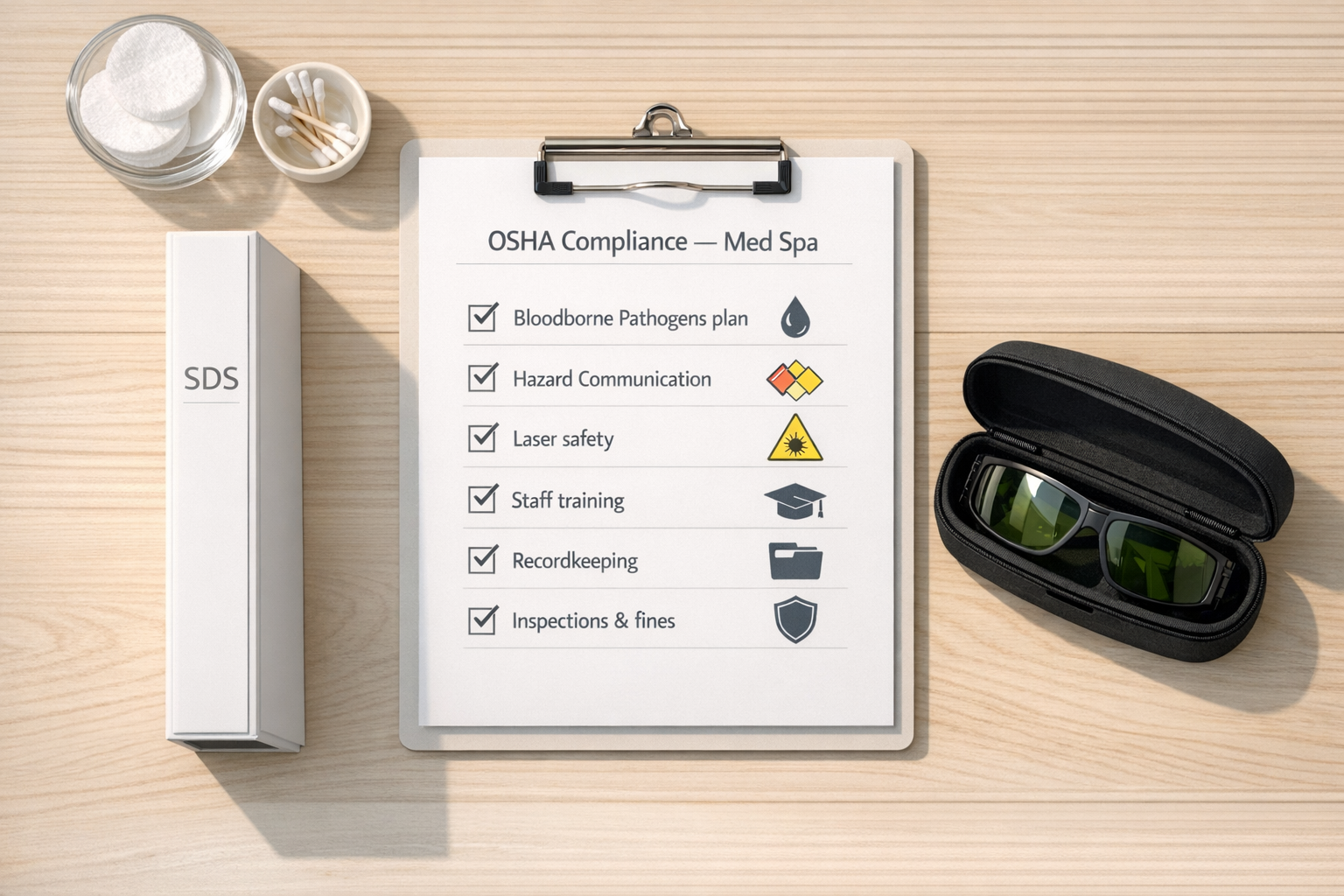

OSHA compliance is mandatory for med spas and focuses on employee safety. Med spas must adhere to strict standards for bloodborne pathogens, chemical handling, and laser safety. Non-compliance can lead to fines ranging from $1,500 to $75,000. Key requirements include:
- Bloodborne Pathogens Standard: Written Exposure Control Plan, annual training, sharps injury logs, and proper PPE usage.
- Hazard Communication Standard: Safety Data Sheets (SDS) for chemicals, EPA-approved disinfectants, and sterilization protocols.
- Laser Safety: Protective equipment, proper signage, and ventilation for laser procedures.
To avoid violations, med spas need detailed safety plans, regular staff training, and accurate recordkeeping. Tools like Prospyr can streamline compliance by automating reminders, tracking training, and storing required documentation in one place.
Why it matters: OSHA audits are becoming stricter, with new infection control regulations introduced in 2025. Compliance ensures a safe workplace, reduces risks, and protects businesses from financial penalties.
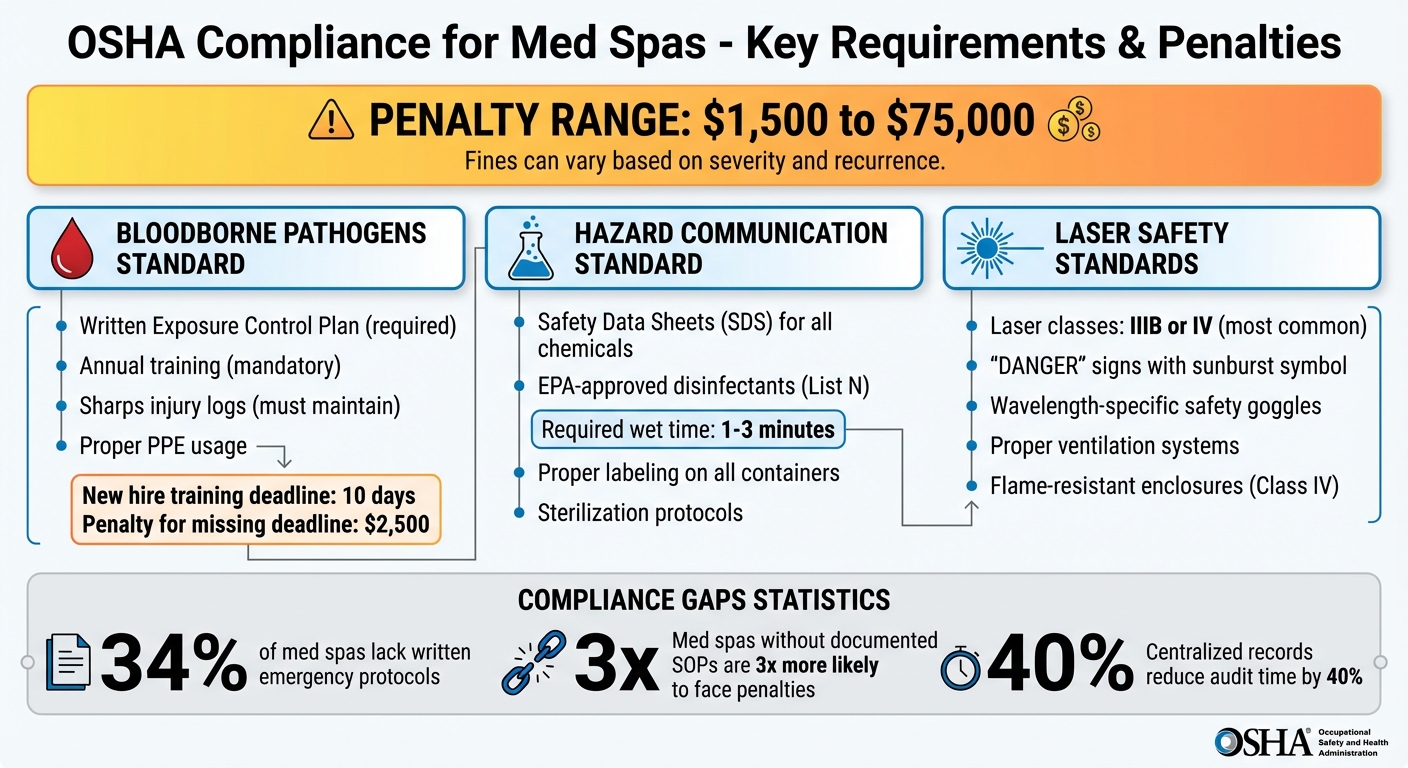
OSHA Compliance Requirements and Penalties for Med Spas
OSHA Standards That Apply to Med Spas
Med spas must follow several OSHA regulations to ensure employee safety and maintain compliance. These standards address daily operations and help protect staff from potential hazards while avoiding penalties for violations.
Bloodborne Pathogens Standard
The Bloodborne Pathogens (BBP) Standard is a key regulation for med spas. Every facility is required to have a written Exposure Control Plan (ECP) that details how to manage risks associated with blood or other potentially infectious materials. This plan must be reviewed and updated annually.
New employees must complete PPE training within their first 10 days and repeat it annually. This training covers the correct use of gloves, masks, and eye protection. Employers are responsible for providing properly fitted PPE and ensuring it is used correctly.
Med spas are also required to maintain a sharps injury log to document all needlestick incidents. Sharps containers must meet specific safety criteria: they need to be puncture-resistant, leak-proof, and clearly marked with biohazard symbols. These containers should be placed near treatment areas to reduce the risk of injuries during transport. Additionally, facilities must have a post-exposure protocol in place, which includes medical follow-up for employees exposed to bloodborne pathogens.
Hazard Communication Standard
The Hazard Communication Standard focuses on the safe handling of chemicals, lasers, and injectables. Med spas must ensure that all chemical containers are properly labeled and maintain Safety Data Sheets (SDS) for every hazardous material on-site.
Daily cleaning procedures require the use of EPA-approved disinfectants on all treatment surfaces. It's essential to confirm that cleaning products are listed on the EPA's "List N", which identifies disinfectants effective against pathogens. Additionally, the required "wet time" - typically 1–3 minutes - must be observed by keeping surfaces visibly wet for the duration specified on the product label. For reusable medical instruments, sterilization protocols must go beyond basic cleaning to ensure thorough decontamination.
Laser Safety Standards
OSHA enforces laser safety through the General Duty Clause, referencing the ANSI Z 136.1 "Safe Use of Lasers" as the primary guideline. Most lasers used in med spas are classified as Class IIIB or Class IV, which require strict safety measures.
Equipment must include protective housings, safety interlocks, and key controls to prevent unauthorized use. For Class IIIB and Class IV lasers, "DANGER" signs with the laser sunburst symbol are mandatory, and employers must provide wavelength-specific safety goggles with the proper Optical Density rating - generic laser glasses are not acceptable.
Laser beams can focus to intensities far greater than direct sunlight, posing a risk of instant, permanent blindness. Treatment rooms must have proper ventilation to capture "laser plume", the harmful fumes generated during procedures. For Class IV lasers, enclosures should be made from flame-resistant materials to minimize fire risks. These safety protocols are critical for protecting staff from serious injuries and ensuring safe operation of advanced equipment.
sbb-itb-02f5876
Reading about the problem? See how Prospyr solves it in one platform.
Book a DemoSafety Plans and Staff Training
Creating an OSHA-Compliant Safety Plan
Every med spa must have a detailed, written safety plan tailored to the specific risks associated with aesthetic medicine. This plan should align with the facility's operations and the equipment being used.
At its core, the plan should include three essential programs: an Exposure Control Plan for managing bloodborne pathogens, a Hazard Communication Program for chemical safety, and a Laser Safety Plan for operating laser devices. Additionally, you'll need thorough Standard Operating Procedures (SOPs) that outline tasks like daily deep cleaning, sterilizing reusable instruments, and using EPA-approved disinfectants properly.
It's also crucial to establish clear incident reporting procedures and maintain OSHA Form 300 logs to document any workplace injuries. Without these written protocols and logs, your facility could face hefty fines.
Involve everyone - your medical director and all staff levels - in developing and reviewing the safety plan. This ensures it’s practical and actionable. Keep detailed records, such as meeting minutes, attendance sheets, and training certificates, to create a solid paper trail. These documents are your safety net during OSHA audits.
A well-crafted safety plan lays the groundwork for effective staff training on these compliance standards.
Training Staff on OSHA Standards
Once your safety plan is in place, the next step is thorough staff training to meet OSHA requirements.
New hires must complete Bloodborne Pathogen training within their first 10 days. Missing this deadline could cost your facility $2,500 in penalties. To stay compliant, all staff should also participate in annual refresher training to reinforce safety practices.
Training should cover key topics like bloodborne pathogens, hazard communication, laser safety, infection control, proper use of personal protective equipment (PPE), waste management, and incident reporting procedures. But don’t just hand out materials and call it a day - use quizzes and direct observation to confirm that employees understand and can apply their training.
"OSHA is not getting any gentler... Expect them to be really aggressive in infection control in all areas of medical care." - Steve Wilder, President, Sorensen, Wilder & Associates
Keep your training records - certificates of completion, meeting minutes, and attendance sheets - organized and easily accessible. OSHA audits can happen without warning, and you'll need to present these documents immediately. Finally, conduct quarterly safety reviews to address areas needing improvement and to update staff on any new equipment or procedures introduced to your practice.
Common OSHA Violations and How to Prevent Them
Most Common OSHA Violations in Med Spas
Failing to meet OSHA standards can lead to hefty fines and serious consequences. In med spas, the most frequent violations stem from missing written documentation, insufficient staff training, and poor recordkeeping.
One critical issue is the absence of a written Bloodborne Pathogens (BBP) Exposure Control Plan, which is required for all healthcare facilities. For example, in October 2018, a healthcare entity was fined $13,500 due to multiple violations, including the lack of a written BBP plan, inadequate training, incomplete logs, and insufficient medical follow-up.
"Sadly, many medical spas may not even be aware that OSHA standards apply to them. Medical spas are considered health care entities; therefore, they are subject to the health care requirements of OSHA."
– Steve Wilder, President, Sorensen, Wilder & Associates
Other common problems include improper disposal of sharps and personal protective equipment (PPE), failure to provide adequate PPE like masks and eye protection, and neglecting to use EPA-approved disinfectants on treatment surfaces. These recurring issues underline the need for regular internal reviews to maintain compliance.
Steps to Prevent Violations
Med spas can avoid common OSHA violations by taking a proactive approach. Start with regular internal audits of safety plans and standard operating procedures (SOPs). Annual reviews can help catch compliance gaps before they escalate. A 2023 survey found that 34% of med spas lacked written emergency protocols, and those without documented SOPs were three times more likely to face regulatory penalties.
Leverage technology to streamline compliance. Digital systems can track employee certifications for tasks like operating lasers or administering injectables. Automated reminders ensure new hires complete their Bloodborne Pathogen training within the required 10-day window. Keeping OSHA Form 300 logs in a digital format also simplifies access during audits.
Assign a compliance officer to oversee OSHA and HIPAA requirements. This person should manage risk assessments, maintain safety documentation, and ensure cleaning products meet EPA standards. They should also establish clear protocols for reporting incidents like needle sticks or adverse events. Engaging staff in selecting safety devices and documenting these discussions not only fulfills OSHA requirements but also keeps everyone informed about updated tools and procedures.
Using Prospyr for OSHA Compliance and Practice Management
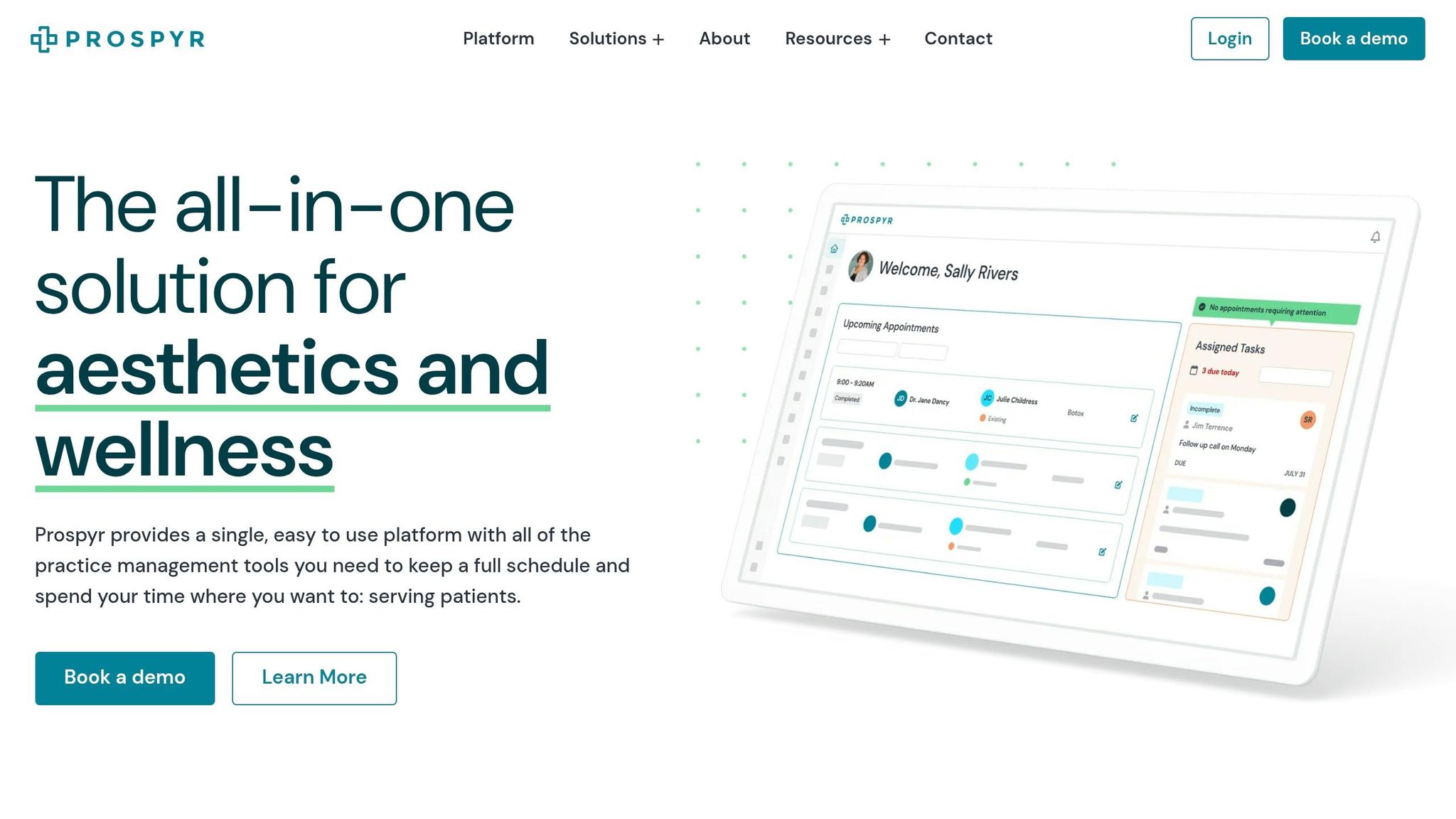
By combining OSHA documentation with everyday practice management tasks, Prospyr strengthens compliance efforts while improving workflow efficiency.
Prospyr Features That Support OSHA Compliance
Prospyr makes it easier to manage OSHA compliance alongside daily operations. Its CRM/EMR integration and AI-powered note creation tools provide secure digital storage for important OSHA documents like training records, exposure incident reports, and Safety Data Sheets. These documents are not only HIPAA-compliant but also readily available during audits, meeting OSHA's recordkeeping standards under 29 CFR 1910.1020. Med spa owners have reported audits being completed 40% faster thanks to centralized records, with one case study highlighting zero OSHA citations after implementing task-tracked training.
The platform’s task management system ensures all mandatory staff training is tracked and completed on time. Automated reminders help confirm that new hires finish required training promptly, and annual retraining is documented for employees who handle hazardous materials. Alerts notify teams of safety policy updates or urgent training needs, with delivery tracking that provides proof of compliance under the Hazard Communication Standard (29 CFR 1910.1200).
Prospyr also helps prevent safety violations through its AI booking and scheduling tools. For example, it enforces mandatory safety checks by blocking bookings if an operator hasn’t completed their laser safety training, ensuring compliance with OSHA laser safety guidelines. Meanwhile, the practice analytics dashboard tracks key metrics like training completion rates, incident reports, and compliance tasks, helping you spot potential issues - such as overdue hazard communication updates - before they become violations.
These features not only simplify compliance management but also integrate smoothly into everyday operations.
How Prospyr Simplifies Daily Operations
Prospyr goes beyond compliance, easing the administrative workload with automation. The platform’s AI transcription tool instantly logs post-treatment hazards, cutting manual data entry in half and reducing errors. Digital intake forms and an AI assistant collect staff vaccination and exposure data during onboarding, automatically filling out customizable exposure control plan templates stored in the EMR.
The Media Archive acts as a central hub for safety manuals, training videos, and OSHA-required documents, making essential materials easy to access. Paired with inventory management tools, it allows you to monitor Personal Protective Equipment supplies, track sharps containers, and manage biohazard bags - all within the same system that handles scheduling, payments, and client interactions.
Conclusion
Meeting OSHA compliance standards isn’t just a legal obligation for med spas - it’s a safeguard for your team and your business. With enforcement ramping up and financial penalties on the line, ensuring proper infection control measures has never been more critical.
The key requirements are straightforward but non-negotiable: written bloodborne pathogens and exposure control plans, hazard communication training for staff working with chemicals or lasers, accurate recordkeeping, and maintaining sufficient PPE supplies. As Christie Hutchinson, CEO of QCC Healthcare Consultants, puts it:
"In the event of an OSHA inspection, licensing board investigation or conflict with an employee, your documentation of education can protect you".
Tools like Prospyr simplify the process by centralizing documentation, automating training reminders, and tracking safety metrics. When OSHA compliance integrates into your daily operations - whether through digital intake forms or inventory management - you reduce administrative burdens and can focus more on delivering high-quality patient care. This streamlined approach not only keeps your spa compliant but also enhances the overall experience for your patients.
FAQs
Do I need a dedicated OSHA compliance officer for my med spa?
No, you don’t need to hire a dedicated OSHA compliance officer for your med spa. However, staying up to date with OSHA regulations and maintaining proper safety measures is essential. You can achieve this by investing in staff training and implementing compliance programs to ensure a safe workplace and meet regulatory requirements.
What should I do if OSHA shows up for an unannounced inspection?
If OSHA shows up for a surprise inspection, here’s how to handle it:
- Check their credentials: Confirm the inspector is officially authorized before proceeding.
- Be cooperative: Allow access to necessary areas and provide requested documents, like safety records or training logs.
- Document everything: Take detailed notes during the inspection, including any issues they point out.
- Act quickly on follow-ups: Address citations or corrective actions immediately to stay compliant.
Staying calm and organized can make a big difference during these inspections.
How long do I have to keep OSHA training and injury records?
OSHA mandates that injury records be maintained for at least 3 years. Additionally, training records, like logs, need to be kept for a minimum of 1 year, though requirements may differ depending on specific regulations. It's crucial to regularly check OSHA guidelines to ensure your med spa complies with all record-keeping rules.