Hand Hygiene and PPE: Accreditation Requirements
Essential hand hygiene and PPE rules for aesthetic clinics: written SOPs, staff training, audit-ready documentation, and penalties.
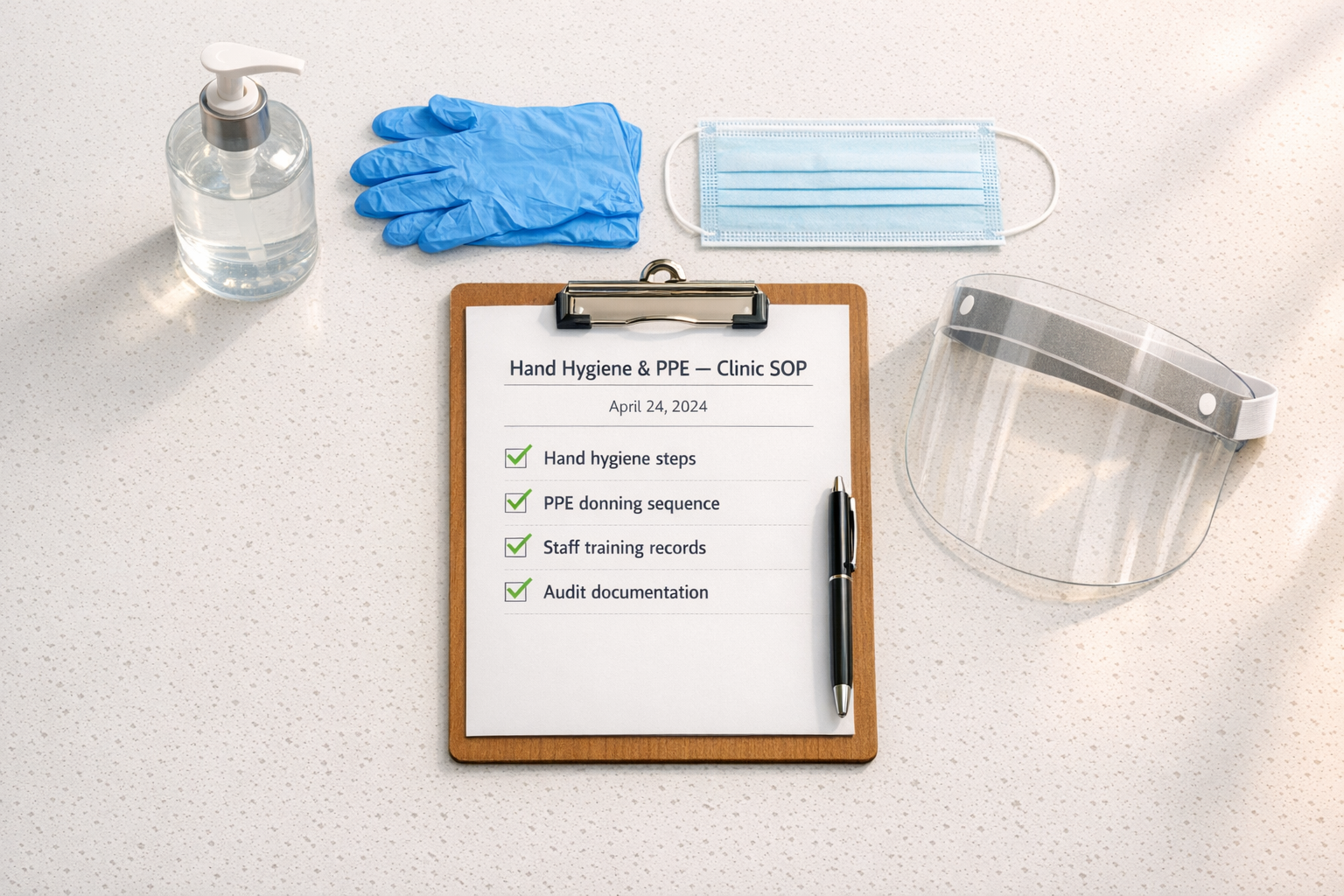

Infection control protocols like hand hygiene and personal protective equipment (PPE) are non-negotiable for aesthetic clinics. They protect patients, meet state laws, and ensure accreditation. Failure to comply risks fines, license suspensions, or legal action. For example, a January 2026 inspection in New York led to multiple license suspensions due to missing protocols.
Key Takeaways:
- Hand Hygiene: Staff must wash hands before and after patient interactions, even when using gloves. Clinics need a written Infection Control Plan, regular training, and annual reviews.
- PPE: Proper use of masks, gloves, and gowns is mandatory. Training on PPE use and disposal, plus documentation, is critical.
- Compliance Risks: Missing records or inconsistent practices can lead to penalties ranging from $1,000 to $5,000 per violation daily.
Tools like Prospyr help clinics manage documentation and stay inspection-ready. Prioritize training, real-time monitoring, and maintaining organized records to meet standards and protect your practice.
1. Hand Hygiene Protocols
Hand hygiene is one of the most effective ways to prevent infections in aesthetic clinics. Staff are required to wash their hands before and after every interaction with a patient, assisting with medication, or coming into contact with blood, body fluids, or contaminated surfaces. Hands should be cleaned with soap and water or an alcohol-based sanitizer, but if hands are visibly dirty, soap and water must be used.
It’s important to note that gloves don’t replace proper hand hygiene. Staff must clean their hands both before putting on gloves and immediately after removing them. Hands should be thoroughly dried to avoid bacterial growth. Additionally, staff with visible skin conditions should not engage in direct patient care. These practices form the foundation for more advanced training and competency measures.
"Licensees shall observe and follow thorough hand washing with soap and water or any equally effective cleansing solution or waterless hand sanitizer before and after serving each client." - Illinois Administrative Code
Training and Competency
To ensure consistent hand hygiene practices, clinics should assign an Infection Control Lead responsible for overseeing training. New hires need to complete infection control training within 10 calendar days of starting, with annual refresher courses required to maintain compliance. Training programs should align with the clinic’s specific Standard Operating Procedures (SOPs) rather than relying on generic guidelines. As Jordan Matyas, Founder of 1818 Litigation Attorneys, highlights:
"If IDFPR walked in tomorrow, would your SOPs accurately reflect what your practice does - and show that you're operating safely?"
Compliance Monitoring
Clinics are required to conduct an annual review of infection control procedures to ensure staff adherence to established protocols. If a local health authority identifies an outbreak, this review becomes mandatory. These reviews are not just about patient safety - they play a key role in accreditation evaluations. Medical directors are responsible for supervising clinical protocols and conducting regular chart reviews to confirm compliance with current hand hygiene standards.
Documentation and Audit Readiness
A written Infection Control Plan is essential for every clinic and must be part of its overall Plan of Operation. This plan should name the Infection Control Lead, provide a training schedule, and outline specific hygiene protocols. Additionally, clinics must maintain sanitary logs for at least 90 days and make them immediately accessible to inspectors upon request.
"The record for the last 90 days shall be readily accessible and available upon client or inspector request."
It’s also worth noting that restroom sinks often don’t qualify as clinical hand-washing stations in some states. Clinics must ensure that at least one sink is easily accessible from service areas. These documentation and accessibility requirements reflect the high standards applied to all infection control measures, including those for personal protective equipment (PPE).
sbb-itb-02f5876
Reading about the problem? See how Prospyr solves it in one platform.
Book a Demo2. PPE Protocols
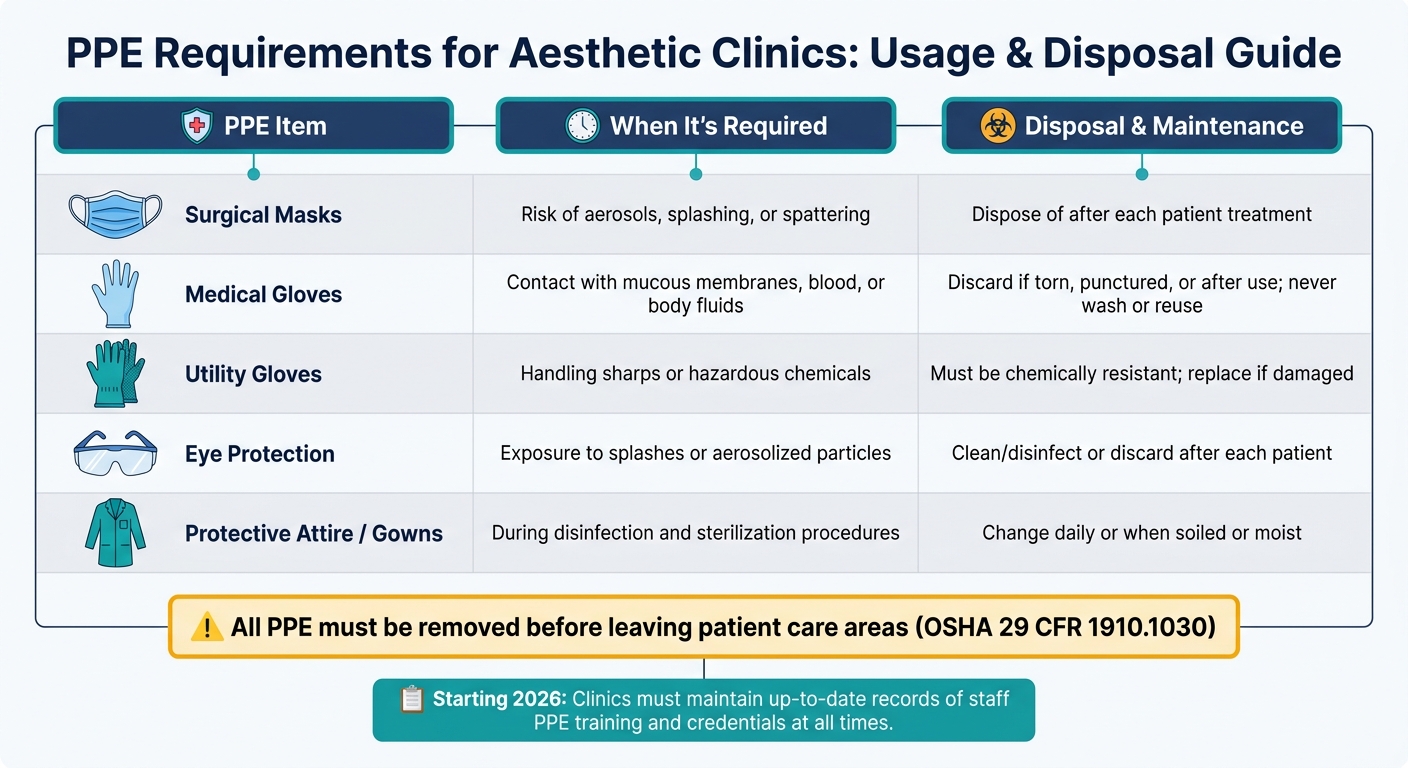
PPE Requirements for Aesthetic Clinics: Usage & Disposal Guide
Personal protective equipment (PPE) includes various items specifically designed to protect against hazards in clinical settings. According to the California Code of Regulations, PPE refers to specialized gear created to mitigate specific risks, which means general work attire like scrubs or uniforms doesn't count as PPE. These protocols are essential for meeting licensing and accreditation standards in aesthetic practices. In these clinics, core PPE items include surgical masks, medical gloves, heavy-duty utility gloves, eye protection, and protective gowns or lab coats. Each has specific use cases and disposal guidelines, all aimed at bolstering infection control efforts alongside hand hygiene protocols.
Here's a quick summary of required PPE items and their maintenance practices:
| PPE Item | When It's Required | Disposal & Maintenance |
|---|---|---|
| Surgical Masks | Risk of aerosols, splashing, or spattering | Dispose of after each patient treatment |
| Medical Gloves | Contact with mucous membranes, blood, or body fluids | Discard if torn, punctured, or after use |
| Utility Gloves | Handling sharps or hazardous chemicals | Must be chemically resistant; replace if damaged |
| Eye Protection | Exposure to splashes or aerosolized particles | Clean/disinfect or discard after each patient |
| Protective Attire | During disinfection and sterilization procedures | Change daily or when soiled or moist |
All PPE must be removed before leaving patient care areas. Additionally, clinics must adhere to OSHA's Bloodborne Pathogens Standard (29 CFR 1910.1030), which mandates an active Exposure Control Plan and task-specific PPE for procedures involving blood or other potentially infectious materials.
Training and Competency
Staff must be thoroughly trained on selecting, using, and disposing of PPE. This training should cover all aspects of PPE use, and clinics are required to maintain proof of ongoing training. One critical point: gloves should never be washed or reused. Starting in 2026, regulators will require clinics to keep records of staff training and credentials up to date at all times. Common citations during inspections include missing documentation for bloodborne pathogen training or the absence of laser safety officer designations.
Training isn't just a checkbox - it’s the foundation of compliance monitoring.
Compliance Monitoring
Medical directors are responsible for actively supervising PPE protocols. This supervision must go beyond administrative tasks.
"Supervision must be real (and not simply on paper), meaning that the medical director should oversee clinical protocols, conduct regular chart reviews, and be available for consultation." – Phorest
Standard Operating Procedures (SOPs) need to reflect actual daily practices. Using generic templates can backfire during audits, as inspectors will scrutinize inconsistencies between written policies and observed practices.
Documentation and Audit Readiness
When inspectors arrive, preparation is key. According to Med Spa Standards:
"The single largest difference between an inspection that ends in a clean bill of health and one that ends in a Statement of Deficiencies is whether the operator can hand over these seven documents in fifteen minutes or has to dig."
Clinics must maintain organized records, including sterilization logs, sharps container disposal records, and an OSHA Exposure Control Plan. These documents should be readily accessible at all times. Regularly reviewing 5–10 patient charts can help ensure that documented procedures align with daily practices. Tools like Prospyr simplify audit readiness by centralizing digital intake forms, patient records, and other documentation in a HIPAA-compliant system.
Pros and Cons
Implementing hand hygiene and PPE protocols offers clear benefits but also comes with operational hurdles. These challenges go hand-in-hand with the compliance issues mentioned earlier. By understanding both advantages and drawbacks, clinics can design systems that work effectively in everyday practice - not just during inspections.
When practitioners visibly wash their hands, it boosts client trust, signaling professionalism and care. This trust supports accreditation efforts and creates a safer environment by preventing antibiotic-resistant infections. Additionally, following proper protocols helps clinics avoid fines, suspensions, and potential legal liabilities.
However, maintaining compliance is no easy task. One notable challenge is the Hawthorne effect - staff are more likely to follow protocols when they know they're being observed. This often leads to inflated adherence rates during direct observation. For example, a U.S. trauma resuscitation center study found that actual hand hygiene adherence was only 7%, dropping to 0% before clean procedures.
"The goal of measuring hand hygiene is to provide timely, meaningful, and actionable feedback to guide HCP improvement." – Janet B. Glowicz, CDC
To better understand the trade-offs, here’s a breakdown of the key areas of concern:
| Category | Advantages | Challenges |
|---|---|---|
| Training | Encourages accountability and helps staff grasp the importance of protocols, improving engagement | Experienced staff may fall back on outdated habits |
| Compliance | Minimizes cross-contamination and protects both clients and staff from healthcare-associated infections | Measuring adherence accurately is tough due to the Hawthorne effect; automated analytics systems can be expensive |
| Documentation | Offers legal protection and creates a verifiable record for inspections and insurance purposes | Paper-only compliance often results in violations when actual adherence is lacking , whereas digital intake solutions streamline documentation |
"Documentation is often the determining factor – it is not just about whether sanitation is performed, but whether it can be verified." – Dermascope
To address these challenges, consider using covert observation to gather accurate adherence data. For documentation, maintaining an inspection-ready binder with disinfectant logs, staff license verifications, and signed standing orders can prevent last-minute scrambles during inspections. Successfully navigating these pros and cons is essential for clinics to meet accreditation requirements while staying efficient in daily operations.
Conclusion
Maintaining proper hand hygiene and ensuring PPE compliance are more than just routine tasks - they are essential pillars for running a safe and efficient aesthetic clinic. Regulatory standards and state medical board requirements clearly outline what’s needed: written protocols, Medical Director approval, and thorough, documented staff training.
The protocols mentioned earlier emphasize the need for consistent, daily compliance. Standard Operating Procedures (SOPs) should accurately reflect the clinic’s specific operations rather than relying on generic templates. These SOPs must also be reviewed and signed by the Medical Director every year.
Compliance isn’t optional - it’s crucial. Penalties for documentation lapses can range from $1,000 to $5,000 per violation per day. Clinics without documented SOPs are three times more likely to face regulatory scrutiny after an adverse event. Additionally, malpractice insurance providers increasingly demand proof of written protocols during underwriting, and missing documentation could lead to denied coverage. Following these guidelines not only boosts patient safety but also helps streamline clinic operations.
A tool like Prospyr can simplify this process. This HIPAA-compliant CRM/EMR system centralizes patient records, digital intake forms, and clinical documentation, making compliance a seamless part of the clinic’s daily routine. Features like automated reminders for license renewals and integrated task management help address small gaps that could otherwise lead to audit issues.
FAQs
What documents should we be able to provide an inspector in 15 minutes?
To prepare for inspections, it’s smart to have a well-organized binder with key documents that inspectors often request. Include items like your medical director agreement, the physician's current license, staff credential files (covering licenses and a scope of practice matrix), and signed clinical SOPs for each treatment offered.
Additionally, post laminated emergency protocols - such as anaphylaxis procedures - clearly in treatment rooms for quick reference. Be ready to provide sample patient records and billing logs as well.
Using tools like Prospyr can streamline this process by centralizing your records, helping ensure your practice is always prepared for an audit.
Does a restroom sink count as a clinical hand-washing station?
No, restroom sinks usually don’t meet the criteria for clinical hand-washing stations. These stations are specifically designed for hand hygiene and must not double as waste disposal areas, as that can encourage biofilm accumulation.
Key features of clinical hand-washing stations often include:
- Hands-free operation: This could mean sensor-activated or elbow-operated taps.
- Gooseneck faucets: For easier access and reduced contamination risk.
- Splash protection: To prevent the spread of water and potential contaminants.
Prospyr supports aesthetic clinics in staying compliant by simplifying workflows, ensuring they maintain environments that prioritize top-tier patient care.
How can we prove daily hand hygiene and PPE compliance during audits?
To ensure compliance with daily hand hygiene and PPE protocols during audits, perform unannounced observational checks. Focus on key moments such as entry, donning and doffing PPE, and exit. Use standardized tools that align with CDC or WHO guidelines to record compliance rates. Be sure to include details like the date, unit, shift, and staff role. Platforms like Prospyr can help centralize and organize this data, making it easier to showcase your dedication to safety and quality improvement during audits.