How Multimedia Improves Patient Understanding
Learn how videos, animations, and interactive tools boost patient comprehension, reduce anxiety, and streamline clinical workflows.
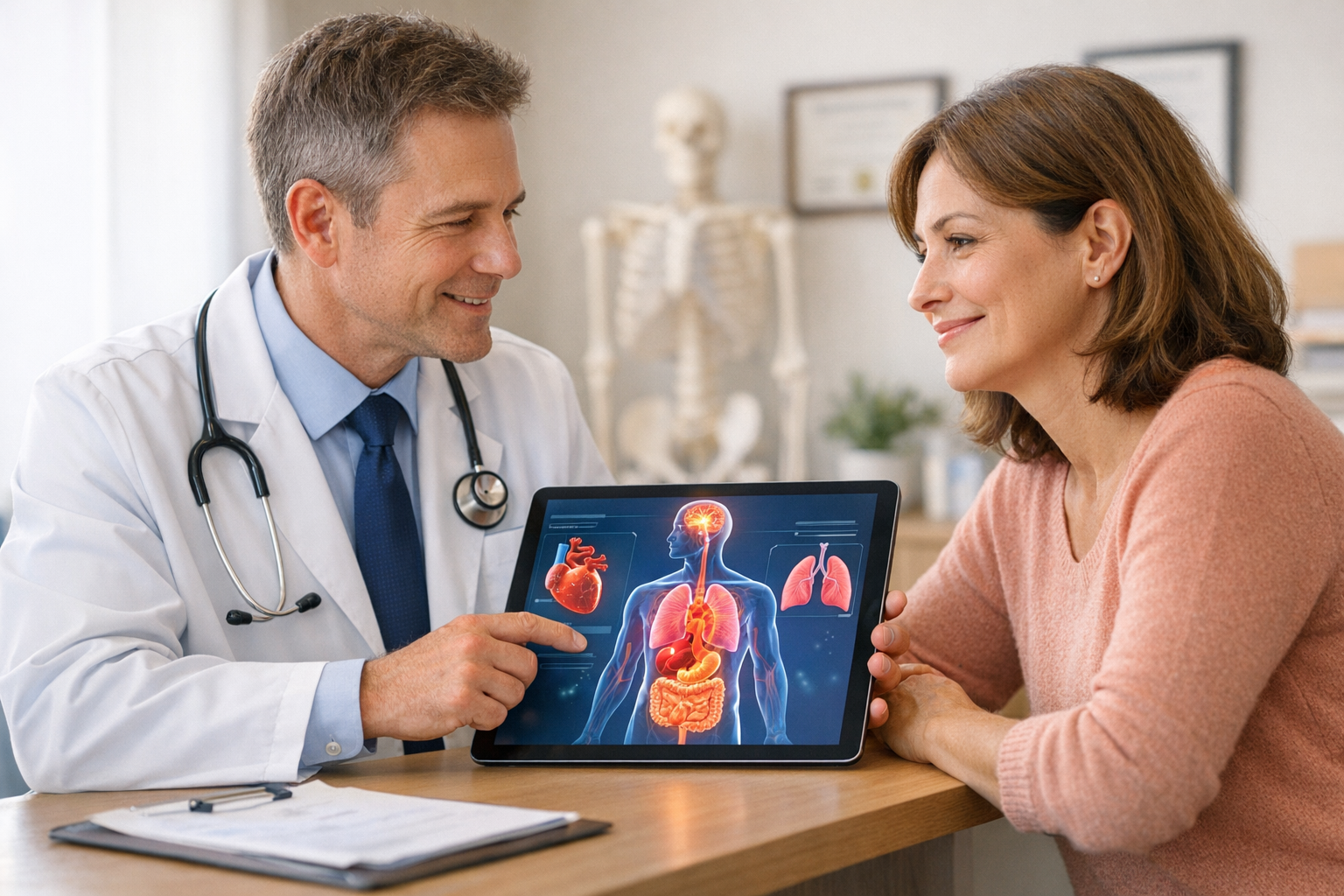

When it comes to explaining medical procedures, many patients feel overwhelmed by complex jargon and dense materials. Multimedia tools - like videos, animations, and interactive models - are transforming how healthcare providers communicate. These tools simplify medical concepts, improve retention, and help patients make informed decisions.
Key takeaways:
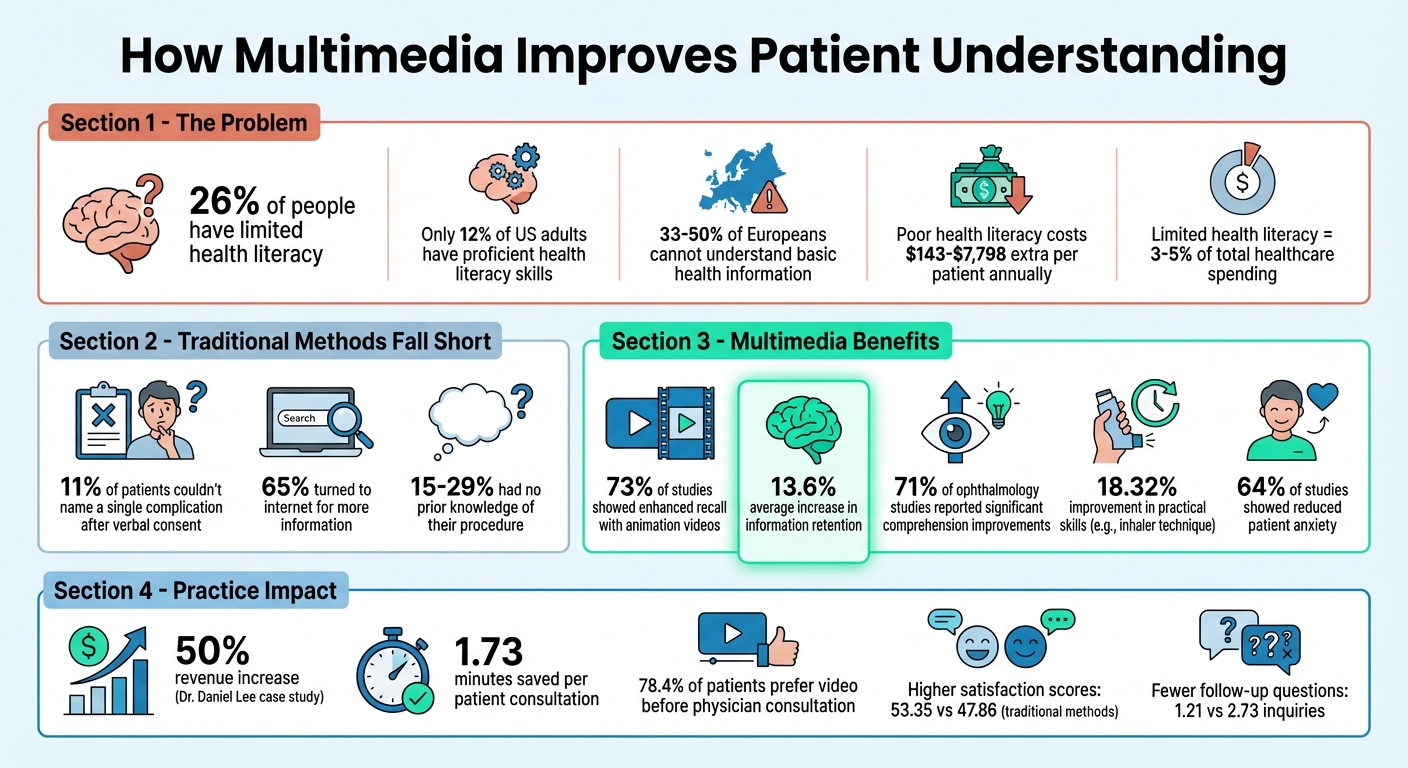
- 26% of people have limited health literacy, making traditional methods less effective.
- Multimedia tools combine text, visuals, and audio to break down complex procedures step-by-step.
- Studies show multimedia boosts understanding by 13.6% and reduces patient anxiety.
- Patients with low health literacy benefit significantly from spoken animations and visual aids.
- Multimedia also saves time for healthcare providers and improves patient satisfaction.
How Multimedia Improves Patient Understanding: Key Statistics and Benefits
Problems with Traditional Patient Education
Poor Information Retention and Patient Engagement
When patients are given information through verbal explanations or paper brochures, they often struggle to retain what they've learned. Research shows that traditional methods like these result in low levels of understanding and memory retention. This lack of comprehension can seriously hinder a patient’s ability to make informed decisions about their care.
Take, for example, studies in specific medical fields. In laser corneal refractive surgery, 11% of patients couldn’t name a single complication, and 65% turned to the internet for more information. Similarly, a study on root canal treatment found that 15% of patients had no prior knowledge of the procedure, and 29% were entirely unfamiliar with it. These gaps in understanding remain even after patients receive explanations and sign consent forms.
The problem often stems from cognitive overload. When patients are bombarded with dense, jargon-heavy materials or fast-paced verbal explanations during consultations, they struggle to process and retain the information. As a result, many leave feeling confused, anxious, and unprepared for what lies ahead.
This issue is even more severe for individuals with limited health literacy, who face additional challenges in understanding and remembering essential details.
Accessibility Issues and Health Literacy Gaps
Retention challenges are compounded by the widespread problem of health literacy gaps. For example, 33% to 50% of people in Europe cannot understand basic health information, and in the United States, only 12% of adults have proficient health literacy skills. For these individuals, brochures filled with complex medical terms are essentially useless.
The financial consequences are alarming. People with poor health literacy face extra healthcare costs ranging from $143 to $7,798 per year, compared to those with adequate literacy. In countries like Switzerland and the U.S., limited health literacy contributes to 3% to 5% of total healthcare spending. These costs are tied to misunderstandings that lead to complications, missed appointments, and poor treatment adherence.
"Patients with low health literacy are especially susceptible to cognitive overload".
Another challenge is that patients with limited health literacy are less likely to ask questions during consultations. They may feel embarrassed about their lack of understanding or worry about wasting the doctor’s time. This reluctance creates a harmful cycle: they don’t grasp the information, don’t seek clarification, and leave with critical gaps in their knowledge about their care.
Together, cognitive overload and inadequate health literacy severely weaken the effectiveness of traditional patient education methods.
Reading about the problem? See how Prospyr solves it in one platform.
Book a DemoHow Multimedia Improves Patient Comprehension
Multimedia addresses the limitations of traditional patient education by engaging multiple cognitive channels simultaneously. Instead of relying solely on text-based explanations, tools like animations and videos create external mental models that make complex information easier to understand. This approach not only improves retention but also boosts engagement and caters to diverse learning preferences.
Better Information Retention
Multimedia taps into dual-channel processing - combining visuals with narration to distribute cognitive effort more effectively. For instance, a systematic review revealed that 73% of studies showed enhanced recall when animation videos were used compared to standard care. In ophthalmology, 71% of research (5 out of 7 studies) reported significant improvements in patient understanding when video-based tools were introduced. One particular study highlighted that multimedia education increased information retention by an average of 13.6% compared to traditional verbal or written instructions.
In February 2017, a team at St. James's Hospital in Dublin, led by G. Roche-Nagle, conducted a study involving 93 patients undergoing complex vascular procedures like EVAR and peripheral angioplasty. Patients who watched a two-minute animation on an iPad alongside verbal consent had significantly higher comprehension scores (P=.003) and greater overall satisfaction (P<.000) compared to those who received only verbal explanations.
Beyond improving retention, multimedia also enhances patient engagement while helping to alleviate anxiety.
Increased Engagement and Lower Anxiety
Multimedia transforms patient education into a more interactive and engaging experience. Animations, for example, simplify medical procedures by focusing on key elements and omitting distressing details. Unlike realistic photographic videos, animations are often better received by patients as they reduce distractions and avoid triggering fear.
This approach also helps reduce anxiety. In 2018, the Duke Transplant Center ran a quality improvement project involving 37 lung transplant patient-caregiver pairs. Patients who received multimedia-based education reported significantly lower anxiety levels about their upcoming surgery (P=.02) and expressed higher satisfaction with the educational process (P=.02) compared to those who received standard education.
"Multimedia methods decrease anxiety and increase satisfaction with the education experience when preparing patients for lung transplantation."
- Sandra L. Gerity, DNP, Duke Transplant Center
A systematic review of 14 studies on diagnostic procedures further supports this, showing that 64% of the studies reported a meaningful reduction in patient anxiety when multimedia tools were used.
Accommodating Different Learning Preferences
Patients learn in different ways - some respond best to visual demonstrations, others to auditory explanations, and many benefit from a mix of both. Multimedia caters to these varied preferences, making education more accessible to a wider audience.
In a 2015 study conducted by the Amsterdam School of Communication Research, 231 participants aged 55 and older were educated about colorectal cancer screening. For patients with low health literacy, spoken animation significantly improved information recall (P=.02) compared to written text paired with static images.
"Spoken animation is the best way to communicate complex health information to people with low health literacy. This format can even bridge the information processing gap between audiences with low and high health literacy."
- Corine S. Meppelink, MSc, Amsterdam School of Communication Research
Multimedia is also highly effective in teaching practical skills. For example, studies have shown that multimedia tools improved inhaler technique scores by 18.32%. This adaptability makes multimedia an invaluable resource for a wide range of patient education needs, from explaining medical procedures to teaching self-care techniques.
Proven Benefits of Multimedia in Patient Care
The use of multimedia in healthcare goes far beyond simply improving understanding - it has a direct, measurable impact on patient satisfaction, clinical workflow efficiency, and treatment outcomes. Research consistently highlights how incorporating visual and interactive tools into patient education benefits both healthcare providers and patients in practical ways.
Increased Patient Satisfaction and Confidence
Patients often feel more assured about their healthcare decisions when they can visually grasp what’s happening inside their bodies. For example, the Hepatobiliary Surgery Institute at Lanzhou University's First Hospital conducted a randomized controlled trial involving 184 patients. Participants who watched a 14-minute multimedia health education video - focused on topics like the hospital environment, preoperative planning, and dietary advice - reported higher satisfaction scores (53.35 vs. 47.86) and required fewer follow-up clarifications (1.21 vs. 2.73 inquiries) compared to those who received traditional verbal education.
In another study conducted in 2020 on Mohs micrographic surgery, a common procedure in dermatology, 102 patients were divided into two groups. Those who viewed an educational video before their consultations demonstrated significantly better knowledge (P=.02) and expressed greater satisfaction with their understanding of surgical risks (P=.013). Notably, 78.4% of participants preferred watching the video before meeting with their physician.
"Video-assisted consent for Mohs micrographic surgery improves patient knowledge, leads to a better understanding of the risks, and saves physicians time without compromising patient satisfaction."
- JAAD International
More Efficient Use of Clinical Time
Beyond boosting patient confidence, multimedia tools also help streamline clinical workflows. By reducing the need for repetitive explanations, healthcare providers can save valuable time. In the Lanzhou University study, nurses spent an average of 15.21 minutes on admission education when using multimedia, compared to 16.94 minutes with traditional verbal methods (P<.001). While 1.73 minutes may seem minor, the time savings add up significantly over multiple consultations in a single day.
Multimedia also ensures consistency in delivering essential information. In busy healthcare settings, verbal explanations can be rushed - sometimes averaging just 76 seconds. Multimedia eliminates the risk of omitting critical details and allows patients to revisit the material at their convenience, whether at home or in the clinic, without requiring additional staff involvement.
Better Treatment Outcomes
A deeper understanding of treatment plans leads to better adherence and, ultimately, improved outcomes. Patients who fully comprehend their care instructions are more likely to follow them correctly. A systematic review found that multimedia education enhanced practical skills, such as proper inhaler use, by 18.32% compared to standard care. Similarly, in ophthalmology, 71% of randomized controlled trials reported statistically significant improvements in patient comprehension following video-based education.
Clearer communication also helps set realistic expectations, which is especially important in aesthetic and wellness treatments. The Lanzhou study found that multimedia education not only improved patient satisfaction but also enhanced satisfaction among doctors and nursing staff, fostering a more positive experience for the entire care team.
"Multimedia health education can enhance the effectiveness of verbal health education, making it easier for patients to consolidate, understand, and retain the educational content while reducing the time and frequency required for nurses to deliver education."
- Liping Yang, Department of General Surgery, The First Hospital of Lanzhou University
sbb-itb-02f5876
Using Prospyr to Add Multimedia to Your Practice
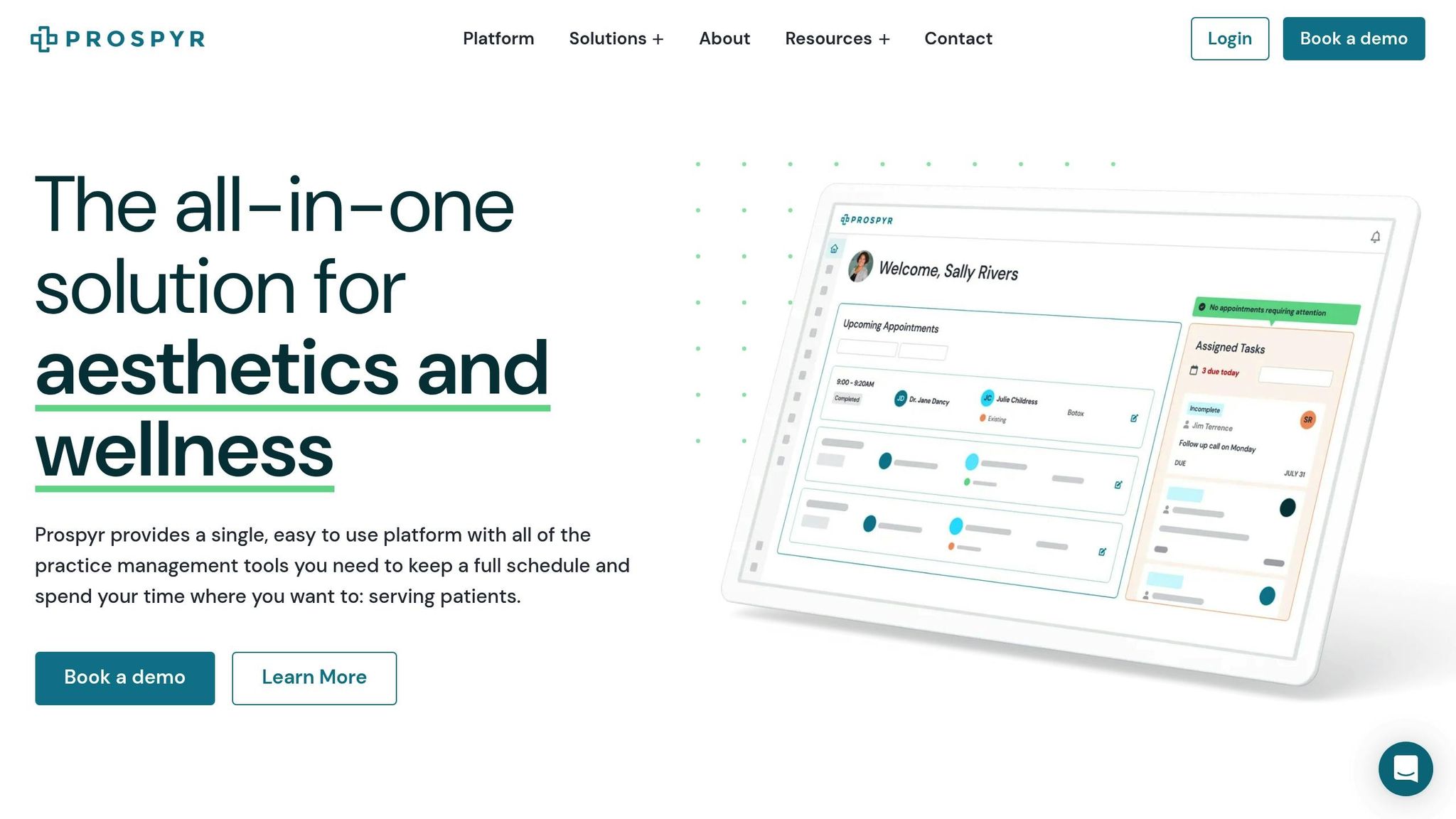
Prospyr makes it simple to integrate multimedia into your practice by centralizing tools that enhance patient education. Multimedia has long been recognized for improving patient understanding, and Prospyr takes it a step further by organizing, delivering, and securing these resources efficiently. Let’s look at how Prospyr can help you manage educational content and improve patient care.
Managing Patient Education Content with Prospyr
Prospyr combines CRM and EMR systems to store multimedia resources like 3D animations, videos, whiteboard explainers, and post-care guides directly within patient records. This eliminates the hassle of juggling multiple platforms when sharing information with patients.
When building your multimedia library, focus on content that clearly outlines patient instructions and the reasoning behind them. Always ensure materials are medically accurate and meet current standards. For patients with lower health literacy, spoken animations can be particularly effective - studies show they help these patients retain as much information as those with higher literacy levels.
Delivering Multimedia Through Digital Channels
Prospyr’s built-in email and SMS tools make it easy to deliver educational materials at just the right time. For example, you can automate sending a pre-procedure animation or a post-care video to patients.
This approach has delivered impressive results. Dr. Daniel Lee, Founder of New Life Cosmetic Surgery, saw a 50% revenue increase and a 40% rise in booked appointments after consolidating four separate software systems into Prospyr. Similarly, Dr. Saami Khalifian, CEO of SOM Aesthetics, achieved over $100,000 in monthly revenue within just two months of opening his practice.
"Prospyr has helped us launch SOM Aesthetics like a rocketship. Their powerful platform and helpful support have enabled us to exceed our financial targets while delivering an unmatched experience for our patients."
- Dr. Saami Khalifian, Founder and CEO, SOM Aesthetics
Maintaining Security and Compliance
Prospyr doesn’t just streamline content delivery - it also ensures your educational materials are secure and compliant. All multimedia shared through Prospyr is stored within a HIPAA-compliant framework, safeguarding patient privacy. Its cloud-based security protocols prevent unauthorized access to protected health information, including educational content tied to patient records.
Additionally, Prospyr maintains an auditable record of all educational materials provided, showing exactly what information was shared with patients and when. This documentation not only protects patient privacy but also shields your practice by creating a clear compliance trail.
Conclusion
Key Insights for Aesthetic Practices
Animation videos have been shown to significantly enhance information recall, with 73% of studies reporting improvements. This directly impacts patient satisfaction - multimedia presentations not only elevate satisfaction scores (P < .000) but also improve comprehension (P = .003).
Another advantage of multimedia education is its ability to streamline consultations by reducing the time spent on repetitive explanations (P = .008). By pre-conditioning patients with the foundational knowledge they need, your clinical team can focus on addressing specific, individual concerns. Moreover, multimedia tools help close the health literacy gap - patients with lower health literacy levels retain as much information as those with higher literacy when exposed to spoken animations (P = .12).
Technology’s Role in Enhancing Patient Care
The evidence speaks volumes: multimedia education is more than just an added convenience - it’s a powerful tool for improving patient outcomes and optimizing practice efficiency. Platforms like Prospyr simplify the process by centralizing educational content within HIPAA-compliant systems and distributing it through automated email and SMS channels.
To maximize these benefits, consider creating a library of concise, 1–8 minute spoken animations focused on essential information. Highlight what patients need to do, why it’s important, and any warning signs they should be aware of. This strategy can increase information retention by 13.6%, leading to better treatment outcomes and stronger patient-practice relationships. With Prospyr’s automated delivery system, integrating this level of patient education into your practice becomes seamless and highly effective.
FAQs
How can multimedia help patients better understand their treatments?
Multimedia tools - like animations, interactive visuals, and narrated graphics - make it easier to grasp complex medical concepts by engaging both sight and sound. They break down treatments and procedures into simple, step-by-step formats that patients can pause, replay, and review at their own pace. This not only clears up confusion but also helps patients better understand and remember the information.
Studies reveal that patients who use multimedia resources are more likely to recall key details and stick to care instructions compared to those relying solely on written materials. For instance, video explanations have been shown to significantly improve understanding and satisfaction, particularly for individuals with limited health literacy.
With Prospyr, clinics can seamlessly integrate multimedia education into appointment reminders, patient portals, and follow-up messages. This ensures patients receive engaging, easy-to-digest content that supports their care journey and encourages healthier outcomes.
How do multimedia tools help patients with low health literacy understand medical information?
Multimedia tools - like animations, interactive visuals, and narrated videos - help break down complex medical concepts into easily digestible pieces. By combining visuals with audio cues, they make information more engaging and easier to grasp, especially for patients who struggle with health literacy. These tools strip away the confusion of medical jargon, offering clarity through a mix of sight and sound.
Studies highlight that multimedia formats not only improve how well patients remember information but also promote positive attitudes and healthier choices. For instance, video animations have been shown to effectively teach patients about medical procedures, proper medication use, and healthy habits. They also lead to higher satisfaction and better adherence to care plans.
Platforms like Prospyr allow aesthetics and wellness clinics to integrate these tools into their daily operations. With features like animations, interactive forms, and AI-powered video explanations, clinics can ensure every patient - no matter their literacy level - receives clear, accessible education. This approach enhances patient experiences and supports better health outcomes.
How does using multimedia improve healthcare efficiency?
Multimedia tools such as animations, interactive visuals, and video tutorials are transforming healthcare by making patient education more efficient. These resources empower patients to absorb information at their own pace, better retain critical details, and come to appointments well-prepared. As a result, healthcare providers spend less time repeating explanations and more time focusing on treatment and decision-making.
Research highlights that multimedia education can ease the workload for healthcare staff, lower patient anxiety, and lead to better health outcomes. Platforms like Prospyr take this a step further by automating educational content delivery through patient portals, appointment reminders, and digital forms. This approach not only saves time but also ensures secure, HIPAA-compliant communication. The outcome? A smoother workflow for providers and a better overall experience for patients.