Mentorship for Aesthetic Nurses: Key Skills to Teach
Guidance on injection technique, anatomy, patient communication, compliance, and program models to train confident aesthetic nurses.
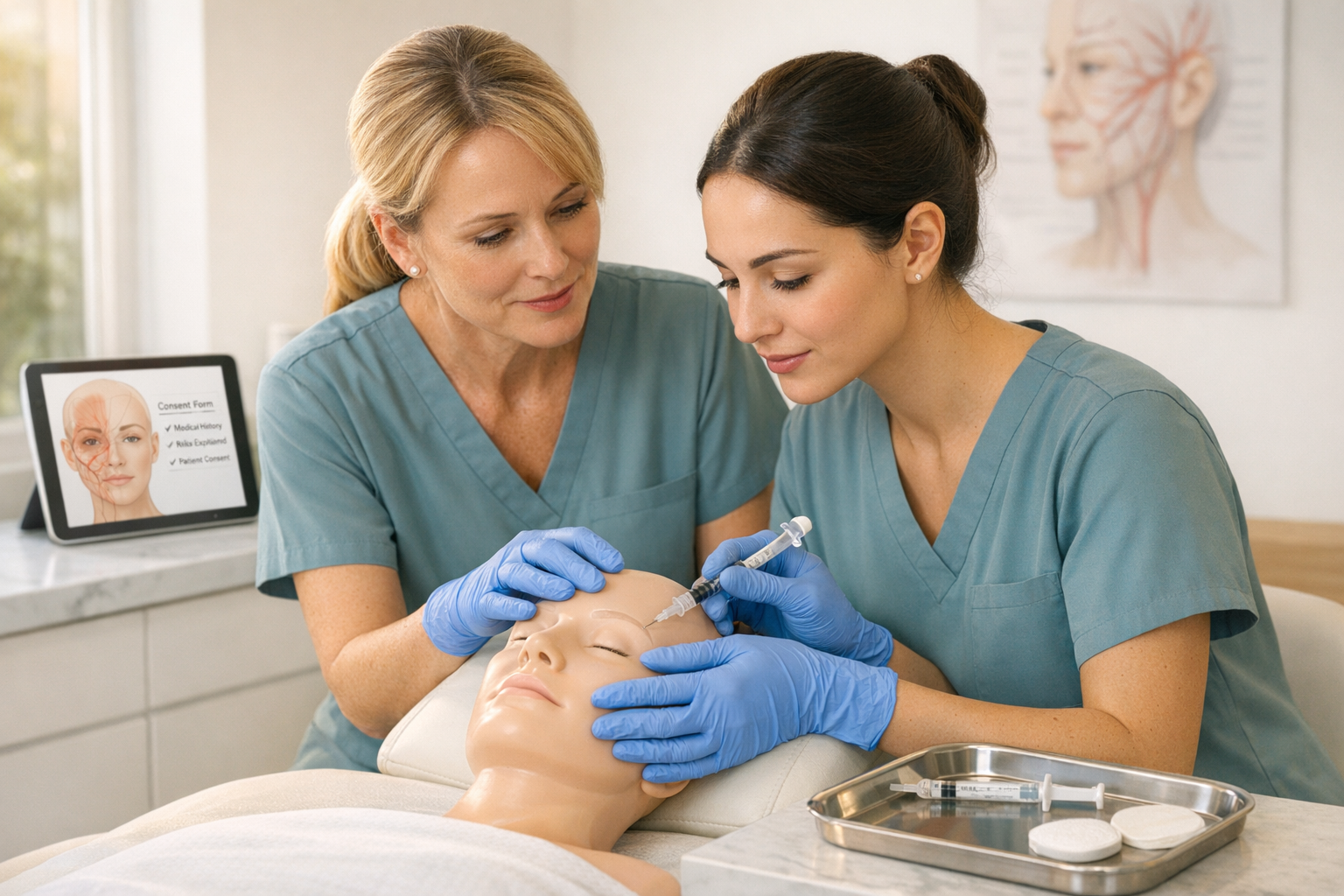

Mentorship is the backbone of aesthetic nursing success. It bridges the gap between theoretical knowledge and practical expertise, creating confident practitioners who deliver safe, natural-looking results. For both new and experienced nurses, mentorship offers structured guidance in mastering injection techniques, understanding facial anatomy, and improving patient communication.
Key takeaways:
- Injection skills: Learn proper depth, angle, and site selection for treatments like Botox and fillers.
- Anatomical knowledge: Prevent complications by understanding muscle, nerve, and vascular landmarks.
- Patient communication: Build trust through active listening, manage expectations, and handle tough conversations.
- Compliance: Stay within legal boundaries, master documentation, and ensure safety standards.
- Artistry: Balance facial proportions and tailor treatment plans for individual patients.
Programs combining one-on-one and group mentorship models are highly effective. Mentors benefit too, improving leadership skills while guiding the next generation of injectors. Clinics with mentorship programs report higher patient satisfaction, fewer complications, and better staff retention. If you’re in aesthetic nursing, mentorship isn’t just helpful - it’s transformative.
Clinical Injection Skills
Administering injectable treatments like neuromodulators, dermal fillers, and biostimulators demands precise technique and a strong grasp of facial anatomy. To achieve this, practitioners rely on mentors to teach critical skills, such as selecting the right injection depth, angle, and site.
The learning curve for these procedures can be challenging, but mentorship plays a crucial role in building confidence. Hands-on, clinically integrated rotations provide invaluable experience in refining injection techniques. While training programs and workshops can be costly, they represent an important investment in developing these essential skills, laying the groundwork for mastering more advanced techniques.
Injection Techniques and Best Practices
The journey toward mastering injection techniques begins with the basics. Mentors often start trainees with Botox and simple dermal filler applications, gradually progressing to more complex areas like tear troughs or liquid rhinoplasty. Repeated practice helps build muscle memory and instills confidence over time.
One hallmark of skilled injectors is their ability to perform a dynamic assessment. This involves observing facial muscle movements as patients talk, smile, or frown. Mentors teach this technique to help practitioners predict treatment outcomes and avoid unnatural, "frozen" appearances. Additionally, physical assessments and precise skin markings are critical for achieving symmetry and enhancing natural features rather than altering them.
Shadowing experienced injectors is another key component of training. By observing seasoned professionals, trainees can reinforce their classroom knowledge while learning patient selection and management strategies. This blend of supervised practice and observation ensures that practitioners not only master the how but also understand the when and why behind each injection.
Anatomical Knowledge and Safety
Technical skills alone aren't enough - deep anatomical knowledge is vital for preventing complications. Mentors emphasize the importance of understanding muscle, nerve, and vascular landmarks to ensure safe and effective treatments. As Dr. William H. Beeson and colleagues explain:
Thorough knowledge of the complex anatomy in this area and the use of anatomic landmarks can help the physician obtain improved aesthetic results by deploying fillers in the appropriate anatomic plane and avoiding inadvertent injury to important neurovascular structures in this area.
Training also covers the distinction between true osteocutaneous ligaments, which originate from the periosteum, and false ligaments, which come from the fascia. These structures define boundaries within facial fat compartments, each requiring specific augmentation techniques. Instead of applying a one-size-fits-all approach, practitioners learn to tailor treatments to individual facial compartments, achieving natural results while respecting the anatomy.
Safety is a core focus throughout the training process. Mentors teach practitioners to recognize early signs of vascular compromise or embolization during injections and to follow specific intervention protocols when needed. By emphasizing patient safety alongside technical skills, experienced mentors help reduce procedural complications. Studies show that practitioners who undergo rigorous training programs experience a notable decrease in complications, highlighting the importance of combining anatomical education with safety-centered mentorship.
sbb-itb-02f5876
Patient Communication and Consultation Skills
Technical skills are only part of the equation for nurses - strong communication with patients is just as important. Beyond clinical precision, effective communication is a skill that mentors pass down through guidance and example. A key element of this is active listening, which encourages patients to express their concerns before any advice is given. This process is often streamlined when patients use online scheduling to provide initial details about their concerns. This approach, often summarized by the 3 A's (Available, Analytic, Active Listening), helps patients feel truly heard and understood. By starting with active listening, nurses can naturally build a solid foundation of trust and rapport with their patients.
Building Patient Rapport
Mentors emphasize the importance of tailoring communication to each patient’s specific goals and needs. The 6 C's framework is a tool that helps nurses communicate clearly and consistently while showing genuine interest in the patient’s aesthetic objectives. By understanding each patient’s goals, nurses can adapt their approach to align with what matters most to the individual.
It’s essential to let patients define their primary concerns rather than imposing a professional perspective. As Aesthetic Mentor puts it:
Although we have the aesthetic eye, it is about what the patients' goals are.
Patient satisfaction often depends on whether the results match their personal vision, not the practitioner’s artistic preferences. During consultations, creating a "safe space" is equally important. Patients should feel comfortable discussing sensitive aesthetic concerns and personal goals without fear of judgment. Chronus highlights this dynamic:
Effective communication is essential... the relationship should be established as a safe space for both vulnerable expression and constructive feedback.
Mentors guide nurses to prioritize empathy and collaboration, steering away from authoritative approaches. This creates a partnership where decisions are made together.
Structured mentorship has proven results - 82% of participants in guided sessions described them as transformative, and 98% of individuals in structured mentoring environments found the experience effective in achieving their goals.
Managing Expectations and Difficult Conversations
Once trust is established, managing expectations becomes the next critical step. Setting realistic expectations helps prevent disappointment and fosters stronger, long-term relationships. Effective lead management ensures these relationships are nurtured from the very first point of contact. Mentors teach nurses to use the 5 C's decision-making framework - Challenges, Choices, Consequences, Creative Solutions, and Conclusions - to guide patients through treatment options and potential outcomes.
When results don’t meet expectations, difficult conversations can arise. Mentors encourage reframing dissatisfaction as an opportunity for growth. Jennifer Sokolowsky from Chronus explains:
reframing failures as opportunities for learning and growth and validate effort.
This perspective helps nurses approach challenging discussions with curiosity and openness.
The philosophy of "enhance, not alter" also plays a central role in managing expectations. Mentors teach nurses to focus on achieving natural results that subtly "take years off" rather than making dramatic changes. By establishing this philosophy early and documenting clear care plans, nurses create a shared roadmap for the treatment journey. This mentorship-driven approach ensures that communication skills evolve alongside clinical expertise, benefiting both nurses and their patients.
Reading about the problem? See how Prospyr solves it in one platform.
Book a DemoCompliance and Regulatory Skills
Aesthetic nurses operate in a tightly regulated field where even minor legal missteps can jeopardize patient safety and professional licensure. Mentors play a crucial role in helping mentees understand that compliance isn’t just about completing paperwork - it’s the foundation of a trustworthy and legally sound practice. As ShapeScale points out:
A nurse injector is a medical professional first: Their rigorous qualifications, including an RN license and specialized clinical training, ensure a high standard of patient safety and add significant credibility to your practice.
Mentors emphasize the importance of respecting the legal boundaries that shape aesthetic nursing. This includes mastering state-specific regulations, which can vary significantly. For instance, California requires RNs to operate under "standardized procedures" set by a physician, while Florida allows Nurse Practitioners (NPs) full practice authority. To avoid missteps, mentees are encouraged to regularly check their State Board of Nursing's guidelines, as these rules are subject to change. This regulatory knowledge forms the backbone of ethical and precise practice.
Proper Documentation and Charting
Thorough documentation is non-negotiable in aesthetic nursing, safeguarding both patients and practitioners. Every procedure must be carefully recorded, including patient goals, assessments, products used, dosages, and injection sites. As ShapeScale highlights:
Meticulous charting and record-keeping are also critical components, documenting every aspect of the treatment for safety and continuity of care.
Mentors go beyond teaching basic note-taking. Comprehensive records should include informed consent forms, standardized photos, and objective digital baselines. For RNs working under physician protocols, it’s crucial that documentation reflects adherence to standing orders or collaborative agreements. Additionally, mentors stress the importance of recording responses to complications, such as bruising, ptosis, or vascular issues, detailing both the actions taken and the outcomes.
Legal and Ethical Guidelines
Accurate documentation is just one piece of the puzzle; understanding legal responsibilities is equally essential. Mentors clarify the scope of practice, ensuring mentees know their limits. For example, while RNs can administer injections, they cannot independently evaluate patients or develop treatment plans - these tasks are reserved for physicians or NPs. This distinction is vital for reducing liability risks. Since state regulations differ, mentors advise mentees to familiarize themselves with local requirements, as some states grant NPs full practice authority, while RNs must work under physician protocols.
Mentors also discuss professional liability insurance, which typically costs around $744 annually. Many new nurses mistakenly believe their employer’s insurance covers all risks, but mentors caution that gaps may exist, especially for those working at multiple locations or in independent roles. Comprehensive coverage should include protection against board investigations, not just malpractice claims. Ethical practice also involves strict HIPAA compliance - patient photos, 3D scans, and digital records must be securely stored to meet federal privacy standards.
Aesthetic Artistry and Treatment Planning
Being skilled with a syringe is just the beginning. To achieve balanced and natural results, injectors need an artistic eye that considers light, shadow, and the overall harmony of facial structure. As Core MedSource explains:
Knowledge empowers injectors to create more natural and harmonious results by strategically leveraging their understanding of how facial features interact and respond to various treatments.
This artistic approach is what distinguishes good injectors from great ones. In 2023 alone, around 15.8 million injectable procedures were performed, including 9.5 million neurotoxin injections and 5.3 million hyaluronic acid filler treatments. With this rising demand, patients are seeking enhancements that preserve their individuality and avoid a "cookie-cutter" look. A strong artistic foundation is key to achieving these delicate, personalized results and lays the groundwork for thorough facial analysis.
Facial Analysis and Proportions
The first step in effective facial analysis is a solid understanding of anatomy. Every face is unique, with its own network of muscles, nerves, blood vessels, and tissues. Mentors should teach nurses how to connect muscle movements to aesthetic outcomes through dynamic muscle analysis. Vascular mapping is another critical skill, helping mentees identify safe injection sites and avoid serious complications like vascular occlusion.
Additionally, understanding how aging affects the face is indispensable. Approximately 80% of facial aging stems from structural changes, such as shifts in fat pads and ligaments. Advanced training often includes cadaver dissection, offering hands-on insight into deeper tissue layers. This type of training builds confidence in the precise placement of fillers and neurotoxins, leading to safer and more effective treatments. Such anatomical expertise is essential when creating tailored treatment plans.
Customizing Treatment Plans
A one-size-fits-all approach doesn’t work in aesthetic treatments. Dr. Tim Pearce, the Founder of Dr Tim Pearce eLearning, highlights this point:
Filler treatments aren't one size fits all!
Mentors should guide nurses in using frameworks like the ART CODES approach, which focuses on Defining Points, Defining Lines, and Connecting Planes. For example, when treating female patients, mentors can demonstrate how the "feminizing point" for cheek projection is located about 5mm higher than traditional injection sites.
Customizing treatments also means understanding that beauty isn’t about erasing every shadow or line. Instead, it’s about achieving a balance between definition and softness. Features like the mental crease or nasolabial fold serve to segment the face and should often be softened, not completely removed. Mentors should train nurses to evaluate faces in both static and dynamic states to ensure results look natural during expressions. Practicing on live models can help mentees observe how treatments hold up during movement.
Mentorship Program Design and Delivery
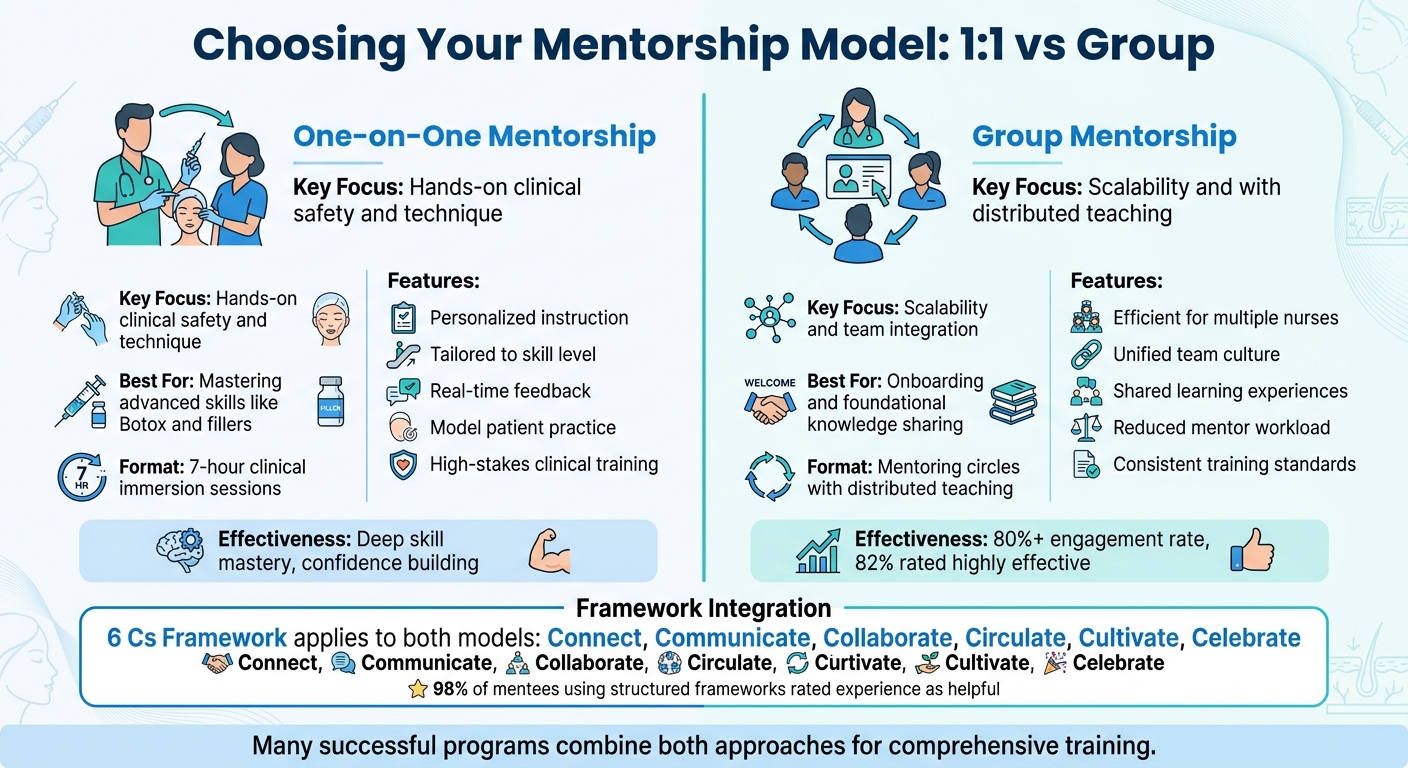
One-on-One vs Group Mentorship Models for Aesthetic Nurses
After developing technical and interpersonal skills, the next step is crafting an effective mentorship program. The design of your program will depend on factors like the size of your practice, available resources, and specific objectives. You might choose a one-on-one model for personalized guidance or a group mentorship model for scalability. Many programs successfully combine both approaches to meet diverse needs.
One-on-One vs Group Mentorship Models
One-on-one mentorship is the go-to choice for mastering clinical skills in high-stakes situations. In aesthetic nursing, for instance, seasoned injectors often spend 7-hour sessions at mentees' clinics, providing hands-on training tailored to the mentee's skill level. Whether it's a beginner learning neurotoxin placement or an advanced injector refining mid-face filler techniques, this format ensures focused, relevant instruction. Mentees also select model patients to gain practical experience with cases that reflect their patient demographic. Katie Rutherford, FNP-C at HarKins Esthetics, shared her thoughts:
Lindsay is not only extremely knowledgeable with injectables but she's patient, kind and offers constructive and positive criticism.
Group mentorship models, on the other hand, are designed for efficiency and consistency. These are ideal for larger practices or clinics with multiple locations, where onboarding several nurses or fostering a unified team culture is crucial. Group formats, such as "mentoring circles", distribute teaching responsibilities among senior staff, reducing the workload on individual mentors. These sessions are particularly effective for foundational training and knowledge sharing, with over 80% of participants staying engaged and 82% rating them as highly effective. However, group models are better suited for general training rather than advanced clinical techniques.
| Mentorship Model | Key Focus | Best For |
|---|---|---|
| 1:1 Immersion | Hands-on clinical safety and technique | Mastering skills like Botox and fillers |
| Group/Circle | Scalability and team integration | Onboarding and team knowledge sharing |
| 6 Cs Framework | Connect, Communicate, Collaborate, Circulate, Cultivate, Celebrate | Programs with measurable outcomes |
Once you've chosen a mentorship model, consistent feedback and clear metrics are essential for fostering professional growth.
Feedback and Progress Evaluation
Feedback is the cornerstone of effective mentorship, turning casual guidance into measurable career development. Programs that prioritize specific goal-setting from the start ensure that each session aligns with clear objectives. During clinical training, mentors should provide real-time, constructive feedback on areas like injection techniques, anatomical understanding, and patient interactions. Kari Dietrich, RN at ENT Aesthetics, described her experience:
Lindsay's calming demeanor and focus on anatomy and safety made both myself and my patient's feel at ease... The growth I felt like I accomplished after spending one day with Lindsay has resulted in me feeling much more comfortable and confident.
To monitor progress, structured frameworks like the "6 Cs" model (Connect, Communicate, Collaborate, Circulate, Cultivate, Celebrate) can be invaluable. This approach sets measurable milestones, ensuring both relational and operational success. In one enterprise program using this framework, 98% of mentees rated their experience as helpful.
Mentors should also incorporate pre-screening assessments, where mentees evaluate model patients' health histories and treatment suitability. This step helps mentees develop essential skills in consultation and patient selection before performing procedures. Celebrating milestones - whether formally or informally - also plays a big role in maintaining motivation and reinforcing positive behaviors as mentees tackle complex techniques.
For practices aiming to simplify mentorship management, tools like Prospyr (https://prospyrmed.com) can streamline operations. These platforms offer features like task management, practice analytics, and HIPAA-compliant digital documentation. By centralizing progress tracking and training schedules, they help practices maintain the safety and documentation standards emphasized during compliance training.
Conclusion
Mastering injection techniques, understanding patient communication, and adhering to compliance standards are all vital in aesthetic nursing. But what truly elevates clinical expertise is mentorship. It acts as the bridge between theoretical knowledge and hands-on excellence, offering nurses the guidance they need to navigate the intricate details of their profession.
As Amie Martin, RN, BSN, BS, and Aesthetic Mentor, wisely states:
If you are the smartest person in the room, you're in the wrong room.
Mentorship doesn’t just benefit individual nurses - it creates a ripple effect. Programs designed with mentorship in mind have been shown to improve patient satisfaction scores by 95%. Beyond that, clinics experience higher nurse retention, smoother succession planning, and fewer procedural errors when mentorship is a priority.
For practice leaders, mentorship isn’t optional - it’s essential. Whether through one-on-one sessions, group mentoring circles, or a mix of both, structured mentorship programs ease the transition for new nurses and reinvigorate seasoned staff.
Getting started involves setting clear goals, fostering an environment where seeking guidance is encouraged, and using tools like the "6 C's of Mentorship" to maintain productive relationships. Platforms such as Prospyr (https://prospyrmed.com) can simplify the logistics - tracking progress, managing schedules, and ensuring HIPAA compliance - so mentors can focus on building skilled, confident nurses who deliver top-tier care.
FAQs
How do I find a qualified aesthetic nurse mentor?
When searching for a skilled aesthetic nurse mentor, focus on programs that provide hands-on training led by experienced professionals. Ideally, these mentors should be board-certified physicians (MDs), nurse practitioners (NPs), or physician assistants (PAs) who actively practice and teach injection techniques.
Here’s what to look for in a program:
- Accredited CE/CME hours: Ensure the program offers continuing education credits to enhance your qualifications.
- Practical experience: Seek opportunities to practice with live models or cadavers, as this is essential for mastering techniques.
- Updated methods: Make sure the training includes the latest advancements in aesthetic procedures.
Additionally, attending industry events, workshops, or "dine & learn" sessions can be a great way to meet reputable mentors. These settings often allow for networking and establishing connections with professionals who can provide guidance and ongoing support as you grow in the field of aesthetic nursing.
What complications should I be trained to spot and treat first?
To handle challenges such as adverse events, patient safety concerns, or data breaches, it's essential to be well-prepared. This means having clear emergency protocols and strict compliance measures ready to address these situations effectively. Proper training and preparation can make all the difference in managing these complications and ensuring safety and security remain top priorities.
What should I document for every Botox or filler visit?
Documenting the treatment process thoroughly is essential for maintaining accurate medical records and ensuring compliance with regulations. Here's what should be included:
- Treatment Plan: Clearly outline the patient's treatment goals and the steps involved to achieve them.
- Patient Consent: Record the patient's informed consent, ensuring they understand the procedure, risks, and benefits.
- Products Used: Specify the exact products, including brand names, lot numbers, and expiration dates.
- Injection Sites and Doses: Detail the precise injection sites and the corresponding doses administered.
- Adverse Events or Reactions: Note any adverse events or reactions observed during or after the procedure.
This level of detail ensures transparency, supports patient safety, and provides a reliable reference for future treatments.