Photo Management Features to Look for in EMR
Key EMR photo features for aesthetic clinics: HIPAA-secure storage, side-by-side/ghosting comparisons, consent tracking, integration, and marketing tools.


In aesthetic practices, managing treatment photos effectively is vital for tracking progress, improving consultations, and showcasing results. Modern EMR systems simplify this process by offering tools like secure storage, photo comparison features, and patient engagement options. These systems not only save time but also enhance clinic efficiency and client satisfaction. Here’s what to look for:
- Secure Storage: HIPAA-compliant cloud storage ensures privacy and easy access.
- Comparison Tools: Features like side-by-side sliders and image ghosting help visualize treatment results.
- Integration: Sync photos with patient records for seamless clinical workflows.
- Consent Management: Link photos to permissions for clear usage guidelines.
- Marketing Features: Export photos for marketing while protecting patient privacy.
Platforms like Prospyr stand out with advanced tools but come at a higher cost, making them ideal for growth-focused clinics. Other EMRs like Zenoti and RxPhoto offer strong alternatives with unique features like patented ghosting technology or 3D anatomical tools.
Key Insight: Clinics using integrated photo management report up to a 30% increase in bookings and improved patient retention by leveraging these tools effectively.
1. Prospyr
Secure Storage and Organization
Prospyr's Media Archive provides a centralized, HIPAA-compliant solution for managing patient photos and videos. This cloud-based platform ensures that staff can access all images from one secure location. With tagging and search features, media can be categorized by procedure type, treatment date, or patient demographics, making it easy to retrieve specific files quickly.
The system also simplifies consent management by linking each photo to documented patient permissions. This means you can instantly identify which images are approved for marketing and which are restricted to clinical use. By keeping everything organized and compliant, Prospyr helps practices avoid privacy violations and adhere to HIPAA standards. These organizational tools work seamlessly with their dynamic visual comparison features.
Side-by-Side Comparison Tools
Prospyr’s Media Archive includes side-by-side before-and-after comparison tools that showcase treatment progress clearly, especially during consultations. According to Prospyr, these visuals play a key role in boosting consultation conversions.
These tools are fully integrated with patient charting and digital intake processes. Photos taken during appointments automatically sync with clinical records, allowing staff to filter images by treatment type and create personalized progress galleries for patient consultations.
Annotation and Clinical Integration
Prospyr enhances its storage and comparison tools by integrating images directly into clinical workflows. Through features like Streamline Charting and telehealth integration, photos are automatically synced to patient records, simplifying clinical documentation. While the platform emphasizes workflow integration, it offers limited markup capabilities.
sbb-itb-02f5876
Reading about the problem? See how Prospyr solves it in one platform.
Book a Demo2. Other Industry EMR Systems
Beyond Prospyr, several EMR systems incorporate advanced photo management features to make clinical documentation more efficient.
Secure Storage and Organization
Many EMRs rely on encrypted cloud storage to ensure photos are stored securely and accessed easily. For instance, Zenoti holds an "A" rating from UpGuard for its strong data security measures. Similarly, EmilyEMR uses encrypted cloud storage, giving clinics control over their images while keeping them off the devices used to capture them. This approach avoids a common HIPAA compliance issue.
Role-based access controls are a standard feature in platforms like PatientNow and Zenoti, limiting photo access strictly to authorized staff. Additionally, these systems organize photos by service type, body part, or appointment date, making it easier to locate specific images within patient records.
Side-by-Side Comparison Tools
Several systems, including RxPhoto, Zenoti, and EmilyEMR, offer slider and split-screen views for seamless before-and-after photo comparisons. RxPhoto stands out with its patented ghosting technology, which overlays a previous image onto the camera view to ensure perfect alignment for after shots. Similarly, Aesthetic Record uses "SmartMatch" technology, which employs faint shadowing to align facial features, angles, and zoom levels.
"Being able to easily show before and after photos has helped me dramatically improve my consultation conversion rate." - Dr. Travis Shaw
RxPhoto has reported a 90% patient retention rate among clinics using its visual documentation tools. Some systems even capture dynamic facial expressions, offering deeper clinical insights. EmilyEMR takes things further with specialized vascular and pigment filters that highlight specific improvements during comparisons.
Annotation and Clinical Integration
Certain EMRs include freehand drawing tools and interactive 3D anatomical atlases, enabling clinicians to document planned incision lines, Botox injection sites, or filler placements directly on patient photos. ModMed, for example, comes with a preloaded database of tens of thousands of anatomical locations in its 3D body atlas.
"The iPad allows me to engage with the patient and make them feel they have my full attention. I can easily access images and drawings from their chart with just a few taps. The technology is not a hindrance to the patient encounter; it's an enhancement." - Andrew Rosenthal, MD, Rosenthal Cosmetic & Plastic Surgery
Annotations are time-stamped and linked to patient encounters, with injection tracking features that log quantities and locations for precise follow-ups. Surveys indicate that nine out of ten patients value the use of cutting-edge technology in their medical care. These features not only improve clinical documentation but also enhance the overall patient experience.
Pros and Cons
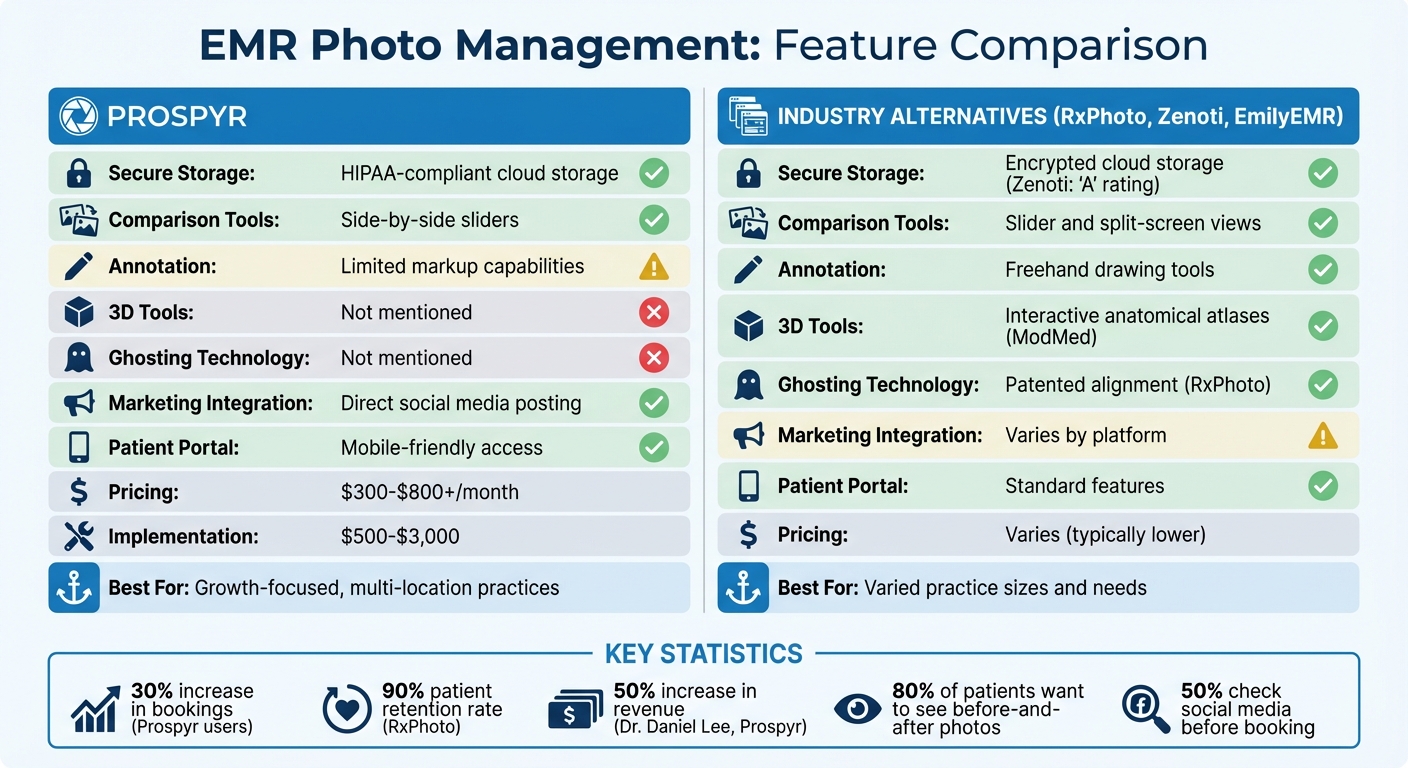
EMR Photo Management Features Comparison: Prospyr vs Industry Alternatives
Taking a closer look at Prospyr's photo management system reveals a mix of strengths and a few trade-offs that come with its advanced features.
Prospyr shines when it comes to turning clinical documentation into marketing opportunities, all while staying HIPAA-compliant. It has proven to boost practice performance, with results like a 30% increase in bookings and three times more client leads. Patients also benefit from secure access to their treatment photos through a mobile-friendly Patient Portal, which fosters both engagement and trust.
The main trade-off? Prospyr's robust features come at a higher cost. Monthly pricing typically falls between $300 and $800+, and implementation fees range from $500 to $3,000. While the platform is ideal for growth-focused or multi-location practices, it does come with a steeper learning curve.
| Feature Category | Prospyr's Capabilities | Primary Benefit |
|---|---|---|
| Marketing Integration | Direct social media posting, consent tracking | Simplifies client acquisition |
| Clinical Documentation | Image editor, automated tagging | Enhances workflow efficiency |
| Patient Engagement | Mobile portal access to treatment photos | Builds transparency and trust |
| Security & Compliance | HIPAA-compliant cloud storage | Safeguards patient privacy |
| Best Suited For | Growth-focused and multi-location practices | Supports business scalability |
For practices looking to streamline their marketing efforts and turn social media engagement into actual appointments, Prospyr's integrated approach is a game-changer. By eliminating the need for multiple tools, it offers a well-rounded solution that balances security, efficiency, and marketing capabilities - perfect for practices focused on growth.
Conclusion
Choose an EMR that brings together a centralized media archive, reliable capture tools, advanced comparison features, integrated consent management, simple tagging, seamless integration, social media connectivity, and patient portal access. These features can transform how you document treatments, improve consultations, and turn clinical photos into embedded marketing opportunities.
Consider this: 80% of patients want to see before-and-after photos of people who resemble them, and 50% check social media before booking an appointment. EMRs like Prospyr have been shown to reduce data entry errors by threefold. Practices using streamlined EMR and CRM systems report a 30%+ increase in new patient bookings driven by optimized lead capture workflows. These numbers highlight the importance of selecting a system that combines accuracy with efficiency.
Look for features such as image ghosting for precise photo alignment, HIPAA-compliant cloud storage with role-based permissions, and unlimited storage capacity. Prioritize systems designed by practitioners who understand clinical workflows, instead of generic medical EMR solutions.
For growth-focused practices, Prospyr offers a seamless way to unify clinical documentation with marketing execution. The platform can generate a week's worth of social media content in just 10 minutes. Dr. Daniel Lee from New Life Cosmetic Surgery shared his experience:
We've seen a 50% increase in revenue and a 40% increase in appointments booked since switching away from using several different point solutions to running our practice on Prospyr.
The right photo management system should eliminate the hassle of juggling multiple apps, automatically safeguard patient privacy, and turn treatment photos into powerful tools for both clinical and marketing purposes. By aligning your EMR with your practice's needs, platforms like Prospyr can streamline your operations and support your growth goals.
FAQs
How do I keep treatment photos HIPAA-compliant?
To keep treatment photos in line with HIPAA requirements, it’s essential to store them on encrypted, HIPAA-compliant cloud servers. Avoid leaving photos on devices or in locations outside the practice for extended periods. Make it a habit to upload images to secure storage promptly and delete them from devices afterward. Also, steer clear of sharing photos through unsecured email or messaging apps. These practices safeguard patient privacy and ensure compliance with HIPAA standards.
What photo comparison tools matter most for before-and-after results?
When it comes to showcasing progress effectively, certain photo comparison tools can make all the difference. Features like side-by-side views allow for a direct comparison of images, while ghosting overlays help align photos perfectly for a seamless visual match. Tools such as background removal ensure distractions are eliminated, keeping the focus on the subject.
Interactive options like sliders let viewers easily compare changes by moving between "before" and "after" images, and morphing can visually demonstrate transitions over time. These tools work together to clearly and consistently display results, making them invaluable for aesthetic practices aiming to highlight their work.
How should photo consent be tracked for marketing use?
To handle patient consent for marketing purposes, practices need to secure written authorization before using or sharing any protected health information (PHI). Under HIPAA regulations, this consent must be explicit and properly documented, covering all marketing activities, including the use of patient photos.
Many modern EMR systems, such as Prospyr, offer built-in tools to securely record and manage these permissions. These features not only help maintain compliance but also create a clear, accessible record of patient authorizations for promotional or social media use.