CRM vs EMR: Which System Does Your Med Spa Need?
What a CRM and an EMR each do in a med spa, which one your practice needs first, and how to decide between one system or two connected ones.

For practice owners and managers. Updated September 22, 2026 · Prepared by Prospyr. Prospyr makes practice software that combines both systems, so read the recommendations with that in mind.
CRM or EMR: the short answer
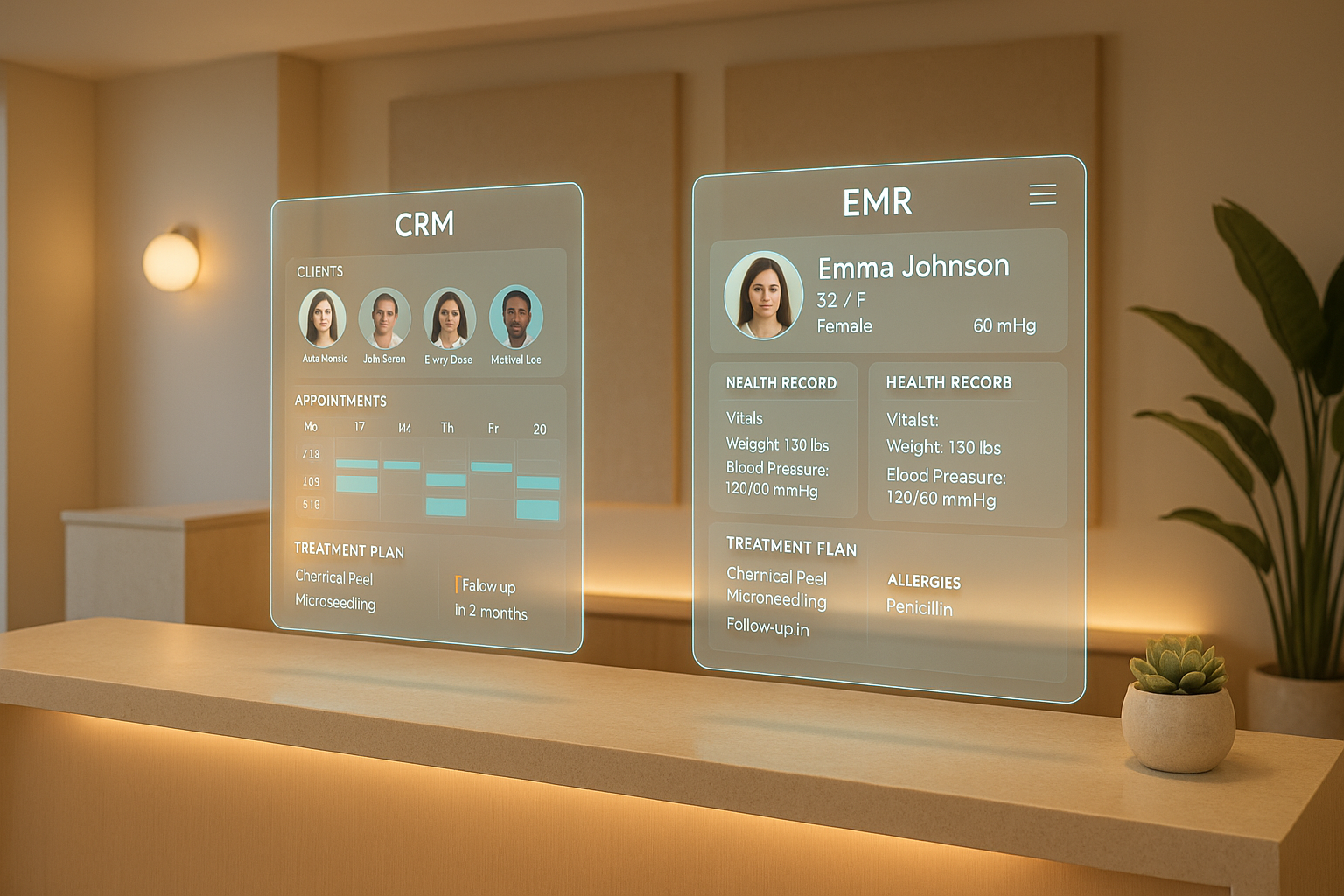
An EMR (electronic medical record) holds the clinical record: medical history, treatment notes, consents, photos, prescriptions and the product used at each visit. A CRM (customer relationship management system) runs the patient relationship: leads, inquiries, reminders, campaigns and rebooking.
Any practice that treats patients needs an EMR. Whether you also need a separate CRM depends on how much of your growth comes from new leads and repeat visits, and whether your EMR already handles that work. Most med spas end up needing both jobs done. The real decision is whether they run in one system or two.
What each system does
| EMR | CRM | |
|---|---|---|
| Main job | Document care and keep the clinical record | Win new patients and bring existing ones back |
| Holds | Medical history, treatment notes, consents, photos, prescriptions, product used | Lead source, inquiries, conversations, appointment history, campaign activity |
| Who uses it most | Providers and clinical team | Reception, patient coordinators, marketing |
| Compliance weight | Heavy: HIPAA, consent, record retention, prescribing rules | Still holds patient information, so HIPAA applies to messages and lists too |
| Typical reports | Treatments performed, product use, clinical follow-ups due | Lead conversion, rebooking rate, campaign results |
Both hold protected health information in a med spa. A CRM that stores who booked which treatment, or texts a patient about a follow-up, needs the same care as the chart, including a business associate agreement (BAA) with the vendor.
Reading about the problem? See how Prospyr solves it in one platform.
Book a DemoWhich does your practice need?
A solo injector or a new practice needs an EMR from day one: charting, consents and photos are not optional. If the EMR includes online booking, reminders and basic follow-up messages, a separate CRM can wait.
A growing med spa that spends on marketing needs both jobs done well. When leads arrive from ads, your website and Instagram, someone has to track each one to a booked consult and follow up with the ones who don't book. That is CRM work, and doing it from a spreadsheet next to the EMR is where most leads get lost.
A medically focused or surgical practice puts the EMR first and should check the clinical depth closely: prescribing, labs, surgical documentation and, if you bill payers, insurance claims. A CRM still helps with consults that don't convert, but it is the second decision, not the first.
One system or two?
There are two ways to get both jobs done.
Two systems, connected. You pick the EMR you like best and a separate CRM, then connect them. This can work, but check the connection closely in the demo:
- How is the same patient matched in both systems, and what happens with duplicates?
- Which system owns the appointment, and how fast do changes sync?
- Does treatment history reach the CRM, so a follow-up can be based on what was actually done?
- Do marketing opt-outs and consent flow both ways?
- Do you have a BAA with both vendors, and with any tool in between?
One system with both. The chart, lead pipeline, booking, payments and messages share one patient record, so nothing needs to sync. The trade-off: you depend on one vendor to be good at both jobs, so test the clinical side and the lead side with equal care.
If you're comparing specific products, our comparison of aesthetic EMRs covers the main options and who each one fits.
Questions to ask in any demo
- Show one fictional lead going from first inquiry to booked consult to charted treatment. Where does the information have to be typed twice?
- After a treatment, can the follow-up message use what was charted (for example, a toxin touch-up reminder)?
- Who on the team can see clinical notes, and who can see only contact and booking details?
- What does the vendor's BAA cover, and does it include messaging?
- How do you export both the clinical record and the contact history if you leave?
Where Prospyr fits
Prospyr runs both jobs on one patient record: the aesthetic EMR (charting with image markup, consents, photos, e-prescribing and labs) and the lead pipeline, booking, payments and follow-up messages. Prospyr does not handle insurance billing today, so practices that bill payers should keep a separate claims solution. Book a practice demo to run the questions above on your own workflow.
FAQ
Is an EMR the same as an EHR?
In everyday use, yes. Strictly, an EMR is the record kept by one practice and an EHR is designed to be shared across providers. Aesthetic software vendors use both terms for the same thing.
Can a CRM replace an EMR in a med spa?
No. A CRM does not provide the clinical documentation, consent records and prescribing a medical practice needs. Some platforms include both, which is different from using a CRM alone.
Does a med spa CRM need to be HIPAA compliant?
If it stores or sends information about patients and their treatments, treat it as holding protected health information: use a vendor that will sign a BAA, limit access by role, and keep marketing consent records.
Editorial scope
This is a general buying guide based on common aesthetic practice workflows, written by Prospyr with AI-assisted drafting and reviewed September 22, 2026. It is not legal or compliance advice. Read our methodology or report a correction.
Software comparison
Which med spa software includes full aesthetic EMR charting?
Of the 18 platforms compared (reviewed July 2026 – September 2026), 12 document full aesthetic EMR charting as included. The exceptions: Aesthetic Record, Boulevard, Mangomint, Mindbody, Pabau and Vagaro offer a limited or add-on version. Prospyr publishes this comparison and is one of the platforms in it.
- Full aesthetic EMR charting (12 of 18): all except Aesthetic Record, Boulevard, Mangomint, Mindbody, Pabau and Vagaro