Top Competitor Branding Strategies for Med Spas
Visual identity, local SEO, reviews, AI personalization and consistent multi-channel branding med spas use to attract and retain clients.

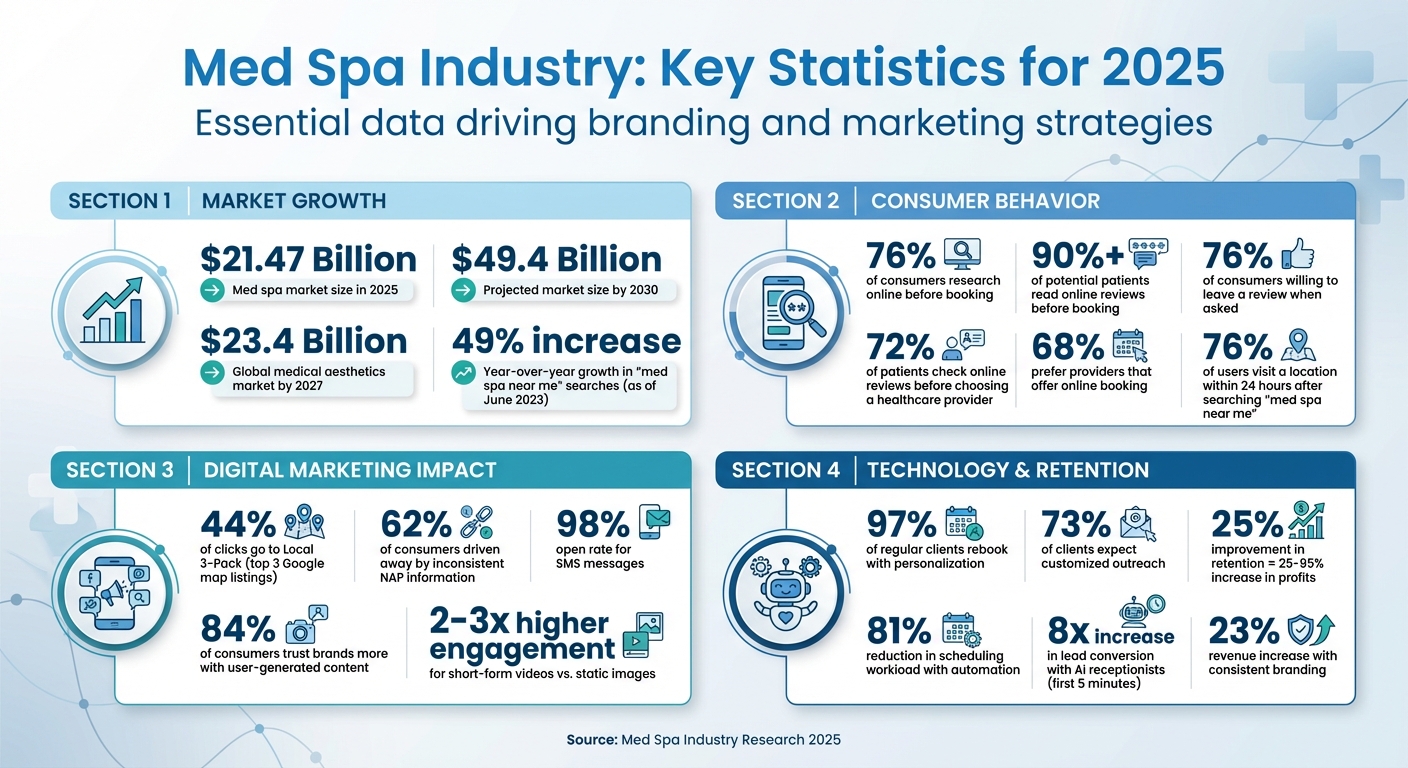
The med spa industry is growing fast, with a market size expected to reach $21.47 billion in 2025. Standing out in this competitive space requires more than just offering treatments - it's about building trust and creating a strong brand. Here's what successful med spas are doing:
- Visual Identity: Tailor design elements (colors, fonts, and spaces) to appeal to specific age groups and demographics. For example, younger clients respond to modern, clean designs, while older clients prefer sophisticated, timeless aesthetics.
- Local SEO: Optimize your Google Business Profile and maintain consistent information across directories like Yelp and RealSelf to rank higher in local searches.
- Online Reviews: Encourage and respond to reviews quickly. Tools like Podium help automate the process, increasing visibility and credibility.
- AI and Automation: Use AI for personalized recommendations, client retention, and automated communication. This saves time and improves client engagement.
- Social Media: Focus on educational content, client success stories, and short videos to connect with potential clients and showcase expertise.
- Consistency Across Channels: Align your branding across your website, social media, and physical clinic to create a seamless experience.
With 76% of consumers researching online before booking and local searches driving 44% of clicks, these strategies are essential for attracting and retaining clients. Med spas that embrace these approaches are better positioned to thrive in a competitive market.
Med Spa Branding Statistics: Market Growth, Consumer Behavior, and Digital Marketing Impact 2025
Visual Identity and Demographic Targeting
Your med spa's visual identity acts as a silent introduction to your brand. The most successful med spas know that design choices aren't just about looking good - they signal who you're speaking to, whether it's trendy millennials or affluent baby boomers. And it's not just a nice-to-have; strategic design can increase revenue by as much as 23%.
Designing for Different Age Groups
Top-performing med spas align their design elements with the preferences of their target audience. Take Beauty Lab + Laser in Salt Lake City, for example. Founded by New York Times bestselling author Heather Gay, this med spa tailors its branding - colors, fonts, and messaging - to connect with young moms and middle-aged women. The result? A brand that feels both stylish and purposeful.
Typography plays a big role here. Med spas targeting younger clients often go for clean, sans-serif fonts to create a modern, approachable vibe. On the flip side, those catering to older, affluent customers lean toward elegant serif fonts, projecting sophistication and timelessness. These choices extend into their physical spaces, where you'll often find accent walls and refined color schemes reinforcing the brand's identity.
Using Color Psychology in Branding
Colors have a subtle yet powerful influence on how people perceive your practice. Successful med spas use this to their advantage, selecting palettes that align with their values and appeal to their audience.
- Blue: Evokes trust and relaxation, perfect for practices focused on anti-aging treatments and medical expertise.
- Black: Conveys luxury and exclusivity, ideal for high-end clientele.
- Pink and tan: Create a feminine, approachable feel, resonating with younger demographics.
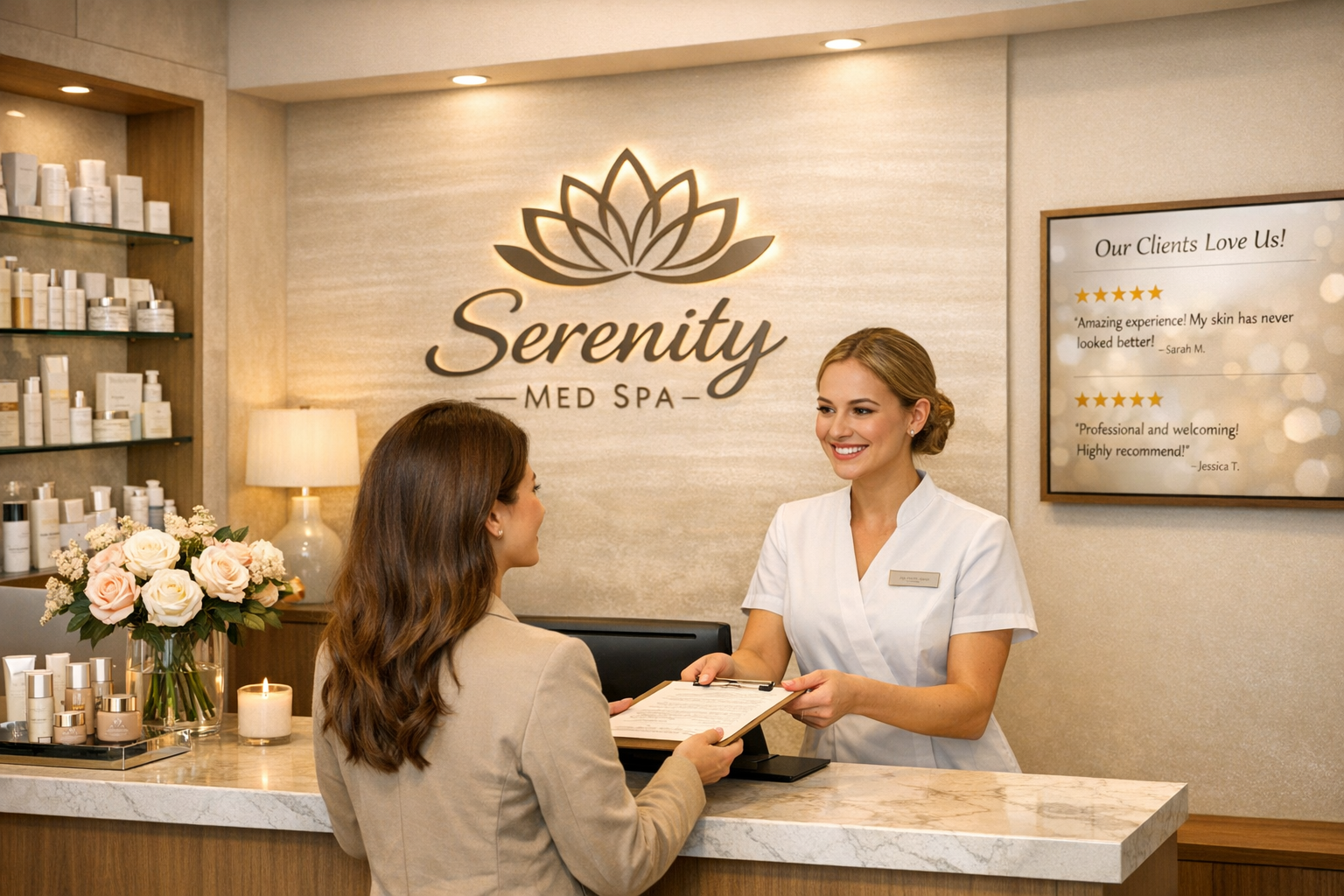
Consistency is key. The best med spas carry their chosen palette across all touchpoints - physical spaces, websites, and social media. For example, many use white as a base to emphasize professionalism, then add splashes of brand colors through wood accents, accent walls, and carefully placed lighting on reception logos.
sbb-itb-02f5876
Building Local Trust and Online Visibility
For searches like "med spa near me", 76% of users visit a location within 24 hours. This makes building local trust just as critical as creating a strong online presence. Med spas that lead in local search results excel at being both visible and reliable where it matters most.
Local Search Optimization
Your Google Business Profile acts as your digital storefront and is key to appearing in the sought-after "Local 3-Pack" - the top three map listings that grab about 44% of all clicks. Top med spas ensure their profiles are claimed and verified, set "Medical Spa" as their primary category, add quality photos of their facility and staff, and post regular updates to show activity.
But visibility doesn't stop with Google. The best-performing med spas maintain consistent NAP (Name, Address, Phone number) information across directories like Yelp, Facebook, Apple Business Connect, and industry-specific platforms such as RealSelf, Healthgrades, and WebMD. Even a single inconsistency can drive away 62% of consumers.
| Directory Type | Examples | Why It Matters |
|---|---|---|
| General | Google Business, Yelp, Facebook, Apple Maps | Builds local search rankings and boosts visibility |
| Healthcare-Specific | RealSelf, Healthgrades, WebMD | Adds credibility and attracts aesthetic-focused clients |
| Hyper-Local | Chamber of Commerce, Nextdoor | Enhances community presence and local relevance |
Many successful med spas also create specialized landing pages for treatments like Botox or microneedling to capture high-intent searches. With "med spa near me" searches increasing by 49% year-over-year as of June 2023, this level of precision delivers results. Strong online reviews further cement trust and visibility.
Using Online Reviews and Testimonials
More than 90% of potential patients read online reviews before booking, and Google ranks reviews as the top factor for local SEO. Leading med spas use tools like Podium or BirdEye to automate SMS and email review requests, often sending them right after appointments.
"Google reviews are the #1 ranking factor for local SEO. More positive reviews = higher search rankings = more patient bookings." - The Med Spa Agency
Encouraging patients to mention specific treatments and locations in their reviews (e.g., "I loved my Botox results at [Spa Name] in downtown Austin") helps boost keyword relevance. Responding to reviews within 24–48 hours shows professionalism and a commitment to patient care.
Beyond written feedback, savvy med spas use video testimonials, before-and-after galleries, and case studies to visually highlight results. They make the review process easy by placing QR codes at the front desk, linking directly to their Google Business Profile review page. Some even offer small incentives, like 10% off the next treatment or entry into a giveaway, to encourage reviews. With 76% of consumers willing to leave a review when asked, this approach turns happy clients into powerful advocates for your business.
Reading about the problem? See how Prospyr solves it in one platform.
Book a DemoUsing Technology for Personalization and Client Engagement
Like visual and local strategies, using technology to personalize experiences builds trust and strengthens client engagement. Many top med spas are leveraging AI and automation to create tailored experiences, and the results speak for themselves: 97% of regular clients rebook when personalization is offered, and 73% now expect customized outreach. This shift toward tech-driven personalization is reshaping how med spas retain clients and enhance their services.
AI-Powered Personalization
AI tools are transforming how med spas understand and serve their clients. Advanced systems can scan a client’s skin, assess conditions using machine learning, and recommend specific treatments almost instantly. For example, these tools can trigger reminders for rebooking - like scheduling Botox every four months - and create highly targeted campaigns. Think anti-aging promotions for older clients or hydration treatments for regular facial enthusiasts. SkinZone Medical’s automated email and SMS campaigns are a great case study: they brought back 275 guests, resulting in a 23% return rate and a 27% boost in revenue.
AI-powered receptionists are another game-changer, offering 24/7 support through phone, WhatsApp, and email. These systems have increased lead conversion rates by a staggering eightfold within the critical first five minutes of contact. Additionally, automation tools like digital intake forms and automated texting have slashed scheduling workloads by 81%, saving med spas from managing 10,000 manual text messages each month.
"A deeply integrated phone system with an AI receptionist delivers real value by completing tasks end-to-end using live customer and appointment data."
– Siddharth Rao, Senior Product Management Manager, Zenoti
Automated Client Retention Tools
Automation doesn’t just improve first impressions - it’s also a powerful tool for keeping clients coming back. Even a modest 5% improvement in client retention can increase profits by 25% to 95%. For instance, The Waxing Studio used automated, personalized promotions to re-engage 436 guests, generating $69,000 in revenue.
Predictive analytics take retention efforts a step further. These systems can forecast demand and perfectly time treatment offers. They also send personalized follow-ups, like aftercare instructions tailored to specific services - think post-microneedling recovery tips.
Membership and loyalty programs have also evolved through automation. Platforms now handle tiered memberships, points-based rewards, and automated billing seamlessly, creating consistent recurring revenue without extra manual work. In fact, med spas saw a 24% rise in membership sales in 2024. Automated feedback tools, like post-appointment surveys sent via text or email, help practices address concerns quickly while encouraging happy clients to leave glowing reviews.
Comprehensive platforms such as Prospyr integrate everything from CRM/EMR systems to AI-driven booking, automated email/SMS campaigns, and membership management. This all-in-one approach allows med spas to deliver personalized, seamless experiences at every client touchpoint.
Social Media for Education and Engagement
Social media is now the go-to platform for med spas to showcase their expertise and connect with potential clients. Did you know that 84% of consumers trust brands more when they share user-generated content? Plus, short-form videos in the beauty and wellness industry generate 2–3x higher engagement compared to static images. Many leading med spas are shifting away from trendy, fleeting posts and focusing instead on educational content. This approach not only builds authority but also transforms casual scrollers into loyal clients. It's a strategy that fosters stronger connections and deeper engagement.
Educational Content Strategies
The best med spas address client questions before they're even asked by sharing treatment overview videos. Short clips - just 10 to 20 seconds long - highlighting procedures like injections, facials, or laser treatments are incredibly effective on platforms like Instagram Reels and TikTok. But it’s not just about showing the process. Sharing evidence-based information, such as how specific ingredients work with the skin or the science behind chemical peels, helps establish trust and positions the practice as an expert in the field.
"When you help your audience understand their skin and options, you build trust and authority."
– Daniel Gouw, EDNA Digital Marketing
Interactive formats like FAQ sessions and "Ask Me Anything" (AMA) events are also great for addressing common concerns about recovery, pain, and pricing. Introducing the practitioners through staff spotlights - putting a face to the person “holding the needle” - helps humanize the brand and makes clients feel more comfortable. Sharing step-by-step pre- and post-care instructions is another way to manage expectations and ease anxiety. To keep this content flowing without overwhelming the team, many practices batch-create posts monthly, maintaining a steady schedule of 3–5 posts per week. While educational content builds credibility, sharing client success stories takes trust to the next level.
Sharing Client Success Stories
Client success stories are more than just testimonials - they’re transformation journeys. The most impactful stories follow a clear narrative: Before (the client’s concern), the Problem, the Solution (the treatment), and the Outcome. This structure helps potential clients envision how these treatments could work for them.
Take Face Fabulous Med Spa as an example. In May 2025, they combined client success stories with targeted social media efforts and paid ads, generating $64,022 in revenue and 213 qualified leads in just 30 days. Their campaign featured two key offers: a "$4/Unit Tox" promotion, which brought in $36,246, and a "$799 Bio-Filler" package, which added $27,776 to their revenue. By using a mix of static images and short-form videos, they successfully boosted local awareness.
Authenticity matters, too. Practices that openly discuss recovery experiences often earn higher levels of trust. Adding location tags to posts can improve local visibility, and saving video testimonials to Instagram Story Highlights under categories like "Real Results" ensures new followers can easily access them anytime. These strategies turn interest into appointments and build lasting client relationships.
Multi-Channel Branding Strategies
Your brand isn’t confined to a single platform - it lives on your website, social media, Google Business Profile, email campaigns, and even within your physical clinic. Keeping your branding consistent across these channels can boost revenue by as much as 23%. When prospective clients encounter a cohesive brand experience, whether online or offline, it reinforces trust and strengthens their connection to your business. This seamless integration ties your digital presence to the impression clients get when they visit your clinic in person.
Aligning Digital and In-Office Branding
The transition from online interactions to in-person visits should feel effortless. Many med spas excel at this by ensuring their digital and physical branding align perfectly. For example, they use the same fonts, colors, and overall aesthetic across their social media, websites, and physical spaces. Even the tone of their Instagram captions matches how their receptionists welcome clients, creating a unified experience.
The physical environment plays a crucial role too. Top med spas design their reception areas to reflect the vibe of their website. This might include strategic lighting to highlight logos or carefully chosen color schemes in treatment rooms that mirror their online branding. Additionally, every team member - from front desk staff to digital marketers - embodies the brand’s mission and values, ensuring every client interaction feels consistent and intentional.
Combining Paid and Organic Marketing
To maximize reach, med spas blend paid and organic marketing strategies. Paid ads on platforms like Google and Meta can generate immediate leads, while organic approaches like SEO and social media build long-term trust and authority. The magic happens when these efforts work together - repurposing successful organic content for paid campaigns and retargeting users who engaged but didn’t book.
Take 7Q Spa Laser & Aesthetics as an example. In 2025, they created a relatable "expectation vs. reality" video that struck a chord with audiences, earning 2.4 million organic views and 188,600 likes. They didn’t stop there - they turned this viral content into paid ads and followed up with automated email and SMS campaigns. This strategy converted online engagement into actual appointments, with SMS messages achieving an impressive 98% open rate. By integrating these efforts, they ensured their brand stayed top-of-mind from the first interaction to the final appointment confirmation.
Platforms like Prospyr make this process even smoother by automating communications and maintaining consistent engagement across all client touchpoints. This kind of integration ensures your brand remains present and memorable, every step of the way.
Conclusion
Building a successful med spa brand requires careful planning and attention to every detail of your business. From crafting visual identities that resonate with your target audience to fine-tuning your Google Business Profile for local visibility, every tactic contributes to attracting and retaining clients. With the med spa market projected to hit $49.4 billion by 2030, the competition is only going to get tougher. That’s why intentional branding is key to earning trust and fostering loyalty.
As Growth99 aptly puts it:
"Med spa marketing success depends on a strategic and systematic marketing approach. Relying on magical thinking or random tactics leads to stagnation."
The most effective med spas focus on building loyalty by creating signature services, maintaining consistent messaging across all platforms, and embracing technology to offer personalized experiences. Consider this: 72% of patients check online reviews before choosing a healthcare provider, and 68% prefer providers that offer online booking. These numbers highlight the importance of meeting today’s consumer expectations with digital convenience and authentic interactions.
Take the time to assess which strategies align with your business goals and local market demands. Whether it’s optimizing for local search, producing educational content, or automating client follow-ups, consistent branding can transform one-time visitors into loyal clients.
With the global medical aesthetics market expected to reach $23.4 billion by 2027, practices that adopt these strategies will be in the best position to thrive. Stay focused on strategies that work, track your results, and continuously refine your approach based on data-driven insights.
FAQs
How can med spas use color psychology to strengthen their branding?
Colors have a significant influence on how people perceive your med spa. The right color palette can evoke emotions and build trust with your audience. For instance, blue is often associated with professionalism, trust, and cleanliness - perfect for clinics offering clinical treatments. Green, on the other hand, reflects natural healing and balance, making it a great choice for spas specializing in organic or plant-based therapies. White and neutral shades give off a sleek, luxurious vibe, while soft pinks exude warmth and femininity, resonating with a largely female clientele.
To make the most of your color choices, ensure they are used consistently across every aspect of your business - your website, signage, staff uniforms, and even digital tools like scheduling software and email templates. This consistency not only strengthens brand recognition but also creates a polished and professional experience for your clients. Tools like Prospyr can help you align your branding across all touchpoints, giving your med spa a distinct edge in a crowded market.
How does AI help med spas improve client engagement?
AI is reshaping the way med spas connect with their clients by delivering more tailored, efficient, and convenient experiences. For instance, AI-driven tools can handle tasks like automating appointment bookings, sending customized reminders, and providing instant responses to client questions. This not only speeds up interactions but also makes them more user-friendly.
On the marketing front, AI helps med spas fine-tune their strategies by personalizing content based on client preferences, optimizing ad performance, and keeping tabs on online reviews in real time. These features allow med spas to attract new clients while strengthening bonds with their current customer base. By simplifying daily operations and offering a more individualized client journey, AI gives med spas the edge they need to foster loyalty and stand out in a busy marketplace.
Why is local SEO important for med spas to attract more clients?
Local SEO is a game-changer for med spas because so many potential clients are actively searching for services in their area. Think about it - phrases like “Botox near me” are incredibly common. In fact, nearly half of all Google searches have a local focus, and here’s the kicker: 76% of people who search on their mobile devices end up visiting a business within just 24 hours.
By fine-tuning your local SEO strategy, your med spa can secure a prime spot in Google’s local search results and Map Pack. This means more walk-ins, a boost in online bookings, and ultimately, higher revenue. Showing up where your clients are searching isn’t just smart - it’s essential for building connections and growing your business.