Pathogen Safety Protocols for Med Spa Staff
OSHA-aligned steps for med spa staff: room setup, proper PPE, safe sharps handling, hand hygiene, and immediate exposure reporting.
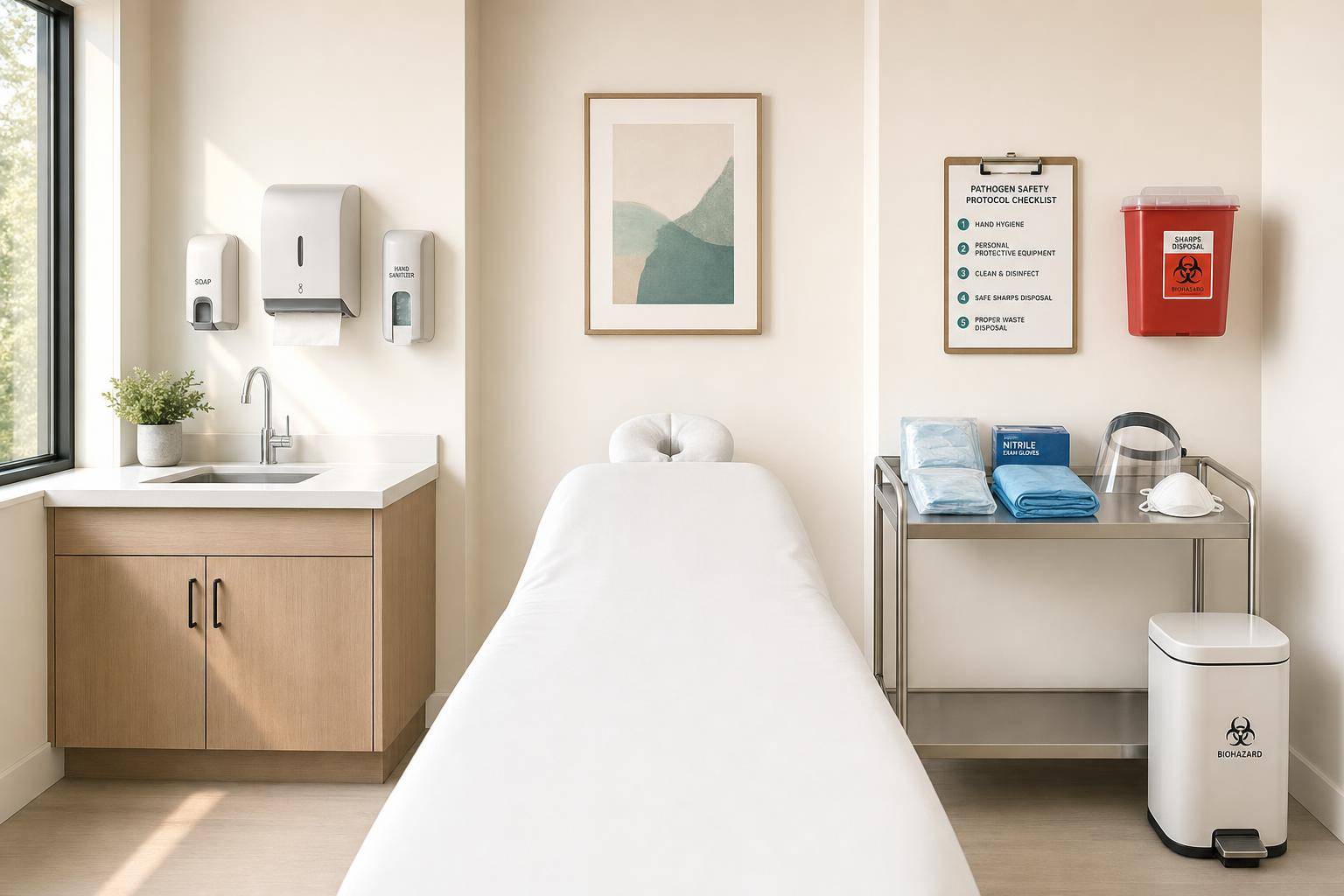

If a med spa breaks the skin, staff need the same infection-control steps every time. In this guide, I’d boil it down to four things: set up the room right, use PPE the right way, handle sharps with care, and report exposures at once.
Here’s the short version:
- I need to treat every patient as a possible exposure risk
- I need hand hygiene at 5 key moments
- I need to put sharps containers at the point of use
- I should never recap needles
- I need to clean surfaces between every patient
- I should bag soiled linens where they are used and never shake them
- I need a written plan for spills, needlesticks, and follow-up
- OSHA requires yearly bloodborne pathogen training
- Staff at risk must be offered the hepatitis B vaccine
- Common bloodborne risks in med spas include HBV, HCV, and HIV
A few treatment types carry more exposure risk than others. That usually includes injections, microneedling, PRP/PRF, IV therapy, blood draws, thread lifts, and laser/IPL on damaged skin.
Quick snapshot: if blood, non-intact skin, or sharps are part of the visit, the room, staff, tools, and cleanup steps all need to follow one fixed routine.
| Area | What I focus on |
|---|---|
| Room setup | Sharps container, sink supplies, clean/dirty zones, waste bins |
| During treatment | Standard precautions, skin prep, sharps in sight, no recapping |
| PPE | Gloves, mask, eye protection, gown based on splash or contact risk |
| Cleanup | Linens bagged at point of use, surface disinfection, wet contact time |
| Exposure response | First aid, spill cleanup, same-day report, follow-up records |
This article gives me the day-to-day OSHA-aligned steps staff can use to cut exposure risk and keep records in order.
Set up treatment rooms to reduce exposure
Once you've pinpointed the main exposure risks, the next move is the room layout. This part matters more than it might seem. If disposal items, hand hygiene supplies, and disinfecting products are all within easy reach, staff can follow standard precautions right away instead of stopping to hunt things down.
Put simply: when supplies are exactly where staff need them, safe behavior becomes the easy default.
Where to place sharps containers, hand hygiene supplies, and waste bins
Place your puncture-resistant sharps container at the point of use - as close as possible to the exact area where sharps are used. That cuts down the distance a staff member has to carry a used needle before disposal.
Keep soap, paper towels, and alcohol-based sanitizer at the point of care and at every sink. For contaminated gloves and other biohazardous waste, use hands-free trash bins.
How to sterilize, disinfect, and store tools correctly
Needles, lancets, and other single-use disposables should go into the right waste container after one use. Reusable tools need sterilization or disinfection based on the manufacturer's instructions, plus a dedicated processing workflow and up-to-date maintenance logs.
A simple way to think about it: each supply type has its own handling rule.
| Item Category | Examples | Required Handling | What Staff Must Do |
|---|---|---|---|
| Single-Use | Needles, lancets, gloves, disposable linens | Dispose in the correct sharps or biohazard bin | No sterilization time needed; requires consistent inventory management |
| Reusable | Metal extractors, certain laser tips, surgical tools | Autoclave or manufacturer-specified sterilization | Requires dedicated sterilization space and up-to-date maintenance logs |
| Environmental Surfaces | Treatment tables, counters, equipment housings | EPA-approved disinfectant wipe-down between every patient | Requires documented cleaning routines and accessible Safety Data Sheets (SDS) |
Every chemical product used in the room needs a Safety Data Sheet (SDS) on file and easy for staff to access.
How to manage surfaces, linens, and ventilation before procedures
Before the first patient arrives, split the room into clean and dirty zones. Set sterile supplies in one area, and direct used instruments, waste, and soiled linens to another.
Handle soiled linens in closed, labeled containers when blood or body fluid contamination is possible. Never shake or sort used linens in the treatment area. That can spread contamination onto nearby surfaces and into the air. In laser and energy-based rooms, check ventilation and air filtration before the first procedure.
sbb-itb-02f5876
Reading about the problem? See how Prospyr solves it in one platform.
Book a DemoWork practice controls to follow during every patient visit
Once the room is ready, the job isn't done. Staff need to keep those controls in place during every patient visit. The big idea is simple: keep clean tasks and contaminated tasks apart. That's how daily work turns OSHA and CDC standard precautions into routine practice.
Apply standard precautions from patient prep through disposal
Treat every patient as potentially infectious, no matter their history or the type of procedure. Hand hygiene needs to happen at each key moment:
- before touching the patient
- before a clean or aseptic task
- after contact with body fluids
- after touching the patient
- after touching the patient's surroundings
Keep clean supplies away from contaminated work areas. And once a single-use item has been used, throw it away right away.
How to perform injections and skin-disrupting procedures safely
For any procedure that breaks the skin, use the same sequence every time:
| Procedure Step | What to Do |
|---|---|
| Preparation | Perform skin antisepsis; open sterile supplies only when ready to use them |
| During the procedure | Keep sharps visible at all times; no hand-to-hand passing |
| After the procedure | Place used sharps directly into the puncture-resistant container; never recap |
Keeping sharps in sight throughout the procedure helps prevent accidental needlestick injuries.
How to turn over rooms and handle laundry without spreading contamination
Use the same room-turnover sequence every time. First, remove disposable barriers. Then bag soiled linens at the point of use, and never shake them. After that, clean high-touch surfaces to remove organic matter, then apply your disinfectant. The surface needs to stay wet for the full contact time. Log each turnover step and the completion time for inspection.
These same controls carry into PPE and hand hygiene.
How to use PPE and hand hygiene correctly
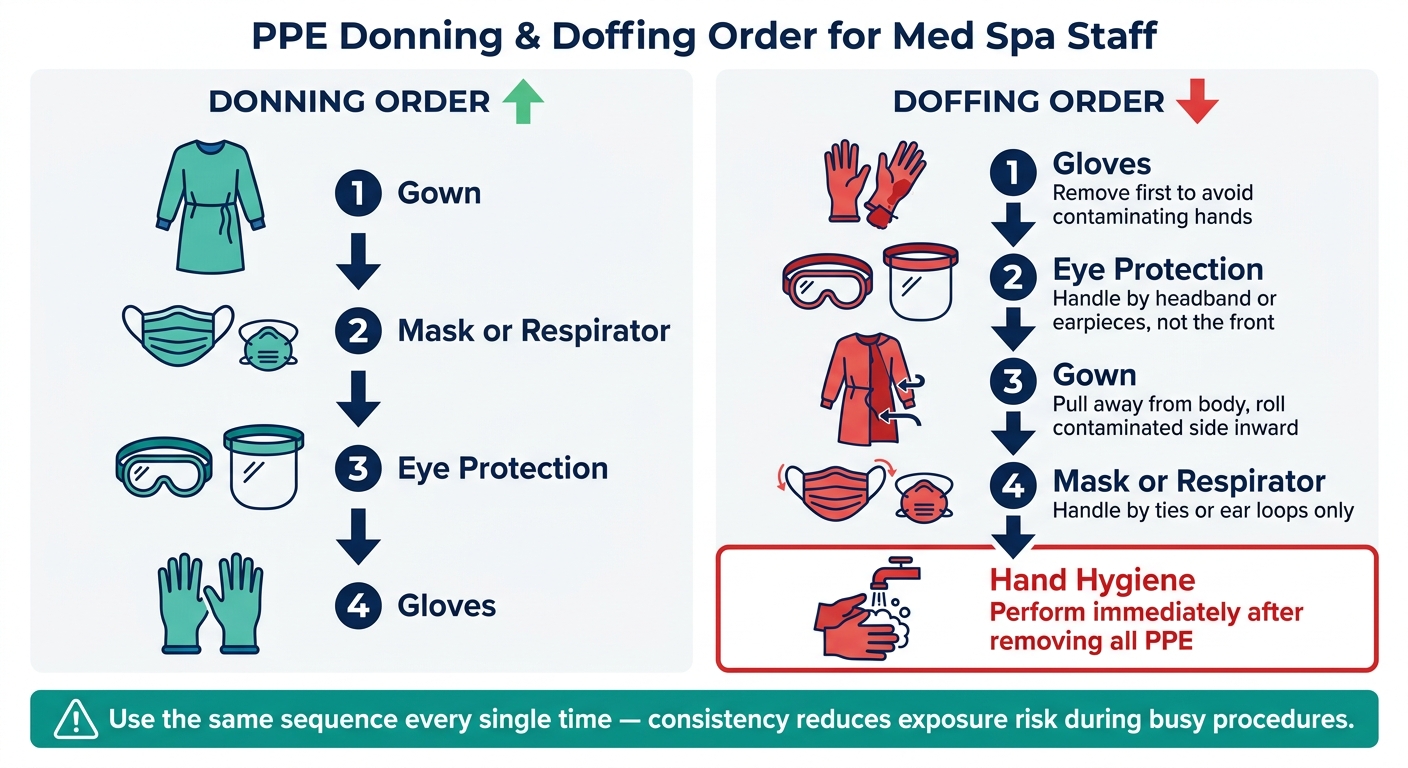
PPE Donning & Doffing Order for Med Spa Staff
Once the room is set up, PPE and hand hygiene help stop exposure from moving from one task, surface, or patient to the next. The key is simple: use the same sequence every time during patient care.
Match gloves, masks, eye protection, and gowns to the task
PPE should match the job in front of you. Use gloves for all patient contact. Add a mask and eye protection when there's a risk of splashes. Wear a gown when your clothing could be exposed.
That sounds basic, but this is where mistakes often start. If the task involves blood, body fluids, or close contact, staff shouldn't guess. The SOP should make the choice clear.
The correct order for putting on and removing PPE
Add the donning and doffing order to the SOP and train staff to follow it the same way every single time. Consistency matters here. A set routine cuts down on errors when things get busy.
Donning order:
- Gown
- Mask or respirator
- Eye protection (goggles or face shield)
- Gloves
Doffing order:
- Gloves (remove first to avoid contaminating hands)
- Eye protection (handle by the headband or earpieces, not the front)
- Gown (pull away from body, rolling contaminated side inward)
- Mask or respirator (handle by the ties or ear loops only)
- Perform hand hygiene immediately after removing all PPE
After PPE is chosen and worn the right way, hand hygiene deals with the last point of transfer between clean and contaminated tasks.
When and how to perform hand hygiene
Write hand hygiene into the SOP as numbered steps:
- Before patient contact
- Before aseptic tasks
- After body-fluid exposure
- After patient contact
- After touching the patient's surroundings
Use soap and water when hands are visibly soiled or after glove removal following contact with blood or body fluids. For all other moments, use an alcohol-based hand sanitizer with at least 60% alcohol. Scrub or rub for at least 20 seconds, then let hands dry fully before touching clean supplies or the next patient.
These controls set up safe sharps disposal and spill cleanup.
How to respond to sharps injuries, spills, and exposure incidents
Even with a well-set room and the right PPE, staff still need a fast plan for injuries, spills, and exposure incidents. This section breaks that response into three parts: dispose, clean, and report.
How to dispose of sharps safely and replace containers on time
Dispose of sharps right away at the point of use. Don’t overfill containers, and replace them before they hit the fill line. You should also log sharps container replacement and waste disposal so your records stay current with OSHA requirements.
Once sharps are secured, move straight to spill control and exposure documentation.
How to clean blood and body fluid spills in the correct order
Clean the spill immediately, then disinfect the area based on your protocol. Document the spill or exposure incident the same day.
After the area is safe, document what happened and begin follow-up.
How to report exposures and document follow-up
After a spill or exposure incident, take these three steps:
- Document the incident using digital intake tools
- Record cleanup steps and follow-up outcomes
- Store the report with training records
Training records must include the date, topics covered, and the staff member's signature. Store training records, incident reports, and follow-up notes together with dated signatures.
FAQs
What counts as an exposure incident?
An exposure incident is any event where a worker comes into contact with blood or other potentially infectious materials during care or procedures.
That can include:
- Needlesticks
- Blood splashes
- Contact with potentially infectious materials
When an exposure incident happens, the details need to be documented carefully. That record should cover the circumstances of the event, the device involved, the task being performed, the PPE used, and any follow-up actions taken.
Which med spa treatments carry the highest pathogen risk?
Treatments that involve skin penetration carry the highest risk of pathogen exposure in med spas. That includes injections, microneedling, and laser procedures.
How often should staff review bloodborne pathogen protocols?
Staff should review bloodborne pathogen protocols at least once a year.