Preventive Maintenance for Aesthetic Equipment
Routine cleaning, calibration, inspections, and digital tracking to reduce downtime and extend aesthetic device lifespan.
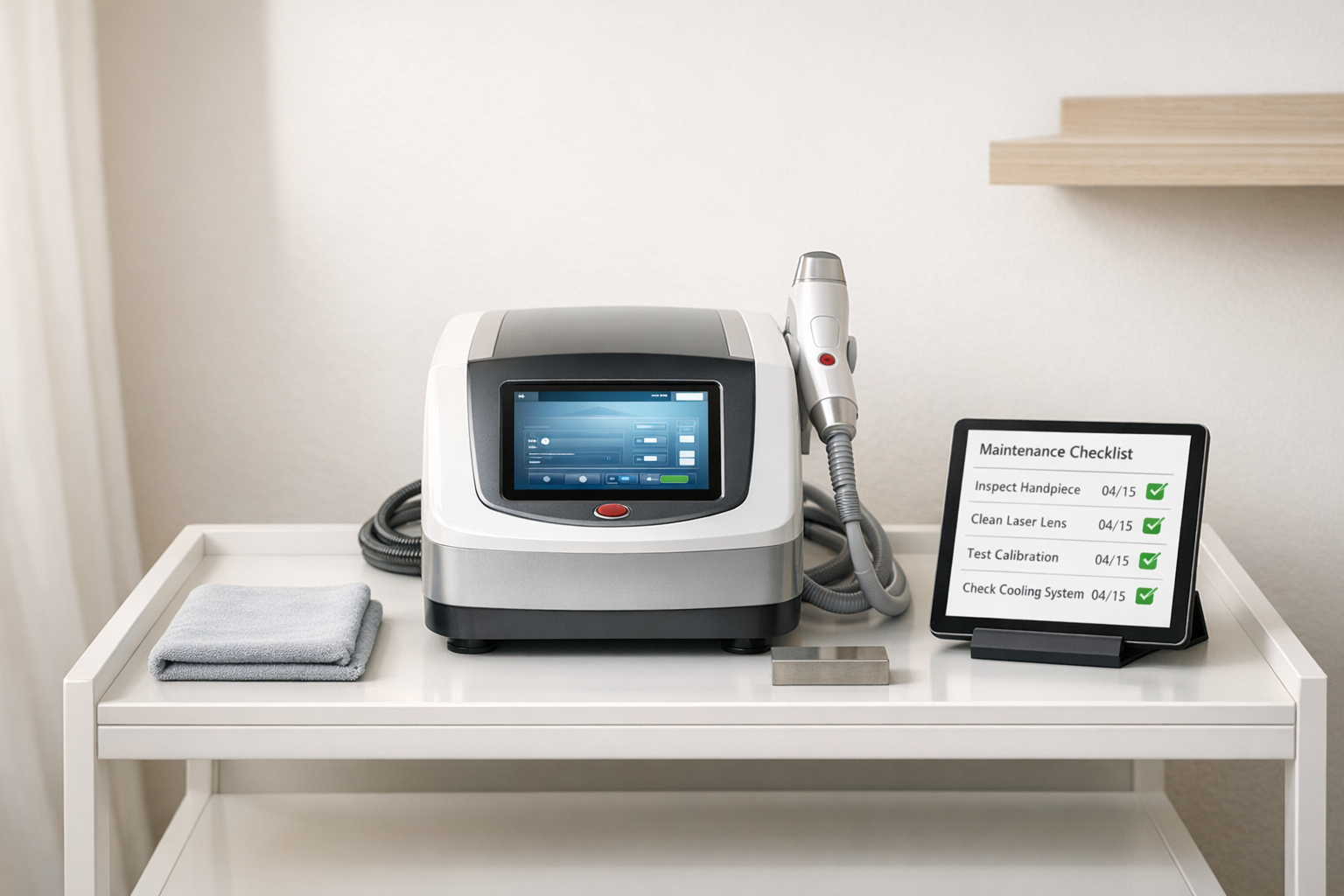

Preventive maintenance is the key to keeping your aesthetic equipment running smoothly, reducing downtime, and ensuring patient safety. Instead of waiting for devices to break, regular care like cleaning, calibration, and inspections can extend equipment lifespan and save money on costly repairs. Here's what you need to know:
- Why It Matters: Skipping maintenance leads to breakdowns, canceled appointments, and lost revenue. Regular checks prevent small issues from becoming major problems.
- Common Causes of Wear: Dust, heat, and time degrade components like laser crystals and cooling systems. Routine care helps catch these issues early.
- Benefits: Longer equipment life, consistent treatment results, reduced downtime, and better compliance with regulations.
- How to Start: Follow manufacturer guidelines, adjust schedules based on usage, and track tasks with digital tools like Prospyr for automated reminders and records.
- Daily to Quarterly Tasks: Clean optical paths, inspect handpieces, calibrate energy output, and check electrical components regularly.
Preventive maintenance isn't just about protecting equipment - it's about delivering reliable treatments and maintaining patient trust. By staying on top of routine care, you can avoid costly disruptions and keep your clinic running efficiently.
Why Preventive Maintenance Matters for Aesthetic Clinics
Equipment downtime can hit aesthetic clinics hard, especially financially. According to VMS Biomedical, a busy clinic in Los Angeles could lose thousands of dollars in revenue from just a week of laser equipment being out of service. Beyond the financial loss, canceled appointments can harm patient trust and throw operations into chaos - issues that regular maintenance can help avoid.
Spotting early signs of wear and tear is a big part of keeping costs down. Catching problems early means smaller repair bills. Components like capacitors and power supplies don’t fail overnight - they degrade over time. Routine checks help identify these issues before they lead to sudden breakdowns. Mickey Couvertier, CBET, CLRT, highlights the risks:
"An old, worn, or dirty laser cavity will overwork your power supply which is working extra hard to excite your medium because the internal test results are low".
Simple fixes, like replacing a worn lens or fiber, can prevent the total failure of a handpiece - a repair that’s far more expensive.
Preventive maintenance isn’t just about avoiding breakdowns; it’s also key to delivering consistent results. Properly calibrated equipment ensures the energy output (fluence) aligns with the device settings. If calibration is off, practitioners might unknowingly compensate for weak performance, leading to unpredictable treatments or even under-treatment. Cooling systems also need regular care to prevent overheating, which could result in patient burns or permanent equipment damage.
Keeping thorough maintenance records is equally important. Documenting service dates, completed tasks, and identified issues helps clinics stay organized and comply with regulations during audits. Digital analytics tools make it easier to track equipment history and spot recurring problems.
The benefits of preventive maintenance go beyond individual devices. Clinics that establish efficient maintenance routines often see noticeable operational improvements. For instance, SOM Aesthetics achieved over $100,000 in monthly revenue within just two months of opening in 2024, thanks to integrated management systems that ensured consistent service and operational efficiency. Regular upkeep not only protects equipment but also enhances overall clinic performance.
Next, we’ll dive into how to build an effective preventive maintenance schedule.
sbb-itb-02f5876
Creating a Preventive Maintenance Schedule
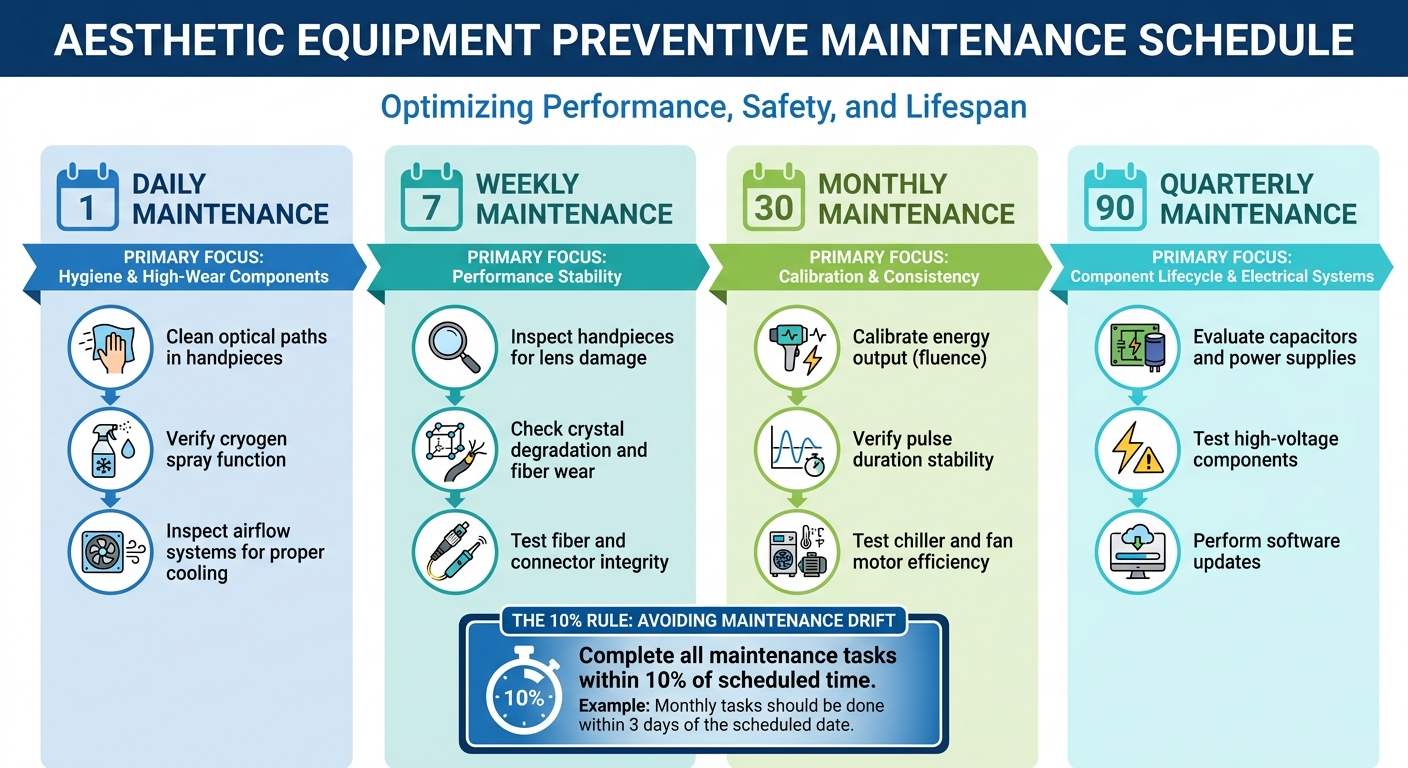
Preventive Maintenance Schedule for Aesthetic Equipment: Daily to Quarterly Tasks
To set up an effective preventive maintenance schedule, begin by consulting the manufacturer’s guidelines for cleaning, calibration, and replacing components. Then, tweak these recommendations based on how often the equipment is used. For instance, clinics handling a high volume of laser treatments each week may need more frequent inspections.
A helpful approach is the 10% rule: aim to complete all maintenance tasks within 10% of their scheduled time. For example, if a task is due monthly, it should be done within three days of the scheduled date (about 1.5 days before or after). This helps avoid “maintenance drift,” where tasks gradually fall behind schedule.
Tracking how equipment is used can also guide adjustments. For example, if you’re increasing laser energy to compensate for reduced output, recalibration should happen more often. Reviewing historical service reports can highlight which components - like cooling fans or laser fibers - wear out the fastest, allowing you to prioritize critical tasks.
Since different types of equipment have unique needs, it’s smart to organize maintenance schedules by device category (e.g., lasers, skin-tightening systems, or microdermabrasion units). For clinics managing a variety of devices, task management tools like Prospyr can automate reminders for daily, weekly, and monthly tasks, ensuring nothing is overlooked. Below are tailored maintenance guidelines for daily, weekly, monthly, and quarterly tasks.
Daily Maintenance Tasks
Daily tasks are all about cleanliness and protecting parts that experience the most wear. Clean the optical paths inside handpieces to remove dust and debris, which helps prevent energy scattering and the formation of “hot spots.” Also, check the cryogen spray function and inspect airflow systems to ensure proper cooling, reducing the risk of burns.
Weekly Maintenance Tasks
Weekly inspections focus on catching minor issues before they grow into bigger problems. Examine handpieces for lens damage, crystal degradation, and fiber wear. Test the stability of fibers and connectors, especially on devices used multiple times a day. These checks help maintain reliable performance, even under high thermal and mechanical stress.
Monthly and Quarterly Maintenance Tasks
Monthly maintenance involves more detailed checks. Verify that the energy delivered matches the settings displayed and that pulse durations remain steady, as calibration drift can affect treatment results. Also, check the efficiency of chillers and fan motors to ensure proper cooling.
Quarterly tasks go deeper, focusing on electrical components. Test high-voltage parts like capacitors and power supplies, which can degrade over time and lead to system failures. Quarterly intervals are also a good time to perform software updates, which can address bugs and improve performance.
| Maintenance Cadence | Primary Focus | Key Tasks for Aesthetic Equipment |
|---|---|---|
| Daily | Hygiene & High-Wear | Clean optical paths, verify cryogen spray, inspect airflow |
| Weekly | Performance Stability | Inspect handpiece wear, test fiber and connector integrity |
| Monthly | Consistency | Calibrate energy output, test chiller efficiency |
| Quarterly | Component Lifecycle | Evaluate capacitors, test power supplies, update software |
Reading about the problem? See how Prospyr solves it in one platform.
Book a DemoBest Practices for Cleaning and Inspection
Recommended Cleaning Materials and Techniques
A solid cleaning routine is crucial for keeping equipment in good shape and ensuring it performs reliably over time.
Always stick to the manufacturer's recommendations when choosing cleaning agents. Using the wrong products can damage the equipment or even void its warranty. Whether you're working with a laser, microdermabrasion machine, or skin-tightening system, only use cleaning agents that the manufacturer explicitly approves.
For optical systems, grab a lint-free cloth and a manufacturer-approved cleaning solution to gently clean lenses and crystals. Stay away from abrasive materials - they can scratch surfaces or leave behind residue. Disinfect handpieces with hospital-grade solutions that are safe for use on medical devices. This step is critical to avoid cross-contamination between treatments.
Make sure your entire staff is trained on which disinfectants to use, how to spot early signs of wear, and basic troubleshooting techniques. This knowledge helps prevent accidental damage and ensures high hygiene standards.
Once cleaning is complete, take the time to inspect the equipment thoroughly to confirm that all components are in peak condition.
Common Inspection Checkpoints
Regular inspections are your best defense against small issues turning into big problems. Start by checking power connections and electrical components. Loose cables or corroded connectors can cause unpredictable failures. Inspect filters for dust buildup - clogged filters can harm airflow and cooling efficiency. As VMS Biomedical points out, "Reduced cooling efficiency increases burn risk and patient discomfort."
Examine handpiece lenses for cracks or cloudiness, check fibers for fraying, and ensure connectors are secure. Keep an eye on temperature levels and power output, as deviations could signal underlying problems. For consumable components like lamps and disposable tips, replace them based on actual usage rather than sticking to a rigid schedule.
To stay organized, maintain detailed inspection records. Include dates, tasks performed, and any issues found. These logs not only help you stay compliant during audits but also make it easier to spot recurring problems with your equipment.
Staff Training and Safety Guidelines
A flawless maintenance program is only effective if the staff executing it are thoroughly trained. Without proper training, there’s a higher risk of equipment damage and potential harm to patients. In fact, strong training programs not only protect safety but can also save money - especially considering that high turnover can cost up to twice an employee’s salary.
To ensure success, focus on role-specific training tracks. For instance:
- Estheticians should be trained in treatment protocols, sanitation practices, and how to identify contraindications like skin sensitivities, allergies, or medication-related risks that could cause burns or bruising.
- Front-desk staff should master scheduling systems, patient intake procedures, and customer service essentials.
A structured 30-day onboarding program works well to build foundational skills:
- Week 1: Cover HIPAA compliance, electrical safety, proper use of PPE, and emergency protocols.
- Week 2: Teach sanitization techniques, workspace organization, and hazard identification.
- Week 3: Include shadowing opportunities to observe experienced staff in action.
- Week 4: Transition to supervised independent work to build confidence.
To reinforce learning, combine short video tutorials, hands-on practice, and simple reference sheets. Assigning a training buddy and incorporating quick quizzes can also help solidify knowledge.
Keep standards high with continued education. Store updated protocols in a central digital hub for easy access, conduct regular safety audits, and hold periodic toolbox talks to address emerging issues. Encourage staff to pursue professional certifications from organizations like the American Association of Aesthetic Medicine and Surgery or the International Society of Plastic and Aesthetic Nurses to deepen their expertise.
Ultimately, well-trained staff are the cornerstone of effective preventive maintenance, ensuring both equipment reliability and patient safety.
Using Practice Management Software for Maintenance
Tracking maintenance manually can lead to missed tasks and equipment breakdowns. Modern practice management software like Prospyr helps avoid these issues by centralizing schedules, automating reminders, and monitoring task completion in real time. For aesthetic clinics that rely on costly devices like lasers, RF microneedling machines, and cryotherapy units, switching to automated systems can cut equipment downtime by 30–50% and significantly reduce repair expenses.
A 2023 study by Medical Economics revealed that automated reminders improved maintenance completion rates in dermatology practices from 62% to 94%. Similarly, a 2024 HIMSS survey found that 65% of ambulatory clinics using task management tools reduced unplanned downtime by 52%. These gains stem from minimizing human error - ensuring critical tasks, such as quarterly calibrations or filter replacements, are never forgotten. Next, we’ll explore how Prospyr simplifies task management and automates alerts to streamline maintenance.
Using Prospyr for Task Management

Keeping up with preventive maintenance requires efficient task management. Prospyr's system organizes these tasks into clear, assignable workflows that connect directly to your equipment records. You can create recurring tasks for everything from daily cleaning of treatment beds to quarterly calibrations of RF devices. Each task is assigned to specific staff members with due dates and priority levels.
"Prospyr optimizes business operations with a task management system that organizes and prioritizes daily activities, ensuring no detail is missed."
For example, you can log into the dashboard and set up a recurring task: "Calibrate RF Microneedling Device – Model XYZ" on the first Friday of January, April, July, and October. Assign it to a technician, attach the vendor manual, and schedule email or SMS reminders 7 days and 1 day before the due date. Staff can mark tasks as complete through the mobile app, upload photos, and add notes, which automatically update equipment logs for compliance audits.
One California wellness clinic saw a 25% reduction in equipment failures and saved $5,000 annually on repairs by using Prospyr for LED light therapy maintenance. The software’s real-time dashboards track task status, flag overdue items, and generate audit trails, improving accountability. Clinics using this system report up to a 40% increase in maintenance completion rates compared to manual methods.
Automating Preventive Maintenance Alerts
Automation takes the load off your team by triggering reminders based on calendar schedules, equipment usage, or manufacturer guidelines. Prospyr can automatically send alerts - like a notification 14 days before a Botox fridge check or after 500 hours of laser use - via email, SMS, or in-app push notifications.
For clinics with multiple locations, Prospyr allows you to map equipment schedules into task templates (e.g., daily for sterilizers or monthly for ultrasound devices). You can integrate usage data from your EMR, set up multi-channel alerts, and even configure escalation protocols if tasks go unacknowledged. After piloting the system, you can scale it across locations while maintaining role-based permissions.
Prospyr also syncs maintenance tasks with low-appointment periods, reducing disruptions. Analytics from the dashboard can show how task completion impacts repair costs. For instance, one clinic cut quarterly repair expenses from $2,000 to $800 by monitoring maintenance performance through Prospyr.
Additionally, Prospyr’s inventory management tracks consumables like gels, tips, and filters, ensuring you have the supplies needed for maintenance. Automated alerts notify you when stock runs low, preventing delays caused by missing items. This HIPAA-compliant system ensures all maintenance logs are secure and audit-ready. By automating alerts, Prospyr not only prevents missed tasks but also improves the overall efficiency of clinic operations.
Compliance, Documentation, and Vendor Coordination
When it comes to maintaining audit readiness, compliance and thorough documentation are non-negotiable. Accurate maintenance records not only keep your clinic in line with regulations but also shield you from hefty fines and potential legal issues. With over 2.6 million workplace injuries and illnesses reported annually, having precise logs can make the difference between a smooth audit and penalties reaching up to $10,000 per violation. These records should cover everything - equipment serial numbers, maintenance dates, technician notes, parts used, and any repairs. Using standardized templates with clear terminology and timestamping ensures your records remain organized and inspection-ready for OSHA or state medical board visits.
Switching to digital, cloud-based systems can significantly reduce manual errors. Tools like Prospyr’s HIPAA-compliant platform centralize all maintenance records under secure access controls, creating a permanent and reliable audit trail. Assigning specific team members to update these logs and conducting regular audits can help identify gaps before inspections. A great example is Dr. Daniel Lee of New Life Cosmetic Surgery, who, in 2024, consolidated four different software systems into Prospyr. This move not only streamlined compliance documentation but also boosted revenue by 50%.
Beyond documentation, strong vendor coordination plays a critical role in sustaining compliance and ensuring smooth operations. For instance, having your Medical Director sign off on all maintenance SOPs is essential to meet legal standards. Clinics that skip written protocols expose themselves to higher regulatory risks and expensive legal defenses. Everything - cleaning schedules, calibrations, and repairs - should be documented to support warranty claims and demonstrate proactive equipment management, whether during audits or when reselling devices.
"If you're running a med spa without standard operating procedures, you're running on borrowed time." – MedSpa Standards
Vendor coordination should start before you even make a purchase. Evaluate after-sale support, maintenance packages, and warranty terms to avoid surprises later. Ensure all devices are FDA-cleared and that vendors provide thorough staff training. Storing vendor contacts, service contracts, and repair logs in a centralized system like Prospyr allows you to quickly address issues and track costs for spare parts.
Finally, schedule annual reviews of your SOPs using Prospyr’s task management features. This ensures compliance checkpoints are consistently met, keeping your clinic prepared for audits throughout the year.
Conclusion
Preventive maintenance safeguards your equipment, ensures patient satisfaction, and protects your clinic's bottom line. Clinics that prioritize this approach see 52.7% less unplanned downtime compared to those relying on reactive strategies. For high-volume aesthetic clinics, even a single week of equipment downtime can mean losing thousands of dollars in revenue. Plus, every $1 spent on preventive maintenance saves $4 to $5 in future repair costs while extending equipment lifespan by up to 40%.
Routine calibration and cleaning not only minimize patient complaints but also improve treatment results. Simple steps like monitoring cooling systems, clearing optical paths, and inspecting handpieces before failure can prevent costly disruptions and emergency repairs.
Prospyr’s task management system helps streamline these efforts by organizing and prioritizing daily maintenance tasks so critical checks are never missed. Dr. Daniel Lee from New Life Cosmetic Surgery shared that after consolidating multiple systems into Prospyr, his clinic experienced a 50% increase in revenue and a 40% jump in appointments booked. The platform’s real-time analytics show how equipment uptime directly impacts appointment volume and revenue, offering actionable insights to boost operational efficiency.
Switching to proactive maintenance doesn’t just cut costs - it frees up resources for growth and innovation. With digital records, automated alerts, and centralized vendor coordination, your clinic will stay audit-ready while your team focuses on delivering top-tier patient care instead of managing maintenance chaos.
FAQs
How do I know if my device needs maintenance more often than the manual says?
To keep your device in top shape, it’s important to regularly check its performance and condition. Devices used heavily, such as those in aesthetic clinics, tend to wear out faster and may require maintenance more often. A good guideline is the "10% rule" - if maintenance isn't performed within 10% of the scheduled interval, it could signal the need for extra care. Routine inspections, servicing, and calibration are key to maintaining peak performance and prolonging the life of your equipment.
What are the earliest warning signs that a laser handpiece or cooling system is failing?
Regular maintenance and inspections play a key role in spotting early warning signs of issues with a laser handpiece or its cooling system. Common signs to watch for include turbine problems, blockages in the air supply, bearing seizures, and evidence of overheating or malfunction. By staying ahead with routine checks, you can catch these problems early and prevent them from turning into bigger, costlier issues.
What should I include in maintenance logs to stay audit-ready in the U.S.?
To ensure you're always prepared for an audit in the U.S., your maintenance logs need to cover the essentials. Include details on equipment cleaning cycles, calibration due dates, inspection results, and scheduled maintenance activities. Every action should be recorded with accurate timestamps to maintain traceability and meet GMP and ISO compliance requirements.