Tiered Loyalty Plans for Aesthetic Clinics
Tiered loyalty programs boost retention and revenue by rewarding repeat visits, VIP perks, and clear tier progression.


Tiered Loyalty Plans for Aesthetic Clinics
Tiered loyalty programs are transforming how aesthetic clinics retain clients. Instead of focusing solely on attracting new patients, clinics are using structured rewards to encourage repeat visits and higher spending. Here’s how it works:
- What They Are: Clients are grouped into tiers like Basic, Premium, and VIP, based on spending or visits. Higher tiers offer better perks, such as discounts, priority booking, and exclusive events.
- Revenue Benefits: Clinics with these programs often see 20–40% of their income become predictable within 12–18 months.
- Client Retention: Enrolled patients return nearly twice as often (9.7 visits vs. 5.3 over three years) and spend more.
- Better Experience: Rewards like VIP treatment and surprise perks make clients feel appreciated, encouraging loyalty.
These programs combine financial stability with an improved client experience, making them a win-win for both clinics and patients.
Benefits of Tiered Loyalty Programs for Aesthetic Clinics
Tiered loyalty programs offer clear benefits by tailoring care to individual clients while supporting steady growth for clinics.
Better Client Retention
Tiered programs encourage clients to stay engaged. For instance, when a client sees they're close to moving from Silver to Gold status, they’re often motivated to book an extra treatment or make an additional purchase. This drive to reach the next level not only boosts revenue but also deepens the client-clinic connection. Unlike flat loyalty programs that treat everyone the same, tiered systems reward clients for their growing loyalty, turning routine transactions into meaningful partnerships.
"Without tiers, your loyalty program is a rewards transaction rather than a relationship builder." – JeriCommerce
Studies show that even a small 5% increase in customer retention can lead to a profit boost of over 25%. Tiered programs also avoid the stagnation often seen in flat systems by continuously offering new perks, keeping clients excited and engaged. This improved retention sets the stage for sustained revenue growth.
Higher Revenue Opportunities
Tiered loyalty programs don’t just build loyalty - they also unlock new revenue streams. For example, membership fees create a steady income source. Managing these recurring fees and deposits ensures financial stability. Many clinics report that over 12–18 months, 20–40% of their revenue becomes consistent and predictable, which clinics can track through detailed analytics.
Top-tier clients tend to spend significantly more, often 5–10 times as much as others, with personalization adding another 10–15% in revenue growth. These programs also create opportunities for upselling and cross-selling. A client coming in for regular neurotoxin treatments might add LED therapy or purchase skincare products to reach the next tier. On average, loyalty program participants receive 9.7 treatments over three years compared to just 5.3 visits for non-members. This increased frequency translates to more opportunities for clinics to offer additional services, contributing to long-term financial stability. Beyond financial benefits, these programs also enhance the overall patient journey.
Better Patient Experience
Tiered loyalty programs elevate the patient experience by making clients feel valued and appreciated. Research shows that 80% of consumers are more likely to recommend brands with strong loyalty programs, and nearly 75% adjust their buying habits to maximize program benefits. These programs go beyond simple discounts, focusing on personalized care and exclusive perks.
VIP members enjoy benefits like priority booking, complimentary services, and invitations to exclusive events. Facial plastic surgeon Mark Hamilton noted that patients "appreciated the special attention and discounted services as well as the regular treatments to keep their skin looking its best". Additionally, these programs encourage regular care, which helps maintain long-term aesthetic results.
The best loyalty programs keep clients engaged by adding unexpected perks rather than relying solely on fixed discounts. This "surprise and delight" approach turns clients into enthusiastic advocates who proudly share their tier status with friends and family. By enhancing the patient experience, clinics see stronger loyalty and improved overall performance.
sbb-itb-02f5876
Core Elements of Effective Tiered Loyalty Structures
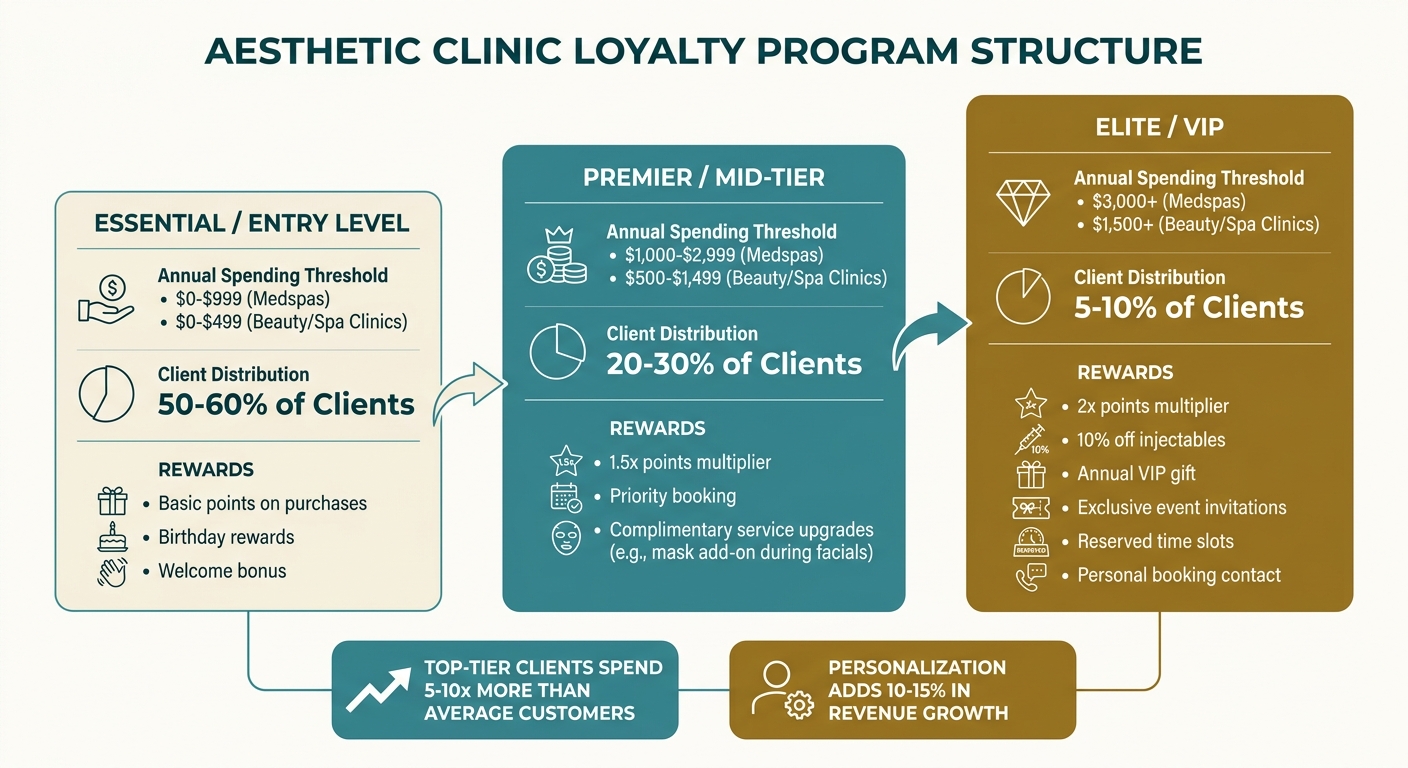
Three-Tier Loyalty Program Structure for Aesthetic Clinics
Creating a successful tiered loyalty program comes down to clear organization, smooth progression, and open communication. When done right, it motivates clients to stay engaged while keeping things simple to understand and manage.
Defining Tiers and Rewards
The sweet spot for tiered programs? Three tiers. Fewer tiers don’t allow for enough differentiation, while too many can confuse customers and water down the sense of exclusivity .
When naming your tiers, make them stand out and align with your brand. Instead of the overused Bronze, Silver, and Gold, try something more personalized. For instance, a wellness brand might use names like Glow, Radiance, and Luminance, while a service-oriented business could go with Essential, Premier, and Elite .
"The top tier should feel like a club that clients are proud to belong to." – JeriCommerce
Set tier thresholds based on actual spending habits. For example, the entry-level tier might cover the bottom 40–50% of spenders, the mid-tier could target the next 20–30%, and the top tier might focus on the top 5–10%. For medspas, typical annual spending thresholds might look like this: $0–$999 for entry, $1,000–$2,999 for mid-tier, and $3,000+ for the top tier. Beauty and spa clinics often use lower thresholds, such as $0–$499, $500–$1,499, and $1,500+ .
The rewards should clearly improve as clients move up. Entry-tier members might earn basic points and birthday perks. Mid-tier members could get better point multipliers, priority booking, or complimentary upgrades. The top tier? Think VIP treatment - maximum point multipliers, exclusive event invites, reserved time slots, or even a personal booking contact.
Consider a hybrid model that lets clients progress based on either spending or visit frequency. You can also reward non-monetary actions like writing reviews, sharing on social media, or referring friends to speed up their progression .
Once your tiers and rewards are structured, the next step is creating goals that keep clients motivated to participate.
Setting Achievable Goals for Clients
Make your program goals clear and attainable. For instance, letting a client know they’re only $200 away from the next tier can nudge them to book another treatment , a tactic often used in effective lead management to convert prospects into loyal members .
Use tools like digital dashboards or wallet passes to show clients how close they are to their next milestone. Integrating these with a digital intake system ensures client data is captured accurately from the start. This taps into Goal Gradient Theory, which suggests people work harder as they near a goal. In fact, over 70% of shoppers say they feel driven when pursuing a meaningful reward .
Align tier milestones with the natural rhythm of your clients’ visits. For example, if most clients return for neurotoxin treatments every three to four months, design your progression to match that timeline. Membership fees can also play a role - offering monthly plans can encourage clients to maximize their benefits, increasing their visits.
To emphasize value, compare membership costs to higher-value alternatives. A $99/month membership that includes $200 worth of treatments is a clear win and can boost commitment.
Once your goals are aligned with client behavior, it’s crucial to communicate these milestones effectively.
Clear Communication and Transparency
Spell out the program rules in simple terms. Use straightforward phrases like "Spend $X to unlock Y" and make sure these details are visible everywhere - your website, emails, booking confirmations, and even receipts. When customers understand how to participate, over 60% say status tiers become an important factor in their loyalty. Showing real-time updates on points or tier progress during checkout can also encourage higher spending.
"Transparency is key in loyalty programs. Your customers need to understand the requirements for achieving and maintaining each tier." – Open Loyalty
Keep clients informed with proactive notifications. Let them know when they’ve reached a new tier, are close to earning a reward, or are at risk of losing their status. A 30–60 day notice before downgrades, paired with a "soft floor" approach (dropping only one tier at a time), can prevent frustration. Using a rolling 12-month qualification window instead of a strict calendar year can also help maintain engagement .
Be upfront about any restrictions. Clearly outline point expiration dates and specify which products or services don’t earn points. With 81% of customers saying they stick with brands that offer effective loyalty programs, being transparent can give you a competitive edge.
Reading about the problem? See how Prospyr solves it in one platform.
Book a DemoDesigning and Launching Your Tiered Program
Launching a successful tiered program starts with understanding your clients - their habits, preferences, and motivations. From there, you can design a program that strengthens loyalty and drives growth.
Identifying Key Client Segments
Begin by analyzing data from the past 12 months. Look at spending patterns and visit frequency to identify natural client groupings. This data will help you set tier thresholds that reflect real client behavior.
For medspas, common tier breakdowns might look like this: Essential clients spend $0–$999 annually, Premier clients spend $1,000–$2,999, and Elite clients spend $3,000 or more.
A hybrid qualification model can be especially effective. For example, clients could qualify for tiers based on either total spending or visit frequency. This ensures you’re recognizing the loyalty of different types of clients - like someone who gets regular facials versus someone who comes in quarterly for Botox.
When launching the program, assign existing clients to tiers based on their last 12 months of activity. This immediately acknowledges their loyalty. Send a personalized "Congratulations" message to inform them of their status and benefits.
With your segments clearly defined, the next step is crafting rewards that resonate with each group.
Choosing the Right Reward System
Your rewards should grow more enticing as clients move up the tiers. Here’s an example of how to structure them:
- Entry-tier members: Points on purchases, birthday rewards, and a welcome bonus.
- Mid-tier members: 1.5x points, priority booking, and complimentary service upgrades like a mask add-on during facials.
- Top-tier members: 2x points, 10% off injectables, an annual VIP gift, and invites to exclusive events.
Service-based perks often create more loyalty than discounts. Features like priority booking, dedicated contacts, and complimentary upgrades encourage repeat visits and make clients feel valued. This is particularly important for top-tier clients, who often spend 5–10 times more than the average customer.
To make the program even more engaging, integrate digital wallet passes (e.g., Apple Wallet, Google Pay). These passes allow clients to track their progress in real time and have been shown to achieve a 90% push notification open rate.
Once your rewards are in place, the focus shifts to promoting the program effectively.
Promoting Your Loyalty Program
Start with a clear, visually appealing one-page graphic that explains the tiers, perks, and thresholds in under 30 seconds. Train your team to deliver a concise, one-sentence explanation of the program. This is crucial because provider-led recommendations - such as those from estheticians or doctors - can double conversion rates. Timing matters too; wait until a client has had 2–3 positive experiences before introducing the program to avoid coming across as pushy.
For eligible non-members, use automated nurture sequences like targeted emails or texts. Highlight their 12-month spend and show them how much they could save by joining. These sequences can convert 8% to 14% of non-members into participants within six months.
Adjust your messaging based on the tier. Entry-tier communication should focus on easy wins and program education. Mid-tier messaging can emphasize progress toward the next level. For top-tier clients, highlight exclusivity and personal recognition. To create momentum, consider launching with a time-sensitive offer like "3x points for the first week" to encourage quick enrollment and tier advancement.
Platforms like Prospyr can simplify the entire process. They can automate tasks like sending upgrade notifications, managing digital wallet passes, and providing personalized updates. These tools also handle membership renewals and tier transitions, ensuring that your program stays seamless and effective.
Implementing with Practice Management Software
Managing a tiered loyalty program manually can quickly become overwhelming. Spreadsheets just don’t cut it when it comes to tracking real-time tier changes, reward redemptions, or staying on top of personalized client communication. That’s where practice management software (PMS) steps in, making the entire process smoother and more efficient.
Automating Membership Management
Prospyr’s membership management tools take the hassle out of tracking client spending and visits. When a client reaches a specific spending threshold, the system automatically upgrades their status and unlocks their new benefits - no manual work required. Prospyr also manages Beauty Savings Accounts (BSA), which allow clients to save regularly for future treatments. These accounts work seamlessly with tiered benefits, handling renewals, benefit delivery, and even inventory tracking. By automating these processes, you save time and create a better experience for your clients.
Improving Client Communication
Keeping clients informed about their progress and rewards is critical. Prospyr’s email and SMS tools send automatic notifications whenever a client moves up a tier or earns new benefits. The 2-Way SMS feature makes it easy to answer reward-related questions quickly, while automated campaigns have been shown to increase open rates by 35% and boost reward redemptions by 28% in wellness practices. Prospyr also tailors communications to specific tiers, offering educational content for newcomers, progress updates for mid-tier clients, and exclusive perks like early access to premium treatments for VIPs. These communications not only keep clients engaged but also feed into performance analytics, creating a cycle of continuous improvement.
Tracking Performance and Analytics
Real-time analytics are a game changer for fine-tuning your loyalty program. Prospyr’s dashboards provide a clear view of key metrics like retention rates by tier, average revenue per membership level, and how often rewards are redeemed. Clinics using PMS with loyalty automation report retention rates that are 25–40% higher than those relying on manual systems. The software also integrates seamlessly with your Point of Sale (PoS) system, enabling automatic tier-based pricing and reward redemptions at checkout. With 72% of aesthetic clinics reporting revenue growth of 15–20% from loyalty programs managed through integrated PMS analytics, these tools ensure that every transaction counts, helping you refine your rewards and adapt to client needs over time.
Measuring Success and Optimizing Your Loyalty Program
To keep the momentum going with your tiered loyalty program, you need to measure its performance consistently and make adjustments as needed. After the program launches, focus on tracking key metrics, gathering client feedback, and refining the program to ensure it delivers long-term results.
Key Metrics to Track
Keep an eye on metrics like tier distribution, engagement levels (open rates, click rates, booking conversions, and reward redemptions), transition rates, incremental revenue, and retention. A well-balanced program usually has about 5–10% of clients in the top tier, 20–30% in the mid-tier, and 50–60% in the entry tier. Transition rates can tell you how often clients move between tiers, which helps you gauge whether the program inspires "status striving" behavior.
Compare spending before and after the program's launch to aim for a revenue boost of 10–15%. Retention is another critical metric - benchmark your program’s retention rates against the industry average of 55%. Even a 5% bump in retention can lead to a profit increase of over 25%.
Collecting Client Feedback
Your top-tier clients are a treasure trove of insights. Engage them by asking for feedback on new services or perks. This not only makes them feel appreciated but also helps you fine-tune the program based on what matters most to your best customers. Use embedded marketing segmentation to understand which rewards and communication strategies work best for each tier.
Analyze spending data regularly by looking at the 50th and 90th percentiles to ensure your tier thresholds are appropriate. During the first month post-launch, review enrollment numbers and tier distribution weekly to catch and correct any issues early. Set up automated alerts for clients at risk of downgrading, so you can act quickly to re-engage them. These insights can help you make real-time adjustments that improve the program’s effectiveness.
Refining the Program Over Time
Instead of resetting tiers at the end of the calendar year, consider using a rolling 12-month qualification period. This approach helps maintain steady engagement and avoids the year-end rush. If you notice mid-tier clients losing interest, introduce enticing perks or temporary promotions like double points to encourage upward movement.
To prevent frustration, use a "soft floor" policy where clients can only drop one tier at a time. When making structural changes to the program, consider giving existing members a grace period of 3–6 months to keep their current benefits, reducing the risk of backlash. Regularly review the perks offered at each level to ensure there’s a clear distinction - each tier should have at least three exclusive benefits compared to the one below it.
Finally, add real-time progress indicators through digital wallet passes to show clients how close they are to reaching the next tier. This visual cue taps into the psychological power of goal proximity, motivating clients to spend more to level up.
Ongoing monitoring and updates are key to keeping your loyalty program effective and engaging.
Conclusion
Tiered loyalty programs can turn occasional visits for aesthetic treatments into lasting client relationships. By tapping into the psychology of status and offering progressively better perks, these programs encourage clients to book more often and try new services. Research shows that even a modest 5% increase in client retention can lead to over 25% higher profits, while tiered models outperform flat ones by generating 10–15% more revenue.
The secret to success is in careful planning and consistent execution. Start with a straightforward three-tier system that highlights your top spenders, and establish clear, data-backed thresholds. Offering meaningful rewards to your most loyal clients not only strengthens their connection to your clinic but also inspires others to aim for higher tiers.
Prospyr simplifies the process by automating tier upgrades, tracking client activity in real time, and sending instant updates. Its seamless integration with your CRM and communication tools ensures a smooth experience, while built-in analytics and email/SMS features allow you to tailor marketing efforts to each tier - all while delivering the premium service your VIP clients expect.
Once your program is up and running, regular maintenance and fine-tuning are essential. Launching is just the beginning. Keep an eye on enrollment numbers, tier advancements, and client adherence to treatments. Use feedback to adjust perks and keep the program engaging and relevant.
With the right structure and tools, a tiered loyalty program can become a cornerstone of your clinic’s success - boosting retention, increasing revenue, and fostering a loyal community of clients who feel genuinely appreciated.
FAQs
How do I set the right spend thresholds for each tier?
Creating spend thresholds is all about striking the right balance: they should motivate clients to aim higher while still feeling within reach. Start by diving into your client data. Look for trends in spending habits and behaviors, especially among your top-tier clients. This will help you set benchmarks that make sense for your audience.
For example, you could introduce annual spending targets like $1,000 or $2,000, or focus on visit frequency goals, such as 10+ treatments per year. These thresholds can serve as milestones for high-value clients while nudging others to step up their engagement.
The key? Make these goals ambitious but not out of reach. If they're too difficult, clients might feel discouraged. On the flip side, if they’re too easy, they won’t feel rewarding. Find that sweet spot to keep clients motivated and engaged.
Which rewards work best without relying on discounts?
The best rewards that don't involve discounts focus on creating a sense of value and connection. These include personalized experiences, exclusive access, VIP status, and recognition through tiered programs. Even small gestures, like handwritten notes or thoughtful perks, can go a long way in boosting patient satisfaction and fostering loyalty.
What metrics should I track to prove the program is working?
Tracking key metrics is essential to understanding how well your program is performing and identifying areas that need improvement. Focus on indicators like membership retention rate, treatment satisfaction rate, and missed appointment rate to gauge engagement and efficiency. Metrics such as the client satisfaction score, average client value, repeat visit rate, and customer retention rate can provide deeper insights into client loyalty and overall program success. Together, these numbers paint a clear picture of effectiveness and point to opportunities for growth.