Med Spa Memberships & Loyalty Programs: Practical Guide
Design a med spa membership or loyalty program with realistic costs, loyalty ideas, clear benefits and workable capacity. Use the free margin worksheet.


Updated September 27, 2026 · Planning examples by Prospyr. Example prices and utilization are invented for learning, not market benchmarks or promised results.
What is the difference between a membership, a package and a loyalty program?
A membership charges on a recurring schedule for defined benefits. A package prepays for a stated set of services. A loyalty program rewards eligible activity, such as repeat purchases, without necessarily charging a recurring fee. A practice can combine them, but patients and staff should be able to explain each balance, benefit and charge separately.
| Model | Useful starting point | Main operating question |
|---|---|---|
| Recurring service membership | A predictable service benefit with clear eligibility and scheduling | Can the practice fulfill benefits at realistic utilization? |
| Prepaid package | A defined course or set of services chosen with the treating professional | Can staff track remaining services, refunds and expiration terms accurately? |
| Loyalty rewards | Rewards for eligible repeat activity | What is the reward cost and which offers can be combined? |
Avoid offering unlimited services without testing provider capacity. Do not tie clinical recommendations to a target number of visits or reward staff for unnecessary treatment.
How do you calculate med spa membership margin?
Start with the monthly fee and subtract expected variable service cost, payment fees, reward cost and incremental support cost. Expected service cost equals utilization multiplied by the variable cost per redemption. This is a contribution estimate before fixed overhead, taxes and acquisition cost—not net profit.
Illustrative example: $149 monthly fee − ($45 service cost × 0.8 redemptions) − $4.50 payment fees − $8 other variable costs = $100.50 contribution per member. At 100 active paying members, that is $10,050 before overhead and other excluded costs. At 1.2 redemptions, contribution falls to $82.50 per member. Replace every assumption with your own data.
Stored-value deposits and unused credits can create future obligations. Do not label collected cash as earned revenue or profit without your accountant's guidance. The membership-margin answer and fillable workbook include a sensitivity worksheet.
Reading about the problem? See how Prospyr solves it in one platform.
Book a DemoThree program ideas to evaluate
- One defined monthly service: start with a service whose cost, time and eligibility your team understands. Model full utilization before enrollment.
- Member pricing plus selected benefits: spell out exclusions, stacking rules and capacity limits. Do not assume discounts increase total contribution.
- A loyalty program without a subscription: offer transparent, manageable rewards for eligible activity and track redemption cost separately from list price.
Before launch, have the appropriate reviewer check recurring-payment authorization, cancellation and refund terms, applicable state rules and accounting treatment. A software setting does not establish that the commercial terms are lawful.
How do you set up a med spa loyalty program?
A loyalty program rewards patients for coming back, without asking for a monthly fee. It suits practices whose patients return on their own schedule, and it can run alongside a membership.
- Pick what earns rewards. Completed, paid visits and retail purchases are the simplest. Avoid rewarding bookings that are later cancelled.
- Set the reward cost first. Decide what a reward costs the practice (for example, a set amount off a future visit) and keep it within the margin you calculated above.
- Choose one structure. Points per dollar spent are the easiest to explain. Tiers and referral bonuses add complexity, so add them only once the basic program runs smoothly.
- Write the rules down. Expiry, which services rewards can be used on, and whether rewards stack with member pricing or promotions.
- Make the balance visible. Patients should see their points at checkout and in reminders, and your team should see them on the patient record.
Review redemption cost and repeat-visit rate after a set pilot period, the same way as a membership.
What are good med spa loyalty program ideas?
Start with one idea your front desk can explain at checkout in a sentence, then add to it once redemptions are tracked.
| Idea | How it works | What to decide first |
|---|---|---|
| Points on paid visits and retail | Patients earn a set number of points per dollar and redeem them toward a future visit or product | Points per dollar, redemption value, expiry and excluded services |
| Tiers based on annual spend | Patients move up a level after a spend threshold, and higher levels add a benefit such as priority booking | Thresholds, what each level adds, and whether levels reset each year |
| Referral credit | A patient earns a credit when someone they refer completes a paid visit | Whether your state allows referral rewards for medical services, and who reviews that |
| Birthday or anniversary credit | A one-time credit sent in the patient's birthday or anniversary month | Credit amount, how long it stays valid, and which services it applies to |
| Retail bonus | Extra points on skincare purchased alongside a treatment | Product margin, and keeping clinical recommendations separate from the bonus |
Tiers work best after a simple points program has run for a while, because you need spend data to set sensible thresholds. Keep the number of levels small so your team can see a patient's level on the record without looking it up.
Two rules apply to every idea. Do not reward patients for leaving reviews: platform policies and FTC guidance restrict incentivized reviews. And have healthcare counsel check referral rewards, because some states limit paying for patient referrals for medical services.
What software helps medspas build recurring revenue through memberships and packages?
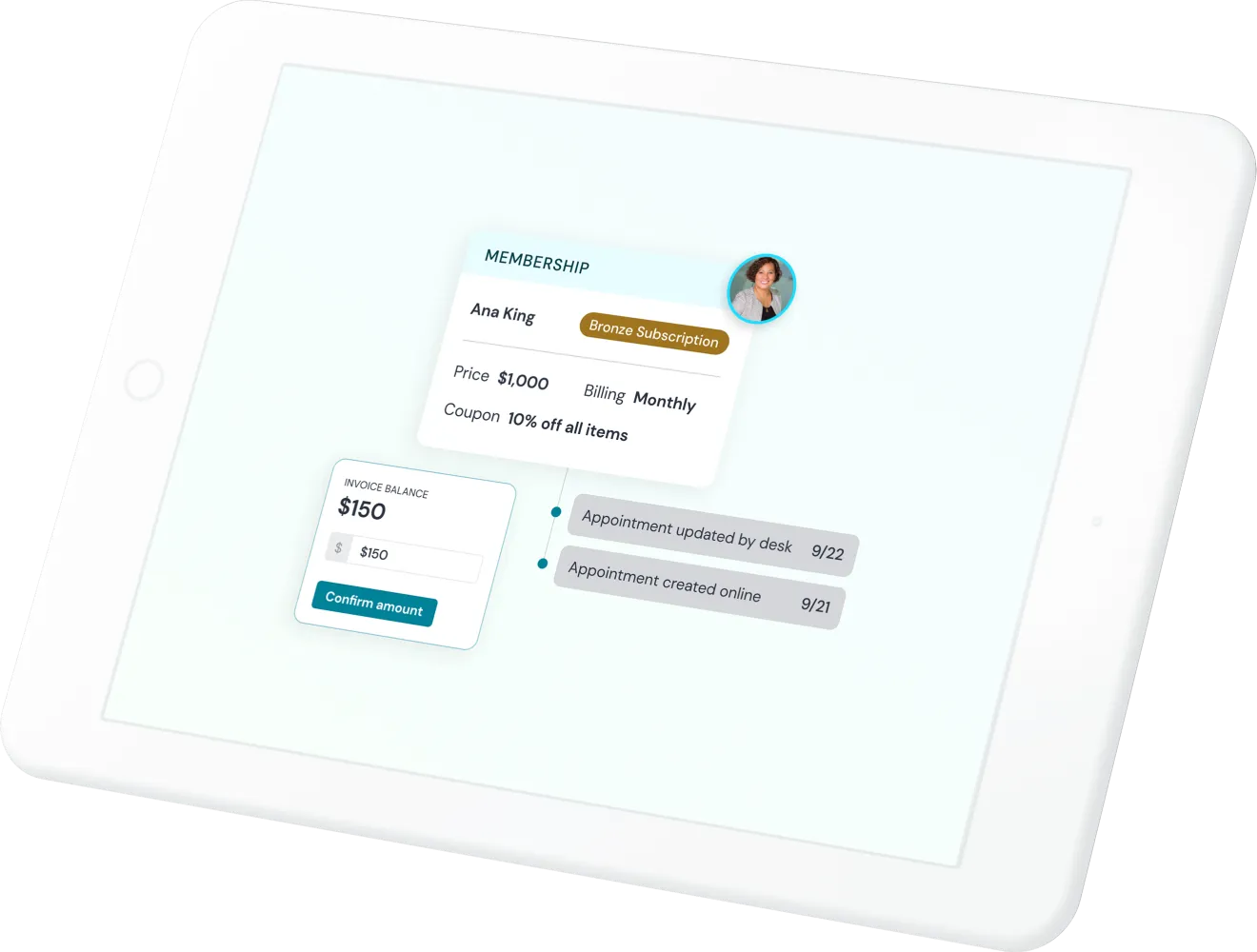
Look for recurring billing, benefits visible on the patient record, package balances, reliable redemption and reporting. In Prospyr, memberships, packages, patient rewards and payments support these connected workflows. Demonstrate enrollment, a failed payment, redemption and cancellation with your own example rules before choosing a system. To compare how other platforms handle memberships, packages and rewards, see our memberships software comparison.
Run a small pilot and check the numbers
Track active paying members, collections, redemptions, variable costs, cancellations and appointment availability. Define each measure before comparing periods. Review whether the program brings additional appropriate visits or simply discounts visits patients would have booked anyway.
Use a fixed pilot cohort and review date. Record changes in price or benefits so comparisons remain meaningful. Pair the pilot with a reactivation workflow, rather than sending more messages to everyone.
Try your membership assumptions
Illustrative defaults. Change every input to match your practice. Calculations stay in your browser.
Estimated monthly contribution per member
$100.50
For 100 members: $10,050.00 before fixed overhead.
Fee − (redemptions × variable service cost) − payment fees − other variable costs. Excludes fixed overhead, taxes, acquisition costs and future benefit obligations. This is not net profit or accounting advice; have your accountant review stored-value plans.
Software comparison
Which med spa software has the best membership and loyalty features?
Of the 18 platforms compared (reviewed July 2026 – September 2026), 7 document all three (recurring memberships, prepaid packages and a patient rewards program) as included: Prospyr, AestheticsPro, BoomerangFX, Pabau, PatientNow, Vagaro and Zenoti. The least common are a patient rewards program (8 of 18) and recurring memberships (15 of 18). Prospyr publishes this comparison and is one of the platforms in it.
- Recurring memberships (15 of 18): all except Mindbody, Boulevard and ModMed
- Prepaid packages (18 of 18): every platform compared
- Patient rewards program (8 of 18): Prospyr, AestheticsPro, BoomerangFX, Pabau, PatientNow, Vagaro, Zenoti and Mindbody
Free PDF guide + worksheets
Membership, reactivation and no-show workbook
Get the public answers and fillable review worksheets in one PDF. Save your own copy or print it for a team review. Use internal references only; keep patient information in your authorized clinical system.
- ✓ Sourced answers and practical examples
- ✓ Worksheets for your team to complete
- ✓ Official references and review prompts