Reputation Management Strategies for Aesthetic Clinics
Tactical advice for building and protecting an aesthetic clinic’s online reputation using reviews, social media, and automated patient communication.


Your clinic’s online reputation is your most critical asset. Why? Because 94% of aesthetic clients check reviews before booking. Clinics with a 4.5+ star rating see 72% higher conversion rates, and 91% of patients under 40 trust online reviews as much as personal recommendations.
To build and protect your reputation, focus on three areas:
- Review Platforms: Boost local search rankings and showcase patient feedback.
- Social Media: Share results, educate, and connect with your audience.
- Direct Patient Communication: Address concerns privately and encourage loyalty.
Automation tools like Prospyr simplify these efforts by managing reviews, social media, and patient follow-ups in one place. This ensures you consistently collect feedback, respond quickly, and strengthen your clinic’s presence without overwhelming your staff.
Keep reading for practical tips to grow your reputation and attract more patients.
1. Review Platforms
Platforms like Google Business Profile, Yelp, and niche sites like RealSelf and Healthgrades are where 77% of patients start their search for a new aesthetic provider. These platforms do more than display your star rating - they directly impact your local search rankings and influence how likely patients are to choose your practice. A one-star improvement in your rating can increase revenue by 5-9%. The stakes are high: 57% of patients won’t even consider a provider with fewer than 4 stars.
Making It Easy to Start
Getting started with review platforms is relatively simple, but scaling the process requires automation. Relying on manual methods - like asking patients in person or emailing them one by one - often falls apart when things get busy at the front desk. Instead, set up automated SMS or email requests that are triggered 24 to 48 hours after an appointment. Timing matters because patients are more likely to leave feedback while their experience is still fresh.
In-office methods can also help. For instance, you can place QR codes at checkout that link directly to your Google Business Profile. Train your team to mention reviews during the payment process, or use an iPad at the front desk to make leaving a review quick and easy. The fewer steps it takes, the more likely patients are to participate.
Building Patient Trust
Review platforms act as social proof. A striking 84% of patients trust online reviews as much as personal recommendations, and for those under 40, that trust jumps to 91%. But it’s not just about the number of reviews - recency is key. Reviews posted within the last 90 days are seen as 2.5 times more relevant by potential patients. In fact, 73% of patients only consider practices with reviews from the past three months.
How you respond to reviews also plays a big role. 89% of clients read how you handle negative reviews. Responding within 24 hours shows you’re attentive and care about your patients’ experiences. Always keep your responses HIPAA-compliant - don’t confirm someone is a patient or discuss specific treatments publicly. A simple reply like, “Thank you for your feedback. Please contact us directly at [phone number] so we can discuss your experience further,” shifts the conversation offline while showing potential patients you take concerns seriously.
Scaling the Process
Managing reviews manually might work for a single-location clinic, but as your practice grows, automation becomes essential. Multi-location practices benefit from a centralized dashboard that pulls reviews from platforms like Google, Yelp, Facebook, and healthcare-specific sites into one place. Without this, reviews can be missed, and response times may lag.
To truly scale, integrate review management with your practice management system. A CRM that automatically sends review requests after appointments and provides real-time alerts for new feedback ensures a steady flow of fresh reviews without adding extra work for your team. This consistent stream of reviews signals to Google that your business is active and valued, which can improve your local search rankings. Automating this process not only saves time but also sets your practice up for seamless use of advanced tools.
Using Tools Like Prospyr
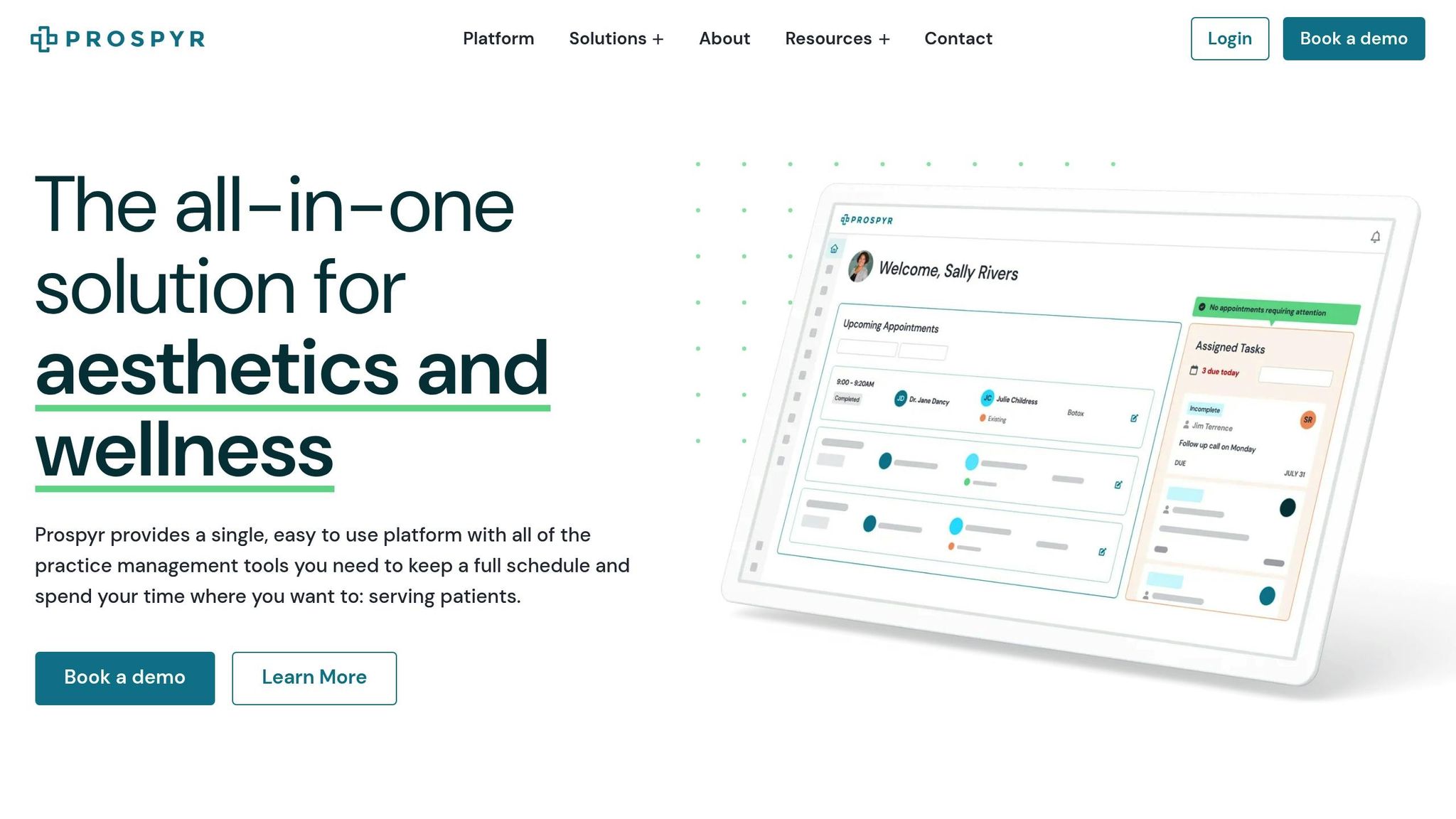
Automation tools like Prospyr make managing reviews even easier. Prospyr’s review management system connects directly with your patient workflow, automating the entire process. After a patient checks out, the system sends an SMS review request at just the right time - no manual effort required. With a centralized dashboard, you can monitor reviews across multiple platforms, respond quickly while staying HIPAA-compliant, and even track trends in patient sentiment over time.
This kind of integration solves the common issue of "review request fatigue" among staff. Instead of relying on your front desk team to remember to ask patients for reviews, the system handles it automatically. This ensures every happy patient has a chance to share their experience. For busy aesthetic clinics managing appointments, treatments, and patient care, automation turns sporadic reviews into a consistent, reputation-building system.
Reading about the problem? See how Prospyr solves it in one platform.
Book a Demo2. Social Media Engagement
Social media is a game-changer when it comes to connecting with patients and building trust. It goes beyond just sharing updates - it's about creating a two-way conversation that shows the human side of your practice. By answering questions, responding to comments, and sharing behind-the-scenes moments, you make your practice more relatable and approachable. This matters, especially when 41% of consumers say social media influences their choice of doctor or medical facility. Done right, your social media strategy can have a direct impact on patient trust and even your bottom line.
Ease of Implementation
Starting on social media is simple. Platforms like Instagram, Facebook, and TikTok are free to use and don’t require advanced tools to set up. The tricky part? Staying consistent. Social media algorithms tend to favor accounts that post regularly. If you only post sporadically, your visibility will take a hit. To avoid this, create a posting schedule and stick to it.
Mix up your content to keep it engaging. Share before-and-after photos, educational videos explaining procedures, or even lighthearted behind-the-scenes clips of your team. This variety not only builds credibility but also makes your practice feel more personal. Additionally, assign someone on your team to monitor brand mentions and respond to feedback within 24 hours. Quick responses can help resolve issues before they escalate.
Impact on Patient Trust
Being active on social media sends a clear message: you’re accessible and transparent. Over 85% of people trust online reviews and social proof as much as personal recommendations. Your engagement on social media reinforces this trust. Whether it’s replying to comments, sharing patient success stories (with permission), or posting educational content, you’re not just showcasing expertise - you’re showing patients they’re heard and valued.
Of course, maintaining HIPAA compliance is critical. Avoid discussing specific treatment details or confirming patient identities in public responses. Instead, craft professional yet warm replies that encourage patients to reach out privately for further discussion. This balance between openness and privacy builds trust while protecting patient confidentiality.
Scalability
Managing social media manually might work for a small clinic, but as your practice grows, it can quickly become overwhelming. For multi-location practices, a centralized system is key to keeping your brand voice consistent across all accounts. Without it, you risk missing mentions, duplicating efforts, or responding too slowly - none of which make a good impression.
Scaling your efforts doesn’t mean adding more to your plate. Automation tools can take care of repetitive tasks like scheduling posts or tracking mentions. By integrating these tools with your practice management system, you can monitor all your social media activity from one place. This setup ensures nothing gets overlooked, even when your team is busy.
Integration with Tools Like Prospyr
Platforms like Prospyr make social media management much easier. With Prospyr, you can schedule and post content across multiple platforms while keeping track of reviews and feedback from a single dashboard. If someone mentions your clinic or leaves a comment, you’ll get real-time alerts and can respond directly through the platform - no need to juggle multiple accounts.
What’s more, Prospyr connects your social media activity with your overall patient workflow. You can track which posts are driving engagement through lead management, analyze sentiment trends, and make sure responses are timely. For aesthetic clinics that are already balancing appointments, treatments, and patient care, this kind of automation transforms social media into a powerful, low-maintenance tool for building your reputation. By staying engaged and responsive, you deepen your connection with patients and strengthen your online presence.
3. Direct Patient Engagement
Engaging directly with patients adds a personal touch to reputation management. Whether through SMS, email, or in-person interactions, asking for feedback builds stronger relationships and fosters loyalty. This approach works hand-in-hand with strategies like leveraging review platforms and engaging on social media.
Ease of Implementation
Starting with direct engagement is simple, especially with consistent follow-up. One proven method is to request feedback from patients within 24 hours of their appointment. This timing is crucial - waiting too long risks losing the immediacy of their experience, which can result in missed opportunities for genuine feedback.
You don’t need fancy tools to begin. Train your front-desk team to ask for reviews at checkout or send a quick follow-up text or email the next day. However, as patient numbers grow, manual processes can falter, leading to missed follow-ups or delayed messages. That’s where automation becomes essential. By connecting review requests with your digital intake and practice management system, you can automate messages immediately after appointments. This ensures reviews keep flowing consistently without adding to your team’s workload. Automation not only simplifies the process but also ensures long-term, scalable engagement.
Impact on Patient Trust
Responding promptly and professionally to feedback - whether public or private - demonstrates that you take patient concerns seriously. Creating private feedback channels is equally important. Internal surveys allow patients to voice concerns discreetly, preventing issues from becoming public complaints. Addressing negative experiences directly can turn dissatisfied patients into loyal advocates.
Scalability
As your practice grows, manual follow-ups become increasingly difficult to manage. Automation helps centralize review monitoring and communication, ensuring timely and consistent outreach. For multi-location practices, the challenge of maintaining a unified brand voice across platforms like Google, Yelp, and Healthgrades becomes even more complex. Automation streamlines this process, reinforcing a strong and trustworthy online presence.
Platforms like Prospyr offer solutions to these challenges. With Prospyr, you can centralize review monitoring, patient communication, and follow-up workflows on a single dashboard. Automated SMS and email requests can be set to go out within 24–48 hours after a patient’s visit, ensuring consistent feedback collection without manual intervention. For larger practices, Prospyr’s analytics tools can track patient sentiment across multiple locations, flag urgent negative feedback, and delegate response tasks to specific team members - keeping everything organized and aligned with your brand.
Integration with Tools Like Prospyr
Prospyr seamlessly integrates into your clinic’s workflow, automating follow-ups and consolidating patient feedback while adhering to HIPAA regulations. After an appointment, the system automatically sends personalized review requests via SMS or email, removing the need for staff involvement. When patients leave reviews on platforms like Google or Yelp, you’ll receive real-time alerts and can respond directly through Prospyr’s dashboard.
What makes Prospyr stand out is its HIPAA-compliant framework, ensuring all patient communications remain private and secure. The platform also supports professional response drafting, tracks sentiment trends, and uses AI tools to analyze feedback patterns. By automating repetitive tasks and centralizing oversight, Prospyr transforms direct patient engagement into a scalable strategy that strengthens your clinic’s reputation and fosters deeper patient loyalty.
sbb-itb-02f5876
Strengths and Weaknesses of Each Strategy
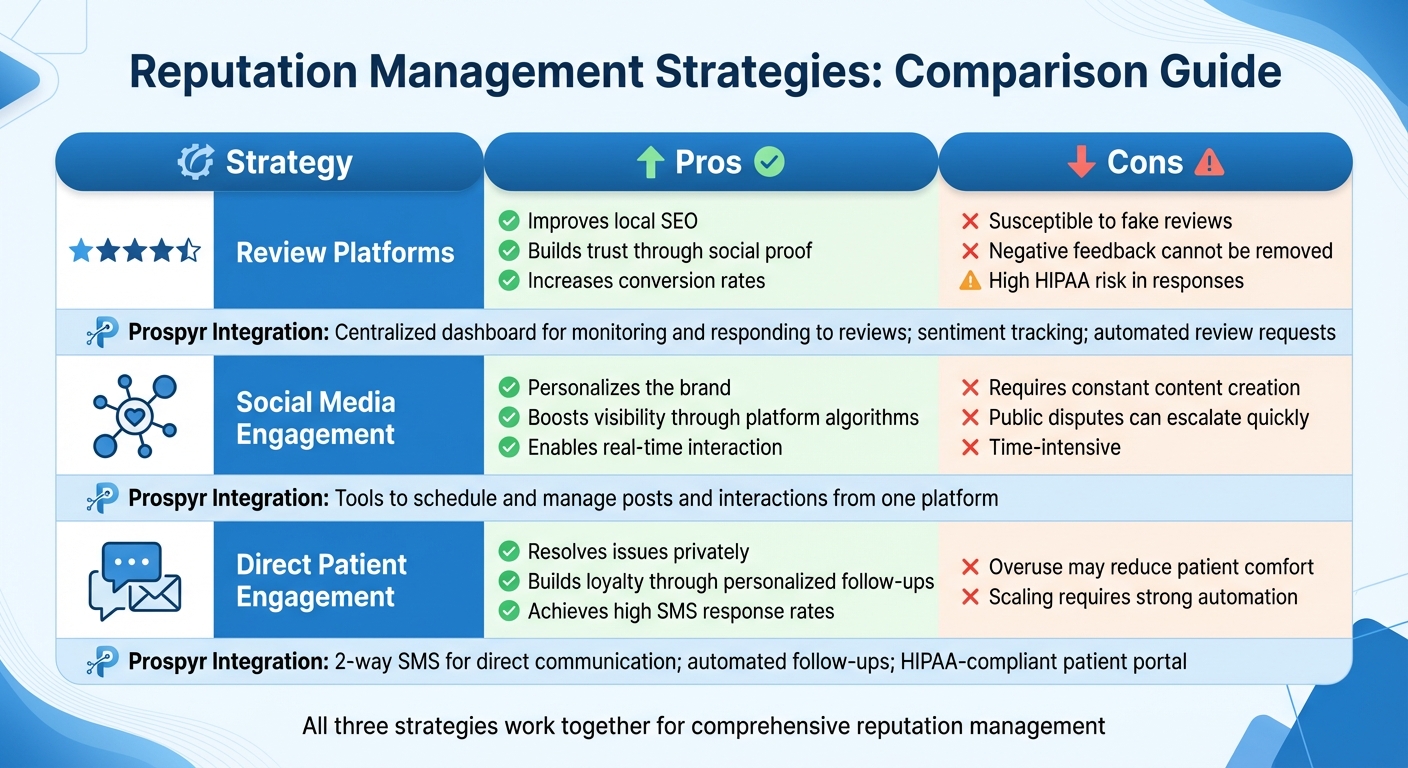
Reputation Management Strategies for Aesthetic Clinics: Pros, Cons & Integration
This section breaks down the core advantages and challenges of each strategy, highlighting their trade-offs and how they align with your clinic's goals. Each approach has its strengths, but also comes with limitations that need careful consideration.
Review Platforms are a powerful tool for improving local SEO, helping your clinic rank higher in local searches and increasing visibility in Google's Map Pack. Positive reviews can significantly boost patient trust, with medical spas boasting 4.5+ star ratings seeing a 72% increase in conversion rates. However, the inability to remove negative reviews leaves clinics vulnerable to malicious feedback. Additionally, responding publicly to reviews carries the risk of violating HIPAA regulations if patient information is inadvertently disclosed.
Social Media Engagement is a great way to add a personal touch to your brand while maintaining visibility through platform algorithms. It’s particularly effective for sharing before-and-after photos and educational content, which helps establish your expertise. On the flip side, this strategy requires a steady flow of content, which can be time-intensive. Public comments also have the potential to escalate disputes quickly if not managed carefully.
Direct Patient Engagement focuses on resolving issues privately and strengthening loyalty through personalized follow-ups. Timely outreach is key to gathering actionable feedback. However, as your practice grows, manual follow-ups can become overwhelming without the right automation tools, and excessive communication risks making patients feel uncomfortable.
The table below outlines the key benefits and challenges of each strategy and explains how Prospyr integrates with them:
| Strategy | Pros | Cons | Prospyr Integration |
|---|---|---|---|
| Review Platforms | Improves local SEO; builds trust through social proof; increases conversion rates | Susceptible to fake reviews; negative feedback cannot be removed; high HIPAA risk in responses | Centralized dashboard for monitoring and responding to reviews; sentiment tracking; automated review requests |
| Social Media Engagement | Personalizes the brand; boosts visibility through platform algorithms; enables real-time interaction | Requires constant content creation; public disputes can escalate quickly; time-intensive | Tools to schedule and manage posts and interactions from one platform |
| Direct Patient Engagement | Resolves issues privately; builds loyalty through personalized follow-ups; achieves high SMS response rates | Overuse may reduce patient comfort; scaling requires strong automation | 2-way SMS for direct communication; automated follow-ups; HIPAA-compliant patient portal |
Prospyr addresses the scalability challenges inherent in all three strategies. Its centralized dashboard streamlines review monitoring, social media management, and patient communication, making it easier to stay on top of these tasks. Automated workflows ensure timely follow-ups without overburdening your team, while its HIPAA-compliant framework protects patient privacy during public interactions. Real-time alerts enable your clinic to respond within 24 hours, a critical timeframe for maintaining trust and credibility . Together, these strategies form a well-rounded approach to reputation management, with Prospyr serving as a key tool for seamless implementation.
Conclusion
Take control of your clinic's reputation without the hassle of juggling multiple tools. Review platforms give you the SEO boost and trust signals your practice needs, social media keeps your brand active and relatable, and direct communication with patients fosters loyalty that transforms occasional visitors into devoted clients.
Prospyr brings all of this together in one seamless solution. With its centralized dashboard, you can manage reviews, plan and schedule social media posts, and send follow-up messages effortlessly. It tracks reviews across various platforms, strengthens your social media presence, and streamlines communication with patients using 2-way SMS.
This efficient system ensures you capture feedback promptly through automation and respond when it matters most. Features like real-time sentiment tracking allow for quick, 24-hour responses, while Prospyr ties reputation management to scheduling, digital intake, and analytics - connecting every step of the patient experience .
FAQs
How can Prospyr help aesthetic clinics improve their online reputation?
Prospyr helps aesthetic clinics streamline their online reputation management by automating key tasks. For example, it can automatically send out review requests via email or SMS right after patient appointments. This makes it effortless for patients to share their experiences, increasing the chances of receiving consistent and positive feedback.
On top of that, Prospyr offers a centralized platform where clinics can track and respond to reviews quickly. By addressing negative feedback professionally and showcasing positive reviews, clinics demonstrate that they value patient opinions. This approach not only helps build trust but also strengthens relationships with current patients and appeals to potential new clients. With these efficient tools, clinics can maintain a polished online presence and drive their growth.
Why should aesthetic clinics respond quickly to online reviews?
Responding quickly to online reviews is a must for aesthetic clinics. It sends a clear message: patient feedback matters, and the clinic is committed to addressing their concerns. This kind of attentiveness, especially when dealing with negative reviews, can go a long way in building trust and showcasing professionalism - two factors that can heavily influence a potential patient’s decision.
Reviews often play a major role in how people choose a provider. A prompt reply not only makes a good impression but also shows that the clinic values its patients. Whether it’s resolving an issue or thanking someone for their praise, engaging with reviews helps improve the clinic’s reputation and strengthens its connection with its audience.
How does social media help aesthetic clinics build trust with potential patients?
Social media offers aesthetic clinics a unique way to connect with potential patients and build trust. By posting before-and-after photos, sharing patient testimonials, and offering expert advice, clinics can highlight their expertise and professionalism. This kind of transparency helps prospective patients feel reassured about the quality of care they can expect.
It’s also a great channel for direct interaction. Clinics can respond to questions, address concerns, and share updates in real time, showing they prioritize patient care. Platforms like Instagram, TikTok, and Facebook are perfect for showcasing glowing reviews and positive feedback, which can boost credibility and draw in new clients. An active and engaging social media presence isn’t just helpful - it’s key to strengthening a clinic’s reputation and fostering patient trust.