Why Brand Identity Matters For Aesthetic Clinics
How consistent brand identity builds trust, boosts referrals and revenue for aesthetic clinics through cohesive touchpoints, reviews, and tech.

Your clinic’s brand identity is more than just a logo - it’s how patients perceive your professionalism, trustworthiness, and care. A strong brand answers critical questions like, “Can I trust this clinic with my appearance?” and directly impacts patient decisions. Here’s why it matters:
- Trust Drives Decisions: 81% of people need to trust a brand before making a purchase, and 77% say branding is a major factor when choosing a provider.
- Financial Impact: Clinics with consistent branding report up to 20% revenue growth, while 68% of patients are willing to pay more for trusted brands.
- Loyalty and Referrals: 92% of satisfied patients recommend brands they trust, boosting word-of-mouth and long-term growth.
Consistency across all touchpoints - from online presence to in-clinic experience —including seamless online scheduling— - builds trust and reduces confusion. Reviews, testimonials, and tailored marketing campaigns further solidify your clinic’s reputation, helping you stand out in a competitive market. Strong branding isn’t just about looking polished - it’s a proven strategy for growth.
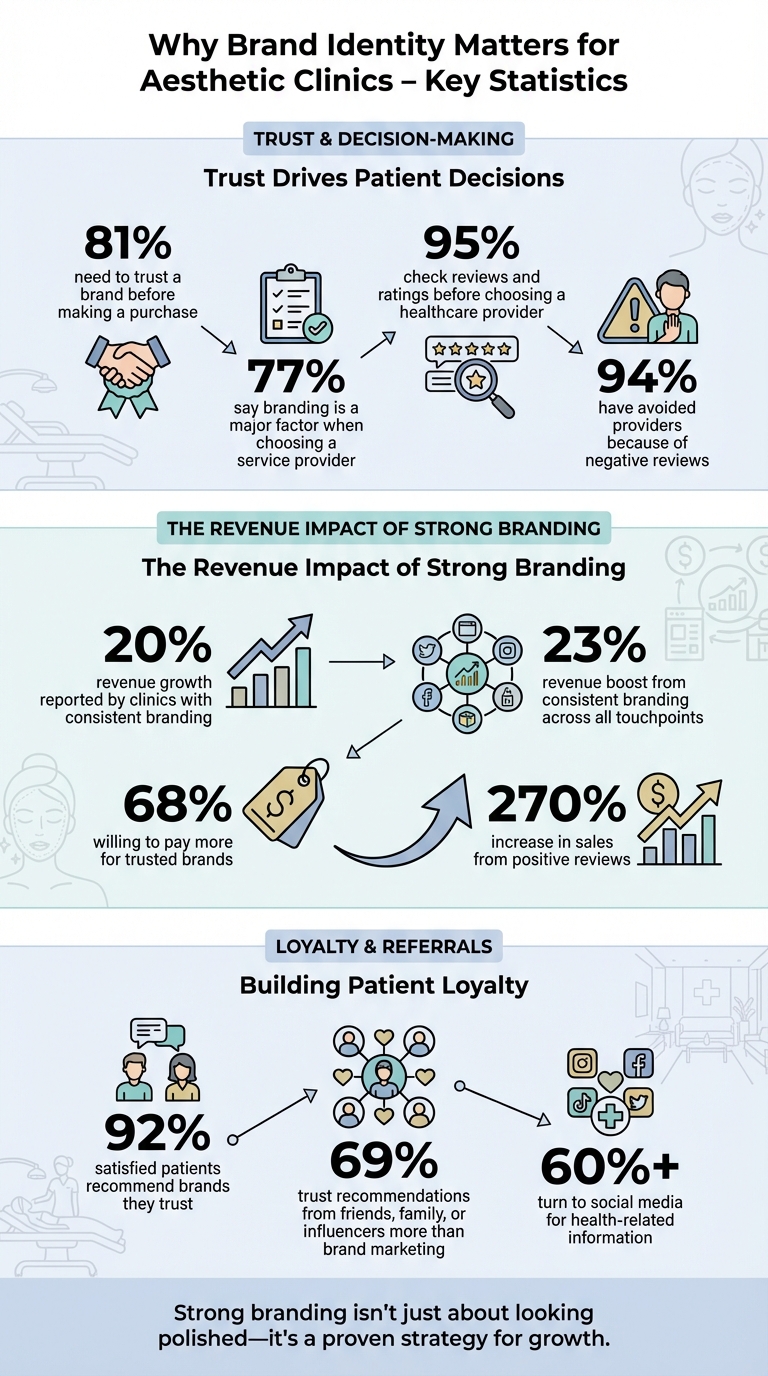
Brand Identity Impact on Aesthetic Clinic Revenue and Patient Trust Statistics
How Brand Identity Builds Patient Trust
The Psychology Behind Strong Brands
When patients consider an aesthetic clinic, their initial impressions are shaped by visual elements and messaging. For example, a sleek, modern logo sends a message of professionalism and sophistication, appealing to patients who value quality and expertise. Elements like high-quality visuals and professional typography go beyond mere aesthetics - they create a mental link to clinical reliability and competence. These design choices play a direct role in building the trust essential for patient loyalty and the clinic's success.
This is no small matter: 77% of consumers say branding is a major factor when choosing a service provider. As Crisalix puts it:
"Branding should be understood as a promise. Reputation is the proof that promise is kept".
Consistency is key. When your messaging aligns across websites, social media, and in-person experiences, it reinforces the perception of competence and attention to detail. On the flip side, a disconnect - like a polished online presence but a chaotic in-clinic experience - can quickly undermine trust. This psychological groundwork highlights the importance of trust signals in shaping patient decisions.
Trust Signals in Aesthetic Medicine
Trust signals are especially important in aesthetic medicine, where patients depend on both online and in-person cues to make informed decisions about medical procedures. For instance, 95% of patients check reviews and ratings before choosing a healthcare provider, and 94% have avoided providers because of negative reviews. In many cases, your online reputation becomes the first impression patients have of your clinic, directly reflecting the promises made by your brand identity.
Key trust signals include:
- Verified staff certifications
- Transparent pricing
- Genuine imagery of your team and facility
Julia Kendrick, Managing Director at Kendrick PR, underscores the value of these elements:
"Building and maintaining a brand reputation is critical for creating ongoing consumer awareness, trust and demand for your services, which helps to differentiate you from competitors and tip consumers from consideration into working with you".
These trust-building cues not only influence initial impressions but also establish long-term confidence in your clinic, helping patients feel secure in their decisions.
sbb-itb-02f5876
Maintaining Consistency Across All Patient Touchpoints
Matching Online and In-Clinic Experiences
Every interaction a patient has with your brand - whether online or in-person - sets expectations that need to align. Imagine this: your digital presence showcases a warm, luxurious aesthetic, but your clinic feels cold and impersonal. This disconnect, often called "brand friction", can erode trust and discourage potential patients from committing to treatments.
In fact, consistent branding across all touchpoints can boost revenue by as much as 23%. But this isn’t just about slapping your logo everywhere - it’s about creating a seamless experience. For example, if your Instagram highlights soft lighting and a spa-like vibe, your clinic should mirror that with soothing decor, calming music, and attentive staff. Growth99 captures the issue perfectly:
"When branding is different across multiple touchpoints... it can confuse potential patients. This confusion can make it hard for people to grasp what the med spa truly represents".
By maintaining this alignment, you not only elevate the patient experience but also reduce potential confusion, making the journey from online to in-clinic smoother and more reassuring.
Reducing Confusion in the Patient Journey
Consistency isn’t just about appearances - it’s about clarity. When your messaging varies across platforms, it can leave patients unsure about what to expect. For instance, if your website feels formal and professional but your social media strikes a casual tone, patients might spend their consultation time clarifying mixed signals instead of discussing treatments. This lack of cohesion often leads to price objections and longer decision-making timelines.
To avoid this, conduct a touchpoint audit. Review everything - your website, social media, emails, and even in-clinic materials. Are they all aligned in tone, style, and messaging? Hannah Russell from GlowdayPRO emphasizes this point:
"Your brand feel + your brand sound + your brand look must be cohesive…and must be applied consistently across all online and offline marketing channels".
Using practice management tools can simplify this process. These platforms let you customize digital intake forms and communication templates, ensuring they reflect your brand’s unique identity instead of looking like one-size-fits-all designs. This attention to detail helps create a unified, professional image that resonates with patients at every step.
Reading about the problem? See how Prospyr solves it in one platform.
Book a DemoBrand Awareness and Social Proof for Growth
Using Patient Testimonials and Reviews
When potential patients are deciding on a clinic, they often rely on reviews to guide their choices. Research highlights that reviews and ratings play a major role in shaping these decisions. This is where the concept of social proof comes into play.
Patient testimonials act as a stamp of approval for your clinic’s promises. As Crisalix explains:
"Branding is what a clinic says about itself. Reputation is what patients believe after interacting with it."
Even if your website features stunning visuals and persuasive content, it’s the authentic voices of your patients that truly persuade someone to book an appointment. In fact, reviews have been shown to increase sales by as much as 270%.
Timing and ease are critical when asking for reviews. The best moment to request feedback is often 24 to 48 hours after a treatment, when satisfaction is at its peak. Simplify the process by using tools like QR codes on receipts or in waiting areas, directing patients straight to your Google Business Profile. Nearly 90% of patients read between one and six reviews before booking, and 89% consider how a clinic handles negative feedback. Positive testimonials not only build trust but also fuel electronic word-of-mouth, expanding your clinic’s presence.
Electronic Word-of-Mouth in Aesthetic Practices
While written reviews are powerful, digital word-of-mouth (eWOM) takes things to the next level. It builds on testimonials, extending your clinic’s credibility through social media platforms. Today, over 60% of people turn to social media for health-related information. Additionally, 69% of consumers trust recommendations from friends, family, or influencers more than a brand’s own marketing.
eWOM thrives on user-generated content - videos featuring patients’ treatment journeys, before-and-after photos, or honest reviews act as digital referrals. MD Internet Marketing puts it perfectly:
"Social proof is the secret sauce to marketing your aesthetic practice."
To capitalize on this, many clinics collaborate with micro-influencers. These partnerships feel more authentic, as their endorsements mirror personal advice. This approach creates emotional connections, transforming happy patients into enthusiastic brand ambassadors who naturally extend your clinic’s reach.
Brand Positioning in a Competitive Market
Standing Out Through Specialization and Value
In a crowded aesthetics market, trust and consistency are just the start. To truly stand out, your brand positioning must set your clinic apart. With the global medical spa industry expected to reach $83.9 billion by 2033, offering standard treatments won’t cut it anymore. What makes the difference? Your brand identity.
As Designmc aptly states:
"In a saturated aesthetics market, treatments no longer differentiate clinics - brands do".
This means shifting focus away from competing on price or a long list of procedures. Instead, highlight what makes your clinic distinctively valuable. Is it your founder’s compelling story? A signature methodology? Or perhaps cutting-edge technology? For example, in December 2025, Ouronyx redefined itself as the "home of mindful aesthetics", aligning every aspect of its branding with ethical and wellbeing-driven values. This approach fostered emotional loyalty rather than transactional relationships.
Your Unique Value Proposition (UVP) should clearly articulate why patients should choose your clinic. Whether you’re known for achieving natural-looking results, offering a comprehensive approach to skin health, or delivering a luxurious experience, your UVP is key.
Rather than competing on price, position your clinic as a premium service provider. For example, instead of offering one-off discounts, bundle services into transformation packages, such as a three-month rejuvenation plan. Business strategist Emily Wilson emphasizes this point:
"Premium brands don't discount themselves into visibility - they attract clients who believe the service is worth every penny".
Once your clinic’s unique value is defined, focus your messaging to appeal directly to the patients who will appreciate your expertise.
Targeting Specific Patient Demographics
Your differentiation strategy becomes even more powerful when your messaging is tailored to your ideal patient demographic. Generic branding leads to generic results. To build a loyal patient base, you need to deeply understand who your ideal patients are - not just their age or income bracket, but the psychological factors driving their decisions. Are they looking for preventative care to maintain their appearance, or corrective treatments to address signs of aging? Identify key life events - like weddings, milestone birthdays, or career changes - that often prompt patients to seek treatment.
Once you’ve pinpointed your target audience, adjust your brand voice to resonate with them. For example, a clinic aiming to attract younger, trend-focused patients might use a bold, playful tone and share behind-the-scenes content. On the other hand, a clinic catering to medically inclined clients would benefit from a more clinical, professional tone that emphasizes evidence-based techniques. A great example of this is Hart Medical, which, in late 2025, centered its branding around founder Eleanor Hartley. By combining science-backed content with a personal, relatable voice, the clinic successfully carved out a unique presence on social media.
To ensure consistency, create a brand style guide that outlines your visual and verbal standards - such as logo design, color palette, typography, tone, and language. This ensures that everyone on your team, from front desk staff to practitioners, communicates in a way that aligns with your brand identity. Given that 81% of customers say they need to trust a brand before making a purchase, consistency is non-negotiable.
Finally, use educational content to establish authority. High-value blogs, webinars, and videos that explain the science behind your treatments can position your clinic as a trusted expert rather than just another discount provider. This strategy attracts discerning clients who prioritize safety and results over low prices, helping you build a stronger, more sustainable practice.
Converting Brand Identity Into Revenue Growth
Linking Brand Values to Patient Experience
A well-defined brand identity can turn occasional visitors into loyal, returning patients. The secret lies in alignment: your brand communicates a promise through marketing, social media, and your website, while your reputation reflects the actual experience patients have. When these two are in sync, trust grows, and patients are more likely to come back.
Clear communication within your team is essential to delivering on your brand promise. Instead of over-promising perfection or instant results, focus on offering clarity, professionalism, and guidance that patients can see and feel. This alignment between what you promise and what patients experience builds trust and lays the groundwork for measurable financial growth.
The Financial Returns of Strong Branding
Consider this: a single facial treatment might bring in $200. But a loyal patient who returns every quarter and buys skincare products could generate more than $12,000 over four years. This is the shift from one-time transactions to long-term relationships - and it’s the key to sustainable growth.
Practices that develop an "Authority Ecosystem" - a digital framework that establishes them as trusted experts - experience average growth rates of 186%. By building trust and maintaining consistency, these practices attract patients who prioritize quality and see your clinic as their go-to for long-term aesthetic goals.
Reputation is another critical factor in patients' decision-making. Around 95% of patients rely on reviews when choosing a clinic, and 94% have avoided providers because of negative reviews. A brand rooted in transparency, education, and consistent delivery turns patients into advocates, bringing in referrals and boosting revenue - without requiring additional ad spend.
As Revita Digital aptly puts it:
"Marketing without math is just gambling."
Strong branding isn’t just about appearances - it’s a financial strategy. Clinics with established brand authority often see a return on ad spend (ROAS) of 5–8×. And when leads are contacted within five minutes, they’re 21 times more likely to convert. Every dollar spent on advertising works harder when your brand identity is clear and consistently reflected in every patient interaction.
How Practice Management Platforms Support Brand Identity
Streamlining Operations for Consistent Branding
Every interaction a patient has with your practice - whether it’s a social media post, a follow-up text, or an appointment reminder - contributes to your brand identity. But keeping that experience consistent across multiple touchpoints is a daunting task without the right tools. That’s where integrated practice management platforms step in to simplify the process.
Take Prospyr, for example. It brings together patient data, communications, and operational workflows into one cohesive system, ensuring your brand promise is upheld at every step of the patient journey. By combining CRM (Customer Relationship Management) and EMR (Electronic Medical Records), Prospyr eliminates the fragmented experience caused by juggling multiple systems. In fact, practices using integrated platforms are three times less likely to encounter data entry errors.
A case in point is New Life Cosmetic Surgery, led by Dr. Daniel Lee. In 2024, the practice transitioned from using four separate tools to running everything on Prospyr. The results? A 50% increase in revenue and a 40% boost in appointments booked. Dr. Lee shared:
"We've seen a 50% increase in revenue and a 40% increase in appointments booked since switching away from using several different point solutions to running our practice on Prospyr."
Automation also plays a key role in maintaining a consistent brand voice. Features like HIPAA-compliant email and SMS tools allow practices to automate appointment reminders, follow-ups, and educational content, all while reflecting a professional and cohesive image. For instance, digital intake forms not only save 16 staff hours but also achieve a 60% pre-appointment completion rate, reinforcing your practice’s modern and efficient reputation.
Managing online reviews is another critical component of brand identity. With 56% of potential patients viewing a practice more positively when they see thoughtful responses to reviews, having a centralized platform to monitor and address feedback ensures no comment goes unnoticed. This attention to detail strengthens your brand’s dedication to patient satisfaction.
By leveraging technology, practices can streamline operations, improve patient experiences, and build a brand that resonates with patients long after their visit.
Using Technology to Improve Patient Engagement
Engaging patients effectively requires more than just great service - it demands the right tools to amplify your brand and foster loyalty. Technology plays a big part in making this happen.
Social media integration is one way to keep your brand front and center. With 97% of cosmetic surgery patients relying on Instagram content to guide their decisions, using a practice management platform to schedule and publish posts ensures your online presence remains polished and consistent.
AI-powered tools take engagement to the next level. For example, smart note-taking can speed up charting by 80%, giving providers more time to connect with patients face-to-face. Automated 2-way SMS tools also enable practices to respond to leads within one minute, boosting conversion rates by nearly four times.
Consider SOM Aesthetics, founded by Dr. Saami Khalifian. Using Prospyr’s integrated platform, the practice launched in 2024 and hit its sales targets 21 times faster than expected. Within two days, SOM Aesthetics generated $40,000 in revenue, surpassing $100,000 in monthly revenue within two months. Dr. Khalifian remarked:
"Prospyr has helped us launch SOM Aesthetics like a rocketship. Their powerful platform and helpful support have enabled us to exceed our financial targets while delivering an unmatched experience for our patients."
Membership management is another way technology can deepen patient loyalty. Patients enrolled in memberships or treatment packages are three times more likely to return, and automated renewals can lead to a 14% revenue increase from subscriptions. By automating these administrative tasks, your team can focus on delivering the exceptional care that defines your brand.
When used effectively, technology doesn’t just streamline operations - it strengthens patient relationships and ensures your brand remains memorable.
Conclusion
Your brand identity goes far beyond a logo or a color palette - it's the cornerstone of how patients perceive, trust, and ultimately choose your clinic. With 81% of consumers needing to trust a brand before making a purchase, trust is especially vital in aesthetic medicine, where procedures often carry personal and emotional weight. A strong, consistent brand communicates professionalism and safety, often answering unspoken concerns before a patient even reaches out.
Clinics that prioritize brand consistency across all channels see measurable benefits, including revenue increases of 20% or more. Additionally, 68% of patients are willing to pay premium prices for services offered by brands they trust and respect. This means that a thoughtful brand strategy allows you to focus on delivering value and quality, rather than competing solely on price.
When your digital presence aligns seamlessly with the in-clinic experience, it builds patient confidence and encourages word-of-mouth referrals. In fact, 92% of consumers are more likely to recommend brands they feel positively about and recognize. As Hannah Russell from GlowdayPRO perfectly captures:
"Your brand is the intangible thread between you, your business and your clients. It is the heart and soul of your business."
In a crowded marketplace, where new aesthetic clinics seem to pop up every day, a well-defined brand strategy isn't optional - it's essential. By clearly defining your clinic's purpose, values, and unique positioning, and ensuring these elements shine through every patient interaction, you create a foundation for long-term growth. When every touchpoint consistently reflects your brand's promise, success becomes a natural outcome.
FAQs
What are the top signs my clinic’s brand feels inconsistent?
Inconsistent branding happens when your visual identity, messaging, and patient experience don’t align. This could look like using different logos or color schemes across platforms, varying tones in communications, or a disconnect between what your marketing promises and what patients actually experience. These inconsistencies can confuse patients, erode trust, and hurt your clinic’s reputation. A unified brand is key to earning trust, fostering loyalty, and ensuring steady growth.
Which trust signals matter most to aesthetic patients online?
Key trust signals for patients seeking aesthetic treatments include clear and consistent branding, transparency, positive reviews, and a polished online presence. These factors play a big role in building credibility and earning trust, which ultimately impact a patient’s decision-making process. A well-defined brand identity doesn’t just bring in new patients - it also helps retain them, contributing to the clinic’s long-term success.
How can I measure if branding is increasing revenue?
To determine if branding increases revenue, focus on patient retention and growth. Clinics that align their branding with local preferences often experience up to a 30% increase in retention rates. Additionally, assess how your brand identity affects patient trust and loyalty - key factors that directly impact revenue. A strong brand fosters long-term relationships, which are crucial for driving financial success.