FTC seeks comment on personalized pricing policy
FTC seeks public comment on proposed guidance addressing deceptive personalized pricing and disclosure requirements.
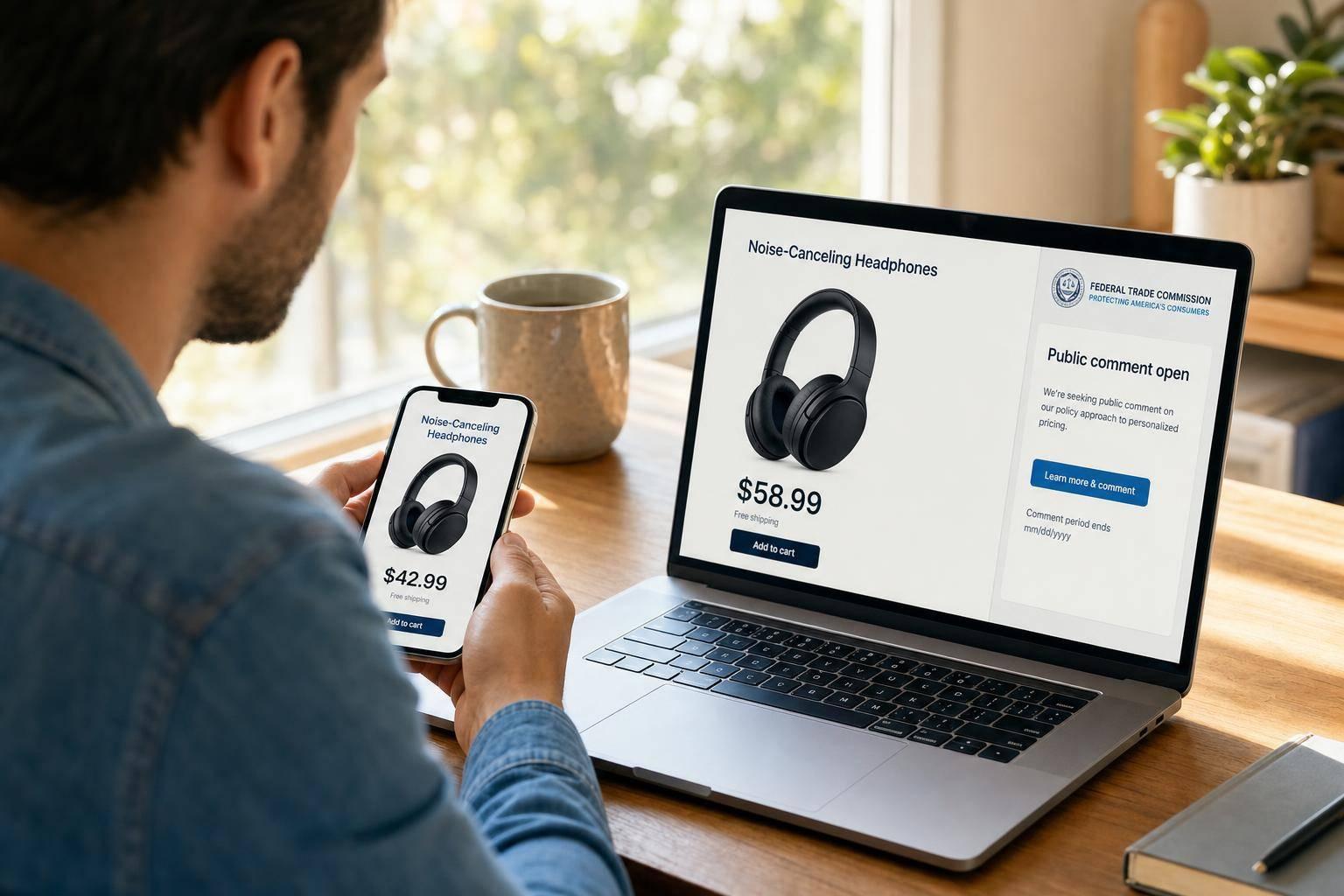

The Federal Trade Commission is opening a public comment process on a proposed enforcement policy statement targeting "personalized pricing", signaling tougher scrutiny of how companies use consumer data to tailor prices.
The FTC announced on August 19, 2026, that it is seeking comment on the proposed statement, which addresses the practice of using personal data such as inferred income, household size, and household composition to set prices for individual consumers. The proposal adds to broader efforts by federal and state lawmakers, regulators, and enforcers to increase oversight of personalized, dynamic, and surveillance pricing, and in some cases to limit or ban those practices.
Focus on disclosure and data use
The proposed statement centers on how inadequate disclosures tied to personalized pricing could amount to a deceptive or unfair practice under Section 5 of the FTC Act.
According to the source material, the FTC identifies three main types of conduct that could raise concerns under Section 5. One is failing to clearly disclose not only that a price is personalized, but also the basis for that personalization and the kinds of data used. Another is describing a price as a "special price" while leaving out that the amount shown is actually higher than it otherwise would be because it was set using information such as a customer’s inferred willingness to pay. A third is collecting, using, or disclosing personal data for personalized pricing without adequate disclosure or consent.
The statement also says personalized pricing may create risk on data privacy grounds if businesses rely on data obtained without consumer consent or without verifying that consumers gave that consent.
The FTC’s position, as described in the proposal, is rooted in the view that it is "consumers’ reasonable expectation[] that the price they see for a product or service is the same price that any other consumer at the same place and time would see." The agency says consumers may expect some price variation in cases involving supply and demand, regional differences, or consumer risk, but also argues that many consumers do not understand how much data they generate or how that data can be used in pricing.
Against that backdrop, the statement says the FTC "intends to enforce the law aggressively against any deceptive or unfair personalized pricing practices that violate Section 5 of the FTC Act or any other law enforced by the Commission."
sbb-itb-02f5876
Reading about the problem? See how Prospyr solves it in one platform.
Book a DemoFTC says it cannot ban all personalized pricing
The proposal also draws a line around the FTC’s authority. It states: "Congress has not given the Commission the authority to prohibit personalized pricing in all circumstances."
FTC Chairman Andrew Ferguson made the same point in the agency’s press release, saying: "The FTC does not have the legal authority to ban personalized pricing in all circumstances . . . ."
The source article says that, as a result, the FTC is likely to rely on traditional enforcement tools rather than rulemaking to address personalized pricing during this Administration.
Other laws may be used in future enforcement
Although the statement is focused on Section 5 of the FTC Act, it says the Commission may also use "any other law enforced by the Commission" in future cases.
The source identifies two laws specifically mentioned by the Commission: the Restore Online Shoppers’ Confidence Act, 15 U.S.C. §§ 8401-8405, and the Rule Against Unfair or Deceptive Fees, 16 C.F.R. Part 464.
The article also notes that the statement comments that "personalized pricing without business competition would allow a monopolist to capture the entire consumer surplus by charging each consumer the highest amount he is willing to pay for a product or service." It says the FTC may be considering how to use its authority to enforce Section 2 of the Sherman Act with regard to personalized pricing.
Essential-goods sectors highlighted
The source says the statement repeatedly points to industries that directly affect household budgets, including housing, food and grocery businesses and related delivery services, and transportation. It also repeatedly discusses how "retailers" may violate Section 5 through personalized pricing practices.
As described in the original article, that approach indicates the FTC’s enforcement agenda will likely continue to prioritize companies that deal directly with consumers, especially sellers of essential goods or services. The article says companies, particularly retailers and businesses supplying necessities such as food, housing, transportation, and health care, should pay close attention to developments.
Comment window and next steps
Once the FTC publishes the statement in the Federal Register, the public will have 30 days to submit comments unless the deadline is extended before the statement goes into effect.
Ferguson also warned in the release that "businesses engaged in or considering personalized pricing" should currently be "on notice that the Trump-Vance FTC will not hesitate to enforce the law in this space."
The source concludes that companies in high-priority sectors should review their pricing and revenue management practices, identify what data they collect and how that data is used in pricing tools, and assess the disclosures they currently make to the public.