US-Canada 50% cosmetics tariffs strain beauty supply chains
New 50% US-Canada cosmetics tariffs threaten supply chains and affordable beauty pricing across North America.
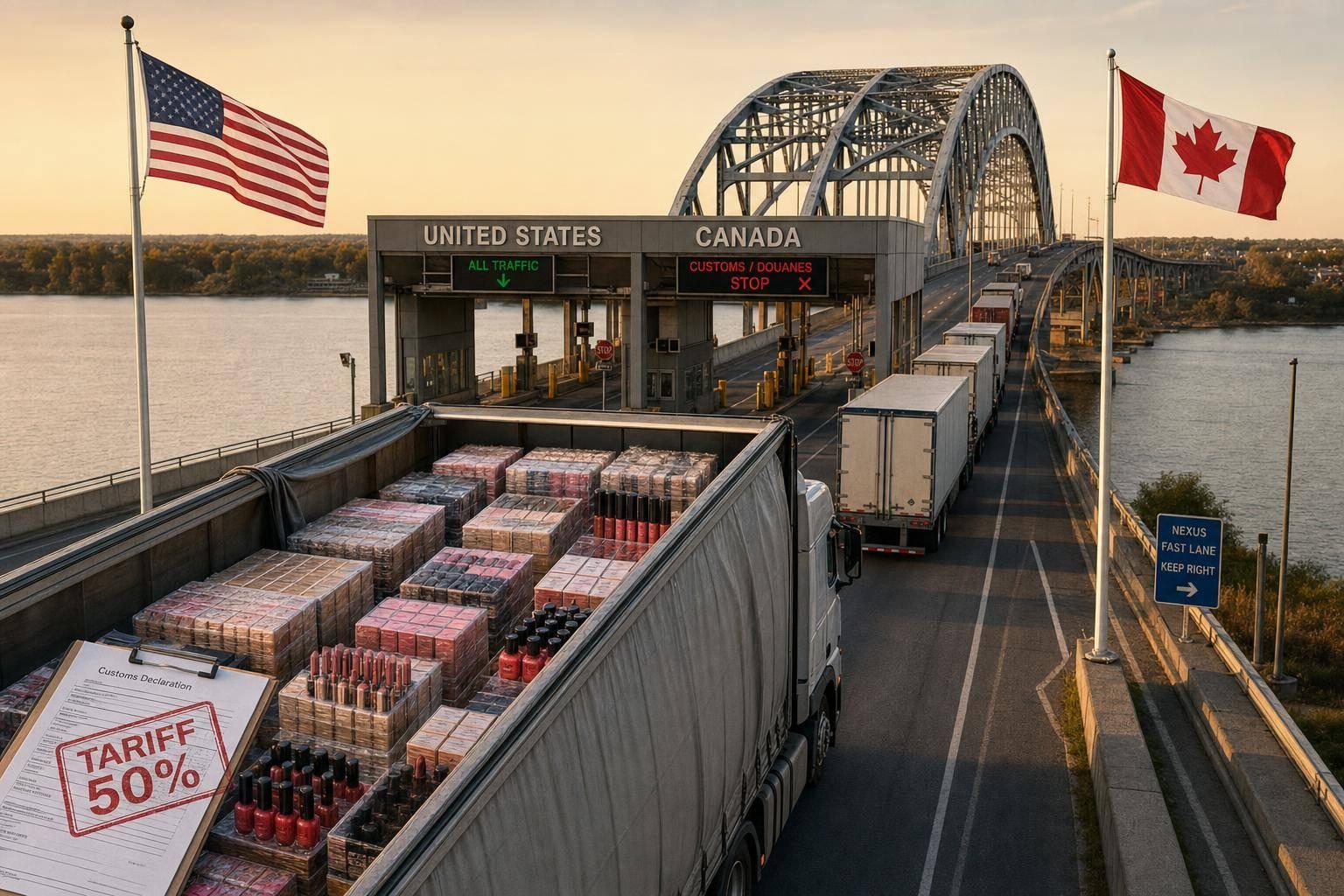

A new round of 50% tariffs on cosmetics moving between the US and Canada is raising pressure on North America’s beauty supply chains, with companies including L’Oréal and The Estée Lauder Companies exposed through Canadian manufacturing operations.
The US has imposed a 50% tariff on hundreds of Canadian products, including cosmetics. Canada has also announced retaliatory 50% tariffs on certain US makeup imports from September 8.
The cross-border impact could be significant for the beauty sector. Canada was the second-largest source of US beauty and skincare imports after South Korea in 2025, supplying more than US$1 billion of products. The manufacturing network between the two countries is also highly integrated, linking businesses and brands such as L’Oréal, M·A·C and The Ordinary.
Companies may respond in several ways already identified in the industry: absorbing some of the added costs, raising prices, restructuring distribution, or shifting manufacturing. But industry representatives have warned that changing long-established supply chains will be both costly and disruptive.
The broader concern is that the tariffs could reshape how beauty products are made and distributed across North America. According to the source material, the duties "could fundamentally alter the economics of North American beauty manufacturing and distribution, placing particular pressure on affordable products where brands have less room to absorb a 50% duty without undermining margins or passing costs on to consumers."
That pressure is likely to be felt most sharply in affordable cosmetics, where brands have less flexibility to offset a 50% duty.