Med Spa Loyalty Program Ideas: Memberships, Points and Referrals That Bring Patients Back
Med spa loyalty program ideas: memberships, points, tiers, referrals and packages compared, how to price a membership, rules to watch and what to measure.
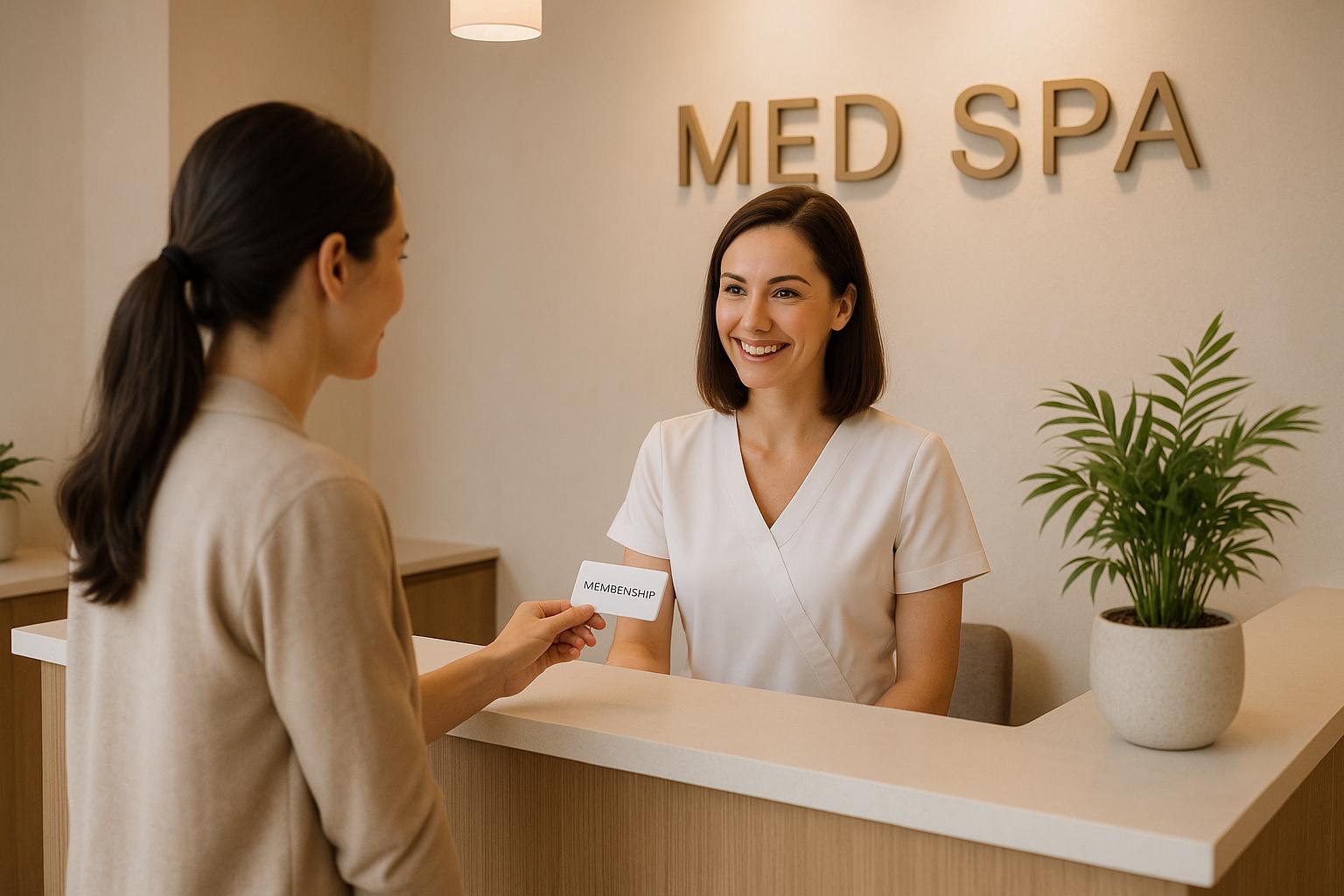

A med spa loyalty program is any structure that gives patients a reason to come back to you instead of shopping each treatment: a monthly membership, a points program, tiers, referral rewards or prepaid packages. Most practices get the most from a membership with member pricing, then add referrals; points programs work best once the membership is running smoothly, because each one adds rules your front desk has to explain.
Updated October 26, 2026 · By Prospyr. Prospyr makes software for aesthetic practices, including memberships and patient rewards.
What types of med spa loyalty programs work?
| Program | How it works | Works well for | Watch out for |
|---|---|---|---|
| Monthly membership | Patients pay a fixed monthly fee for credit, included treatments or member pricing | Predictable revenue and regular visits, especially neurotoxin and facials | Failed payments, unused credit and cancellation terms |
| Points program | Patients earn points on spend and redeem them for treatments or products | Rewarding retail and occasional patients who won't commit monthly | Points are a liability on your books, and complex rules slow checkout |
| Tiered program | Benefits grow as annual spend or visits pass set thresholds | Rewarding your highest-value patients without discounting everyone | Tiers need clear rules and regular review |
| Referral rewards | A patient earns credit when someone they refer completes a visit | New patients who arrive already trusting you | Keep rewards tied to the visit, not to reviews or testimonials |
| Prepaid packages | Patients buy a series up front, such as six laser sessions, at a package price | Treatments that need a series to show results | Track remaining sessions on the patient record and set clear expiry and refund terms |
Manufacturer programs such as Allē and ASPIRE run alongside your own program rather than replacing it. Our guide to aesthetic loyalty programs explains how those work.
Reading about the problem? See how Prospyr solves it in one platform.
Book a DemoWhich loyalty program should a med spa start with?
Start with one program you can explain in a sentence at checkout.
- Mostly neurotoxin and filler patients on a regular schedule: a monthly membership with banked credit and member pricing.
- A broad menu with lots of one-time visits: a points program or a small set of prepaid packages.
- A few patients who drive a large share of revenue: tiers, or an invite-only membership level.
- Strong word of mouth already: a referral reward, added to whichever program you run.
How do you price a med spa membership?
Price the membership so the dues and extra visits cover what the member benefits cost you. Work it out per patient before you launch.
Example (an illustration, not a benchmark): a practice charges $500 for a neurotoxin visit, and a typical patient comes 3 times a year, or $1,500.
- The practice offers a $99 monthly membership. Dues become account credit, and members get 10% off treatments.
- The same 3 visits now cost the member $1,350 ($1,500 less 10%). The member has paid $1,188 in dues as credit, so they pay $162 more at the visits.
- The practice collects $1,350 instead of $1,500, so the member benefit costs it $150 a year.
- If the membership brings that patient in for one extra visit a year, such as a facial or a fourth neurotoxin visit, the extra revenue covers the $150 and the practice comes out ahead. If it doesn't, the membership is only a discount.
Check the same math with your own prices, product cost and card-processing fees, and decide in advance what happens to unused credit when a member cancels. Our patient lifetime value calculator helps you see what a returning patient is worth.
What rules apply to loyalty programs and memberships?
This is general information, not legal advice. Have counsel review your membership agreement and program terms.
- Gift cards, credit and prepaid packages. Federal rules limit expiration dates and fees on many gift cards (Regulation E, 12 CFR 1005.20), and state laws on gift cards, unclaimed property and prepaid services vary. Check how they apply to membership credit and packages in your state.
- Recurring billing. State automatic-renewal laws often require clear terms before the first charge and an easy way to cancel. Put the price, billing date, minimum term and cancellation steps in the agreement the patient signs.
- Reviews and referrals. Don't give points, credit or discounts in exchange for reviews. The FTC's rule on consumer reviews (16 CFR Part 465) bans incentives conditioned on what a review says, and Google's policies prohibit incentivized reviews. Reward referrals for visits, not for posts.
- Medical services. Some states restrict bundling or discounting certain medical services. Ask your medical director and counsel before you include prescription treatments.
How do you measure a loyalty program?
- Active members and the number who join and cancel each month.
- Visits and spend per member compared with similar patients who aren't members.
- Failed payments and how many you recover.
- Unused credit and points, which you owe patients and should track as a liability.
- Rebooking rate, the share of members who book their next treatment within its usual interval.
Our patient retention calculator shows what a few points of retention are worth to your practice.
Which software has the best loyalty and membership features?
Look for software that runs memberships, packages and points on the same patient record as booking and checkout, so balances are right at the point of sale and the front desk doesn't reconcile spreadsheets. Our membership program guide compares 16 platforms on memberships and loyalty points, and the memberships software comparison lays the same features out side by side.
In Prospyr, recurring and one-time membership plans, prepaid packages and a patient rewards program sit on the patient record, and patients can see their wallet balance in the patient portal. Book a Prospyr demo to see a membership set up with your own pricing.
Is a membership worth more than the visits it replaces? Estimate what one patient is worth over the years →
Software comparison
Which med spa software has the best loyalty and membership features?
Of the 18 platforms compared (reviewed July 2026 – September 2026), 8 document all three (recurring memberships, prepaid packages and a patient rewards program) as included: Prospyr, AestheticsPro, BoomerangFX, Mindbody, Pabau, PatientNow, Vagaro and Zenoti. The least common are a patient rewards program (8 of 18) and recurring memberships (16 of 18). Prospyr publishes this comparison and is one of the platforms in it.
- Recurring memberships (16 of 18): all except Boulevard and ModMed
- Prepaid packages (18 of 18): every platform compared
- Patient rewards program (8 of 18): Prospyr, AestheticsPro, BoomerangFX, Mindbody, Pabau, PatientNow, Vagaro and Zenoti